Grow ginseng in a flower pot on the balcony: enjoy the flowers, admire the berries, and still get a harvest, which is more economical than buying it
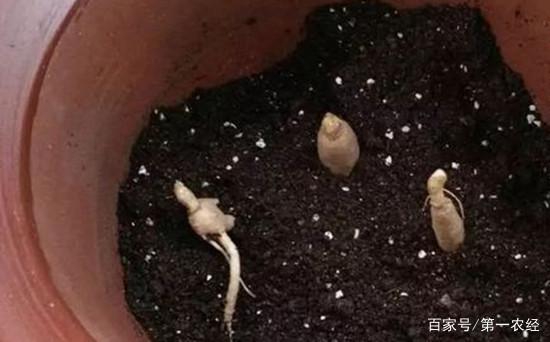
Nowadays, more and more friends like to grow some potted plants at home, such as ivy, pothos, and spider plants. They not only add a bit of greenery but also help purify the air, achieving multiple benefits at once. Of course, potted plants alone obviously can no longer meet people's needs, so all kinds of vegetables and fruits have joined the ranks of potted plants, and even ginseng has as well. As a traditional tonic, ginseng has long enjoyed the reputation of the king of a hundred herbs and is deeply favored by consumers. So how should ginseng be potted? Below, I will introduce some key points for potting ginseng. Let's take a look together!
[Potting Method One]
For potted ginseng, it is best to choose 2-3 year old ginseng seedlings. When planting them in pots, choose seedlings with intact rhizome heads, plump buds, complete fibrous roots, large size and full sap, good shape, uninjured roots, and no pests or diseases, and plant them separately according to size. For spring planting, it is mostly done when the local ginseng seedlings are about to end dormancy or a period earlier; for autumn planting, it is mostly done after ginseng enters dormancy. In addition to requiring a special growing environment, potted ginseng also needs special nutrient soil. The soil for potted ginseng should use hillside soil rich in humus, especially slightly acidic black soil with more humus under broadleaf forests. In places without hillside soil, well-rotted straw and stalk material from the edges of threshing yards that has accumulated for many years can be used. After screening mountain surface soil or rotted straw and stalk material, mix in a small amount of roasted perilla seeds and well-fermented cake fertilizer, chicken manure, etc. as base fertilizer, and at the same time a small amount of river sand can also be mixed in. Before planting ginseng, choose flower pots appropriately according to the size of the ginseng seedlings; the pots may be rough or finely made, and the shape is not limited. The depth of the pot should generally be greater than the height of the ginseng seedlings. If the pot is not deep enough, the small fibrous roots of the ginseng seedlings can be slightly bent when planting. The diameter of the pot can be smaller, but the height must be deeper, which helps keep the ginseng fibrous roots stretched and perfect without losing economic value. When planting ginseng seedlings in the pot, first place 2-4 cm of ginseng soil in the pot, then place the ginseng seedling in the exact center of the pot, hold the seedling with one hand and fill soil with the other, keeping the root system spread out, and bury the entire ginseng seedling firmly with soil. Cover the upper part of the ginseng rhizome head with 1.5-2.5 cm of soil. The ginseng soil should be 1 cm or more below the pot rim to prevent overflow when watering.
A newly planted pot of ginseng can be placed in a greenhouse, indoors, or under trees. It emerges 20-30 days after planting, the leaves flatten out more than ten days later, and it flowers 20-40 days after emergence (in winter, in a greenhouse). Usually the temperature should be 10-25°C; ginseng is a plant that likes shade, coolness, moisture, moderate water, and scattered sunlight. Once potted ginseng has grown stems and leaves, it must rarely see strong light, and even less should it be placed in an uncovered open area without shade. Ginseng grows vigorously under weak light; when light is too weak, the plant tends to grow leggy, with thin and long stems and poor color, weakened photosynthesis, and little nutrient accumulation in the roots. Under strong light, carbon assimilation is slow, the plant is short, leaf color is yellow and poor, leaf tissue is damaged, photosynthesis is reduced, growth and development are affected, and in severe cases sunscald can occur. Practice has shown that from emergence to leaf expansion, weaker direct morning light is beneficial to growth, while after leaf expansion, except for direct light in the early morning and evening, direct light at other times is harmful to ginseng growth. During the growing period, potted ginseng has strict water requirements. When water is insufficient, the leaves wilt and turn yellow, photosynthesis is affected, the surface tissue of the roots is rough, and the sap is insufficient. When there is too much water, the soil is prone to lack oxygen, the plant grows slowly and is prone to disease, and red rust spots appear on the roots, reducing economic value. Under conditions of high humidity, high temperature, and poor ventilation, the plant is prone to epidemic disease. After potted ginseng is soaked in water for several days, root rot will occur. For routine watering, water can be applied around the pot so that water gradually seeps toward the center. As long as it is not too dry, generally there is no need to water heavily, but because temperatures vary greatly from place to place, the watering frequency can be appropriately increased. Because potted ginseng is watered many times, a compacted layer often forms on the surface of larger pots, making it hard for water to seep in during watering. You can loosen the surface soil with your hand or a thin stick to facilitate air flow and water penetration. To allow potted ginseng to grow normally, you can often apply some well-fermented soybean or soybean cake fertilizer water.
[Potting Method Two]
First, you need strong ginseng seedlings and seeds. Only good ginseng seedlings and seeds will produce good potted ginseng. For good ginseng seedlings, the buds must be intact and undamaged so the survival rate is higher! As for the seeds, they must be sprouted until they split open; only seeds that have been sprouted until they split open can be planted. Ginseng seedlings and seeds can only be planted in spring and autumn (except for dormant seeds), not in all four seasons; off-season cultivation is very difficult to succeed. In the process of potting ginseng, you can first spread one third of the soil in the flower pot, then insert the ginseng seedling, then add soil, water thoroughly, and then simply wait quietly for it to sprout. Ginseng should be planted 4-5 cm deep in the soil, generally using upright cultivation, and the soil should not be too sticky; good drainage is preferable. Before ginseng emerges from the soil, water should not be too much, otherwise the seedlings easily rot. After ginseng emerges, watering can proceed normally only once it can carry out photosynthesis. When watering, do not water the leaves; wet leaves make leaf spot disease easy. At the same time, during the care of potted ginseng, strong direct light should also be avoided. A strong ginseng seedling should have an upright stem, and its green leaves should be fully spread out, while ginseng seeds are red when mature.
[Knowledge Link] How is ginseng eaten?
First, take it as a decoction. Wash a whole ginseng root or sliced ginseng and put it into a container, add clear water, soak for 30 minutes first, then cover with a lid and simmer over gentle heat for about 1 hour. Drink it after the ginseng liquid becomes warm. This medicinal liquid has a high concentration of active ingredients, strong tonic effects, and takes effect quickly, and is suitable for people recovering from a serious illness. However, this method wastes medicinal material rather a lot, so it is not suitable for choosing high-quality, expensive ginseng. Second, steam it over water. Cut ginseng into slices or small sections, put them into a porcelain bowl, add clear water, cover with a lid, put the porcelain bowl into a pot with cold water added in advance, and steam over water under the pot over gentle heat for about 1 hour (be careful not to boil the water dry). After it cools, drink the ginseng liquid in the bowl. This method can steam and simmer ginseng repeatedly 3-5 times, and other tonics can be added when steaming the ginseng soup, such as red dates, longan, rock sugar, goji berries, lily, etc.;
Third, make ginseng tea. Cut ginseng into thin slices, take about 3 grams each time (about 5-10 slices), put them into a thermos, pour in boiling water, cover for about half an hour, and drink it as tea. This method can be used to brew repeatedly until the ginseng tea has no taste; in the end, the ginseng residue can also be chewed and swallowed. This way of taking it is simple and does not waste medicinal material, and is suitable for long-term use. Fourth, make ginseng wine. Put a whole ginseng or thinly sliced ginseng into a bottle and soak it in 50-60 degree baijiu, taking it daily. It has effects such as dispelling wind and dispersing cold, and promoting blood circulation and dredging collaterals, but people allergic to alcohol or with liver disease should not take it. Soaking in liquor is suitable for less expensive parts such as ginseng fibrous roots. Fifth, hold slices in the mouth. Cut ginseng into thin slices, take 2-3 slices each time and hold them in the mouth until the ginseng slices have little or no taste, then chew and swallow them. They promote fluid production and refresh the mind, are dry and cool and pleasant to the taste, and are suitable for healthy people who need tonics to strengthen the body. Sixth, grind into powder and swallow. Grind ginseng into fine powder and swallow it daily, or grind ginseng into powder and take it with boiling water. The amount depends on body constitution, generally 1-1.5 grams each time. This method is mostly used for relatively precious ginseng, such as wild mountain ginseng.