Rose black spot prevention and treatment tips for summer, clear it without chemicals
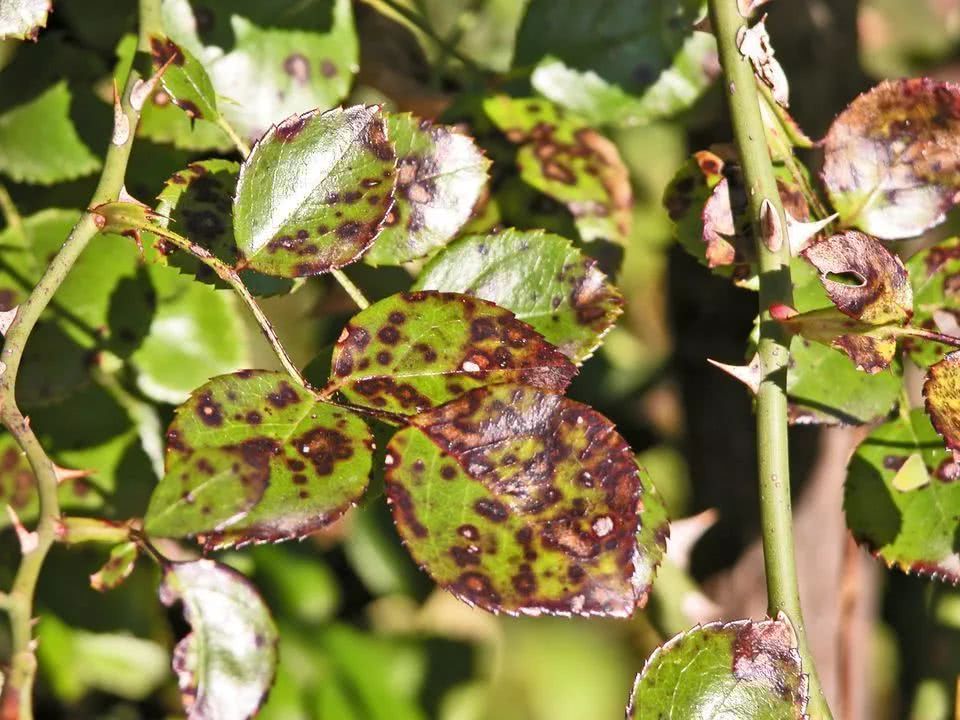
If roses grow in an environment that stays damp for a long time or has standing water, they easily develop black spot. When growing roses, you must regularly prevent and control pests and diseases to avoid fungal infection. As long as they are cared for properly, roses will produce brilliant and enchanting flowers.
If you notice a few black spots on the leaves of your roses and do not deal with them in time, these spots will spread to all the leaves, and even harm the entire plant. After that, the leaves will slowly turn yellow and then keep dropping. If not treated promptly, these small black spots can be fatal to roses.
Black spot is a common fungal disease of roses. It is a pest and disease problem that is easily triggered when conditions are humid and the temperature is relatively high.
At first these spots are small black dots, and eventually they become irregular black patches. At this point the disease is starting to worsen. The infected leaves will slowly turn yellow, and in the end they will keep dropping.
If not treated in time, this black spot will spread throughout the entire rose plant, and the affected branches will turn black or purple.
Black spot is very easy to deal with. It is not fatal to the rose itself, but an infected rose will become very weak, its growth will slow down, and its resistance to pests and diseases will become very low. Black spot not only affects its leaves, it also produces fungal spores. In winter, it will keep dropping leaves. The fungus spreads with water and wind, and can cause all the plants in your home to be infected with fungal diseases.
So when caring for roses, you must avoid overly wet soil. When the temperature is high, do not water too frequently. Leaves must not have standing water. When watering, do not pour water directly onto the leaves. Once fungal disease infects the plant, treat it promptly. All of the measures above can greatly reduce the risk of black spot infection.
Be sure to avoid watering at night, because black spot spores need about 7 hours to break out. It is best to choose to water in the morning, so that before the black spot spores can survive, the leaves have dried thoroughly. If you water at night or when it is raining, the plant is very likely to become infected with black spot.
Another thing to note is not to plant roses too close together. If the plants are too crowded, it will affect air circulation.
Another issue is to maintain a ventilated and well-lit environment, and also keep good airflow between the branches and leaves. If the branches and leaves at the base of the stems and roots grow too densely, prune them in time. It is best to prune after the frost has ended. Do not keep the growing environment too shady. After watering, let the leaves dry quickly to avoid long periods of dampness.
Beginners should preferably choose varieties with stronger resistance to pests and diseases. Plants with strong pest and disease resistance can still survive relatively well even if they become infected with black spot. For example, the common David Thompson rose and Violet Queen, among others.
Remove diseased leaves as soon as you find them, and also clean up fallen leaves on the ground in time. Do not use infected leaves for composting and then place them on the soil surface. Throw them into the trash or burn them promptly.
To control black spot, you can use common fungicides. The more effective ones include chlorothalonil, thiophanate-methyl, and zineb.
After that, spray the fungicide regularly, generally once every 5 to 7 days. About 4 consecutive sprays can completely clear it. Damaged leaves cannot recover, so cut them off in time to prevent black spot from spreading.
If you do not want to spray chemicals, you can also use the following organic pesticides, such as baking soda and vinegar. You can mix vinegar and baking soda, add water and stir it into a solution, then spray it on the leaf tips to kill the fungal disease.
Of course, if you want a better effect, you can use a small spoon of baking soda, mix it with two tablespoons of vegetable oil, then appropriately add some liquid soap, add some edible vinegar, and after mixing, put it into 3 to 4 liters of water. Spray once every 6 to 7 days, and this can clear up black spot.
You can also spray a solution mixed with sulfur powder, which can also effectively clear pests and diseases. You can sprinkle sulfur powder directly on the soil, but be especially careful not to inhale the dust and fumes.
Mixing baking soda and oil can also clear black spot. Its special feature is that it changes the pH value. You can use 4 liters of water, mix in a little baking soda, add a bit of rapeseed oil, stir to mix, and then spray it on the leaves. Avoid spraying in hot and blazing sunlight, otherwise it will burn the leaves.
If you want to be a bit more extravagant, you can mix one part milk with two parts water and spray once a week, which can also clear black spot.
Of course, a relatively effective option is neem oil. It is made from the sap of the neem tree and is an effective organic fungicide. It can be bought in many garden stores, and it can stop black spot spores.