Organic fertilizer has many benefits: it can reduce the harm of continuous cropping, and with the right method, the results are twice as good with half the effort
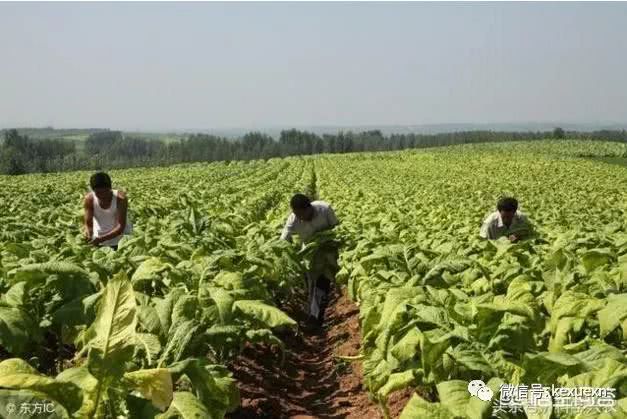
That organic fertilizer can reduce the harm of continuous cropping is already a widely recognized fact. There are also relevant research results from cultivation experiments; organic fertilizer can definitely prevent continuous cropping problems, and this is not just a legend. Regarding the role of organic fertilizer, here is some relevant introduction, and I hope it can be of help to you.
In the broad sense, the concept of organic fertilizer is still fairly wide. It not only refers to the organic fertilizer made through biological fermentation that we speak of, but also includes traditional farmyard manure, as well as straw in the fields and decomposed straw materials.
The harm of continuous cropping, meanwhile, arises because the same crop is planted in a field year after year, so a large amount of the eggs, bacteria and other pests and pathogens of that crop accumulate in the soil, and when it is planted again the damage becomes more severe. In addition, because of continuous cropping in production, a single crop will absorb a certain element from the soil and cause an insufficient supply, resulting in symptoms of nutrient deficiency. These factors are also the reason why continuous cropping should be avoided in production.
The nutrient elements in organic fertilizer, however, are relatively complete. Although its supply rate is not as fast as that of chemical fertilizer, chemical fertilizer has one-sided nutrient elements, which is also unfavorable for cultivating and fertilizing continuously cropped fields, while organic fertilizer is a very good supplement in this respect. In addition, after applying organic fertilizer, the organic matter in the soil can be significantly increased. Organic fertilizer can also improve the physical and chemical properties of the soil, making the soil better to till, and the soil permeability can be greatly improved.
The soil's capacity to store water and retain fertilizer can also be greatly improved, which is very helpful for alleviating the harm of continuous cropping. Note, however, that it can only help, and cannot completely eliminate the harm of continuous cropping. Therefore, in agricultural production, continuous cropping should still be avoided as much as possible, to avoid reduced yields and pests and diseases.
This is Science for Agriculture; you are welcome to follow, and I will take you along to grow your knowledge together.