Attention, watermelon lovers: one trick to bring home a big, sweet watermelon
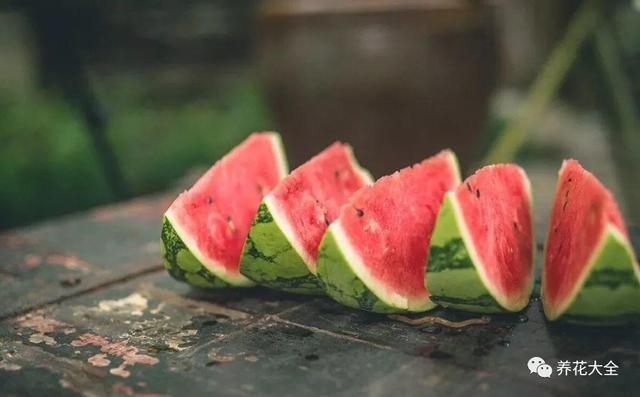
Once summer arrives, all kinds of fruit hit the shelves. Eating some fruit every day keeps the whole family healthy! But do you know how to pick fruit? Grapes, watermelon, dragon fruit, papaya - pick well and they taste great, pick badly and the whole family ends up with an upset stomach!
Watermelon
Plant Care Guide
The nutritional value of watermelon
Watermelon is full of water and also contains many vitamins, making it an essential fruit for cooling off and quenching thirst!
Watermelon is one of the fruits Chinese people love most. On a summer afternoon, a slice of watermelon is simply wonderful - but the prerequisite is: pick a good melon!
How to pick a watermelon:
1. Look
A good melon has clear, neat stripes, a fairly symmetrical body, and a fresh, green stem (vine). Stripes that are pale and unclear, or a crooked, lopsided body, may mean a poorly developed melon with uneven sweetness. A dried-out stem means a dead-vine melon that was artificially ripened.
Among melons of the same variety, bigger is better than smaller. Big means good nutrition, good growth and fuller maturity.
If the blossom-end navel is small and slightly sunken inward, it means the melon is fully ripe and grew strong and robust - a truly ripe melon.
2. Listen
Who says tapping a watermelon is useless? This is an old Chinese tradition. Flick the watermelon with your finger: a "peng peng" sound means a perfectly ripe melon; a "dang dang" sound means an unripe melon; and a "pu pu" sound means an overripe melon.
3. Weigh
If you are strong enough, heft the melon. A ripe melon feels light and seems to float upward; an unripe melon feels heavy and seems to sink downward.
If that feels like too much trouble, use the comparison method: heft two melons of similar size and choose the lighter one. The heavier one (at a similar size) has more water, which dilutes the sweetness.
Dragon fruit
Plant Care Guide
The nutritional value of dragon fruit
Dragon fruit contains a rather special plant albumin and anthocyanins, plus abundant dietary fiber and vitamins. It is especially suitable for children and pregnant women.
Many people keep worrying that dragon fruit has a lot of seeds, but in fact these tiny seeds can be digested by the human body, and it is said they can even boost memory.
A ripe dragon fruit is sweet as honey. If all you taste is a grassy, green flavor, you did not pick a good one. With such a nutritious fruit, come and see how to pick it.
How to pick dragon fruit:
1. Look at the color of the leaves
Fresh dragon fruit is bright red with green leaves. Dull color, yellowing leaves, or even a bit of black rot at the ends are all signs of staleness. Whether white-fleshed or red-fleshed, just pick one with red skin and green leaves.
2. Look at its shape
Short, plump and round dragon fruit is sweeter and has finer flesh than the long, thin type. Bet you did not expect that.
3. Check the feel
Give the dragon fruit a squeeze: too soft means overripe and the flavor will have gone off; moderately soft and firm means it is just right to eat; a bit hard means it is not ripe yet and may taste green and astringent.
Grapes
Plant Care Guide
The nutritional value of grapes
Well-ripened grapes contain plenty of glucose, which can replenish blood sugar, and also antioxidant flavonoids. For children, eating grapes can boost appetite and aid digestion - far better than taking medicine.
The good and bad of grapes
Price, color (green or purple) and berry size have no decisive effect on taste. As long as you know how to pick, you can buy the most delicious grapes for the least money!
How to pick grapes:
1. Look for the white bloom
The white powdery bloom formed by the grape's fruit sugars is harmless to humans and is a sign of healthy grapes. Grapes with a white bloom are fresh, healthy grapes.
2. Look at the stems
Check whether the stems are still green. If they are all dried out, the grapes are not fresh.
Then lift the bunch and shake it up and down to feel whether it is firm. If it feels loose, it may be what is left after the bad berries were removed.
3. Look at the color
Generally, grapes that are bright and glossy are best. The color within a bunch should be uniform; if it is not uniform, the grapes did not grow well and are half good, half bad.
If the grape skins are wrinkled, do not buy them - they are clearly just a soggy mass, unpleasant to eat and likely to cause diarrhea.
4. Give them a squeeze
Fresh, ripe grapes feel springy and bouncy. If too soft, they are overripe and mushy; if too hard, they may have been treated with hormones.
Papaya
Plant Care Guide
The nutritional value of papaya
Papaya is warm in nature. It can be eaten raw and also used in soups and congee, and it is a very popular dessert fruit.
Many people pick papayas with no sweetness and little flesh, which is simply a waste of money. In fact, papayas come in "male" and "female" types, and you may have picked an unpalatable "female papaya."
How to pick papaya:
1. Look at its shape and tell male from female
The "male papaya" has a well-proportioned body, shaped like a fuzzy melon or bottle gourd, with thick flesh, few seeds, and plenty of clear, sweet juice. The "female papaya" has a big belly, thin flesh, many seeds, somewhat less juice, and lower sweetness.
2. Look at the skin and test the stickiness
A ripe papaya is overall orange with a reddish tinge and covered in many spots,and feels sticky to the touch. This kind of papaya is full of sugar and very sweet. Pale green color and few spots mean it is not ripe enough and the flesh is not sweet.
If the skin has mold spots, it means it is overripe and a bit rotten, so it is best not to buy it.
3. Smell it
A papaya that smells very sweet and fragrant, with a strong papaya scent, is a good one. A papaya with a faint smell or no smell at all is not ripe yet, and one with a strange smell may be overripe or unhealthy.
These little tips for picking fruit
hurry up and save them
Next time you go to buy fruit
you will never have to worry about picking badly again