Potted durian on the balcony bears fruit the size of a fist, and the whole family laughed when it was cut open
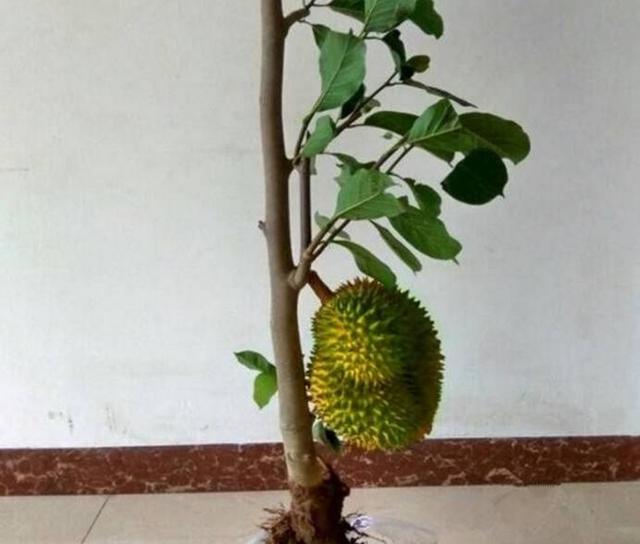
Durian is known as the "king of fruits." It has a strong smell - those who love it praise its fragrance, while those who hate it complain about its stench. We have all eaten fruit, and many people have grown some fruit at home, but this time my wife grew a potted durian at home, and unexpectedly the fruit it produced was only the size of a fist. When cut open, there was still flesh inside, just rather mini. Seeing this, the whole family burst out laughing!
If you grow it in a pot at home and want it to bear fruit, growing it from seed offers little hope of fruiting. It is still worth trying as a potted plant to look at. If you want it to bear fruit, choose a light variety that fruits earlier. You can choose a grafted seedling for pot cultivation.
Before potting, apply enough base fertilizer in the prepared flower pot. It can be organic fertilizer or farmyard manure, and of course some lime can also be mixed in. If the temperature can be kept above 25°C (this temperature is more suitable for durian growth), it can be planted in any season. When potting, plant it with the root ball, which is more conducive to the durian surviving and helps it shift to normal growth more quickly.
There is no need to water it every day normally. Watering should depend on how dry or moist the potting soil is. Keep soil moisture at 30% to 40%. Maintain it in a semi-shaded environment, and do not expose it to strong sun during growth. Occasional sunlight is enough.
For regular fertilization, apply one topdressing during the growth period and another during the fruiting period. This can be done in summer. Supplementing nutrients for the durian during this period can ensure the fruit expands, and it also helps it fully absorb nutrients after harvest. In addition, after harvest is finished and when spring buds sprout, some organic fertilizer can also be applied to promote fruiting.
Although the durian my wife grew this time was small, the taste was still decent. It just fits in the palm of your hand. The durian that originally had a fierce appearance now looks a little cute in this form.