Why are bonsai so expensive? Many people only understand the reason after reading this
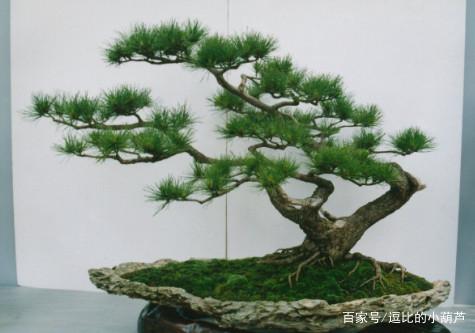
In many people's impression, small bonsai often come with a hefty price tag, and some are shockingly expensive. Some people ask, why are bonsai so expensive? In fact, there are natural reasons why bonsai are so expensive. Today, Little Gourd will talk about why bonsai are so "expensive" - not just the price of bonsai, but also their preciousness and sense of luxury.
Creating a bonsai requires a relatively long and slow process. The creator must invest a certain amount of money, materials, energy and time to produce a work, and the greatest effort and investment is the cost of time. Whether it is a natural wild stump or an artificially propagated one, to cultivate a good work, it cannot be completed without ten or eight years, and some successful works take ten years, twenty years or even longer to produce. For modern people, spending ten or twenty years is too costly, which is why most people who grow bonsai are those with a leisurely life, because they have time or can freely control their own time. If you do not have free time to grow bonsai, having money is no use either. So if someone asks, why are bonsai so expensive? As long as you make them understand this point, I believe they will agree.
The second point is the cost factor of the pot, the tree species and the tree stump. The prices of bonsai vary greatly. Let's start with the pot: different materials and eras make the prices vastly different. If a good tree is paired with an antique pot, it is no longer a simple piece of art, but a valuable collectible. The trees (or stumps) among the three main elements also determine the price of the work because of their variety, age, form and rarity.
The third point is not hard to understand. As everyone knows, bonsai is an art, and it is also a living art. Any living being goes through birth, aging, illness and death; it is only a matter of sooner or later. Apart from the natural life cycle, during the creative process, due to care-related reasons, the unnatural death of a bonsai work - whether you are a master or a beginner - the same risk cannot be avoided, and this also affects the cost and the price in the same way.
Fourth, the value of an artwork is even harder to quantify, but its value is mainly reflected in the price at the circulation stage, and the price is supported by the value. This may be a paradox, but the artistic value of a specific work, including the artistic attainments of its creator, is very clear in the eyes of connoisseurs.
The fifth point is the market factor. Although bonsai is an elegant art, when it is in the circulation stage, it is a commodity, and commodities are affected by market factors, including supply and demand and human speculation. Value does not equal price, and it is very normal for value to be low, or for a high price to come with low value and a low price to come with high value. Some market hype will say: "Art is priceless, and XX's work is not that highly priced either." These words are the incitement of hype merchants. "Art is priceless" does not equal "artworks are priceless." Once an artwork enters the art market, no matter how famous it was before, it has a price. This is not hard to understand.
The above points are mainly to let friends know why the price of bonsai is more expensive. Of course, whether a price is expensive or not, everyone has their own standard in mind. I hope you can cherish and understand why bonsai are so "expensive." What do you think? You are welcome to leave a comment.