Introduction to the Methods of Transplanting and Managing Potted Peonies
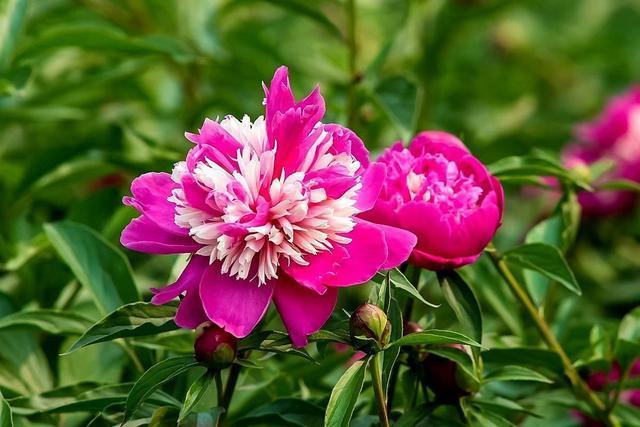
Peony (Paeonia lactiflora), also known as Jiangli or Licao, has a cultivation history of nearly five thousand years in our country, and is one of the earliest flowers cultivated in China. It is hailed by people as the "Flower Fairy" and the "Flower Prime Minister," and is listed among the "Six Great Famous Flowers." Its flowering period is in the fifth lunar month, and it is also respectfully called the Flower God of May. In ancient China, the flower that represented love was not the rose, but the peony, which was regarded as the flower of love.
Peonies are originally garden-grown flowers, but with the acceleration of urbanization, people's living environments have changed, and many people have tried growing potted peonies on balconies. Although it is not very common, there are still successful individual cases.
Pots for potted peonies. Peonies have well-developed root systems and are deep-rooted plants, so the pots used for potted peonies should not be too small; larger and deeper flower pots are better. This characteristic is the opposite of growing clivia, for which small pots are suitable for growing large flowers.
Soil for potted peonies. Peonies are suitable for planting in loose, well-drained sandy loam. Clay is not suitable for peony growth. Neutral or slightly acidic soil is preferable, and the soil should not be [unsuitable for planting].
The key to potted peonies blooming. For peonies to bloom, they must undergo vernalization. So-called vernalization means that a low-temperature stage is needed in winter. If the indoor temperature is too high in winter, peonies will not sprout flower buds. It is best to keep the room temperature at around 0 degrees.
Repotting potted peonies. Potted peonies need to have their potting soil replaced once a year. Peonies do not like repeated cropping, so the potting soil must be completely replaced, and at the same time, care should be taken to cut off old roots.
Fertilizer for potted peonies. For potted peonies, sufficient base fertilizer must be applied, and well-rotted chicken manure is best as the base fertilizer. Peonies do not like nitrogen fertilizer, so fertilizers rich in phosphorus and potassium are preferable.
Transplanting time for potted peonies. There is considerable controversy about this issue. There is an old saying: "Plant peonies at the Spring Equinox, and they will never bloom even when old." But some friends also use their own experience of transplanting peonies to show that spring transplanting can also allow them to bloom.
However, according to the growth characteristics of peonies, Baihua Zatan believes that autumn transplanting is more suitable. This is because the injured fleshy roots can gradually heal and grow new roots, which is beneficial for continued growth in the following spring.