5 kinds of flowers that can be propagated from a single leaf to fill a whole pot, no need to buy them even if they are cheap
ZZ plant (Zamioculcas zamiifolia)
Propagation steps
1. Pick a robust leaf from the ZZ plant, making sure to keep the petiole, then disinfect it with carbendazim;
2. Prepare loose, fertile nutrient soil with good drainage and aeration in a flowerpot, and insert the leaf diagonally into the soil;
3. Place the flowerpot in a cool, ventilated spot indoors for care; roots will generally form after 1~3 months;
4. Once the leaf sends out new shoots, repot it, and you can add a little nitrogen fertilizer or compound fertilizer to the soil;
5. After it survives, just care for it normally. When watering, make sure the soil has dried out completely before watering again, better dry than wet; when the temperature rises, mist the leaves every day
Snake plant (Sansevieria)
Propagation steps
1. Choose a robust, wide, thick section of snake plant leaf, cut about 5~7cm, soak it in potassium permanganate solution to disinfect, then place it in a cool spot to dry for a day;
2. Insert the leaf diagonally or straight into loose soil mixed with sand and gravel, with a insertion depth of 3~4cm, then water thoroughly once;
3. Place the flowerpot in a spot with bright, indirect light and good ventilation, keep the soil slightly moist, do not overwater; roots will form in about a month;
4. After new shoots grow, repot and transplant, place in bright, indirect light for a week, then water a small amount along the edge of the pot. Never let water accumulate in the pot, as this causes root rot. After successful repotting, just care for it normally.
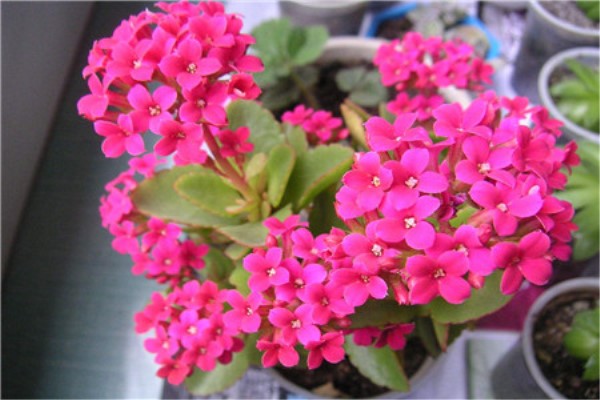
Kalanchoe (Kalanchoe blossfeldiana)
Propagation steps
1. Cut a robust green leaf from the tip of a kalanchoe stem, keep four leaves, and let it dry in a cool, ventilated spot;
2. Mix nutrient soil : coco coir : perlite in a 5:3:2 ratio;
3. Insert the leaf into the flowerpot, water thoroughly once, then place it in a spot with bright, indirect light indoors for care;
4. After sprouting, be careful to control water; too much moisture easily causes stem rot.
Epiphyllum (Epiphyllum oxypetalum)
Propagation steps
1. Cut a leaf that is more than two years old, 10~15cm long, and let it dry in a cool spot. Note that a larger wound area makes rooting easier;
2. Insert the leaf shallowly or diagonally into garden soil mixed with sand, with a depth of generally 1~2cm, as shown in the picture below:
3. After successful propagation, spray a little water every 3~4 days; no need to water frequently, keep the soil half-dry; roots will form in about a month;
3. After rooting, it can be repotted 2~3 weeks later. Be careful to repot it together with the soil around the leaf. Water again after 2 days, then just care for it normally.
Sedum succulents
Propagation steps
1. Choose Sedum succulents with a higher success rate, such as Black Prince (Echeveria 'Black Prince'), Huangli (Sedum adolphi), and White Peony (Graptoveria 'Titubans');
Gently wiggle off a robust leaf, making sure to keep the growth point near the base of the leaf, then let it dry in bright, indirect light
2. Prepare a flowerpot with a shallow bottom and wide rim, and mix soil in a ratio of peat : vermiculite : rice husk ash : perlite = 1:2:1:1, keeping it slightly moist;
3. Place the leaf flat on the soil or insert it diagonally into the soil, not too deep, just enough to hold it steady, then place it in bright, indirect light;
4. Roots generally form in about 10~15 days. Note that before rooting and sprouting, do not water; you can mist the air to keep it humid; after rooting, water a small amount every week, and repot after growth is stable.
The several kinds of flowers above,
can survive with just one leaf,
Gardening friends, if you are interested, hurry up and give it a try,
Remember to leave a comment and share your results~