Detailed Explanation of Bare-Root Transplanting Techniques for Large Oil Peony Seedlings
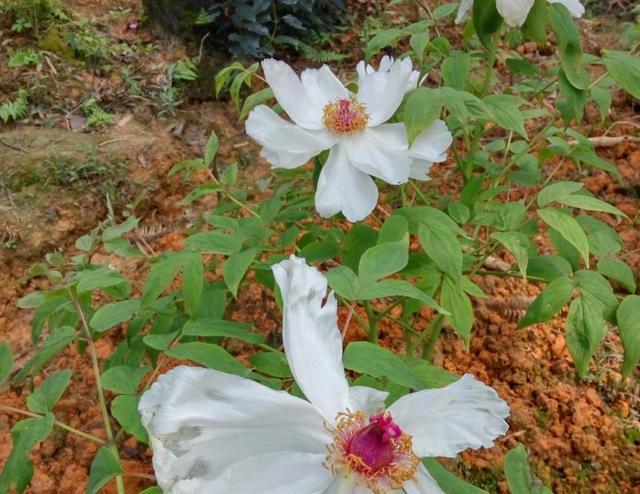
Bare-Root Transplanting Techniques for Large Oil Peony Seedlings
As the state places increasing importance on the development of the woody oilseed industry, oilpeony has sparked a planting boom across the country. In recent yearsafforestation practices have shown that afforestation with 2-3 year old oil peony seedlingshas a high survival rate, while choosing seedlings of a relatively older seedling age for afforestation often resultsin a very low afforestation survival rate. However, in the introduction and landscaping projects of oil peony,the transplanting technique for perennial large seedlings is often needed. To solve thistechnical problem, the Xiangyang Forestry Science Research Institute began in 2015conducting experiments and attempts at bare-root transplanting of 9-year-old and 12-year-old large peony seedlings,achieving very good results. Through sampling surveys, the transplantingsurvival rate reached over 95%. The bare-root transplanting and management techniques for large oil peony seedlings are summarized below,in order to provide technical guidance for the vast number of oil peonyproducers.
1 Preliminary Preparation
1.1 Site Selection
Peony is a sun-loving deciduous small shrub with well-developed fleshy roots. The transplantingsite should preferably be a sunny loam or sandy loam with deep, fertile soil and good drainage.Clay soil and low-lying waterlogged areas should be avoided.
1.2 Land Preparation
The selected plot should be cleared of debris, machine-plowed, and then exposed to the sun. Onemonth before planting, the soil should be deep-plowed to a depth of 50 cm. Plowing can be combined withthe application of base fertilizer and insecticide at the same time, in preparation for autumn transplanting.
1.3 Digging Planting Holes
For large seedling transplanting, at 2,475 plants/hm2, with a row spacing of 1 m x 4 m,planting holes of 60 cm x 60 cm x 50 cm should be dug. When digging the holes,the topsoil and subsoil should be piled separately. The bottom of the hole should be flat, not pot-bottom shaped,so that the seedling roots can fully contact the soil, which helps the plant survive.
2 Seedling Transplanting
2.1 Planting Time
Autumn is the best period for planting peony. There is a saying that "plant peony at the Spring Equinox,and it will never bloom till old age." The best period for planting peony isafter the Start of Autumn, with mid-September to late October being suitable. Planting at this timeis beneficial for the regeneration of the peony root system, improving the transplanting survival rate and safeoverwintering. If planted too early, the temperature is relatively high, affecting survival; if planted toolate, the temperature is relatively low, affecting root healing and the sprouting of new roots. Oil peony seedling contact WeChat; 18374545223
2.2 Seedling Selection and Lifting and Transport
Select strong seedlings that grow well and are free of pests and diseases. Seedlings should be lifted and transportedas they are lifted, transported, and planted, avoiding excessively long storage and transport time. If encounteringhigh-temperature weather in autumn, it is best to lift seedlings in small batches and transport and plant them promptly.
To improve the seedling survival rate, try not to damage the rootsystem when lifting seedlings, and preserve the integrity of the root system.
After the seedlings are lifted, they should be bundled for easy carrying. During carrying,they should be handled gently to prevent damage to or detachment of the peony buds.
2.3 Pre-Transplanting Treatment of Seedlings
2.3.1 Root Trimming
Before planting bare-root peony seedlings, the seedling rootscan be appropriately trimmed according to different situations, mainly to remove aged roots and injured roots, and toshorten some overly long main roots. However, as much as possible, moreroots should still be retained to ensure sufficient nutrient supply during the peony callus formation process.
2.3.2 Air-Drying of Seedlings
When transplanting peony in autumn, if encountering high-temperature and dry weather, they can be lifted, transported,and planted immediately; if encountering rainy and humid autumn weather, spread the seedlingsin a well-ventilated environment to air-dry for 2-3 d. Planting after they have slightly lost watercan improve the survival rate of seedling transplanting.
2.3.3 Disinfection
Seedlings need to be disinfected before planting. For disinfection, 70%thiophanate-methyl and methamidophos can be mixed and sprayed on the peony branches and roots.In winter, 3-5 degrees Baume lime-sulfur mixture can be usedto coat the branches and trunk, in order to kill overwintering pests.
2.4 Planting Method
Before planting peony, the planting hole should be backfilled with soft topsoil to a depth of about1/3 of the hole depth, to ensure that the seedling roots fully contact the soil,which is beneficial for new root growth and improves the transplanting survival rate. At the same time, at 50-100 gper hole, apply compound fertilizer and mix it thoroughly and evenly ⟧67⟧with the soil.Uniform.
When planting, place the peony seedling into the hole so that the root system is naturally distributed andspread out. First fill with topsoil, then fill with subsoil. When the soil is filled to half the hole, gently liftthe seedling and shake it left and right, so that the soil fully fills the center of the seedling roots. After the soil is filled,it must be tamped firmly. The planting depth should be such that the root crown is level with orslightly lower than the soil surface.
2.5 Watering
After planting peony, promptly water once thoroughly with enough water to settle the roots, then seal the planting hole.When the soil begins to dry, loosen the soil to conserve moisture.
After sealing the hole, there is no need to water repeatedly, so as not to lower the ground temperature, which is notconducive to the peony regenerating new roots. At the same time, excessive soil moisture can easily cause the peonyroots to rot and die. In dry seasons, watering should be done to keep the soil moist,and after rain, accumulated water should be drained promptly.
3 Post-Planting Management
3.1 Pruning
After planting peony, pruning should be carried out promptly to concentrate nutrients and promoteroot growth and abundant flowering. Pruning mainly involves cutting off old, weak, withered branches,pest- and disease-infected branches, and overly dense branches, while retaining thick and strong branches with flower buds. The prunedbranches should be burned in a centralized manner or buried deeply.
3.2 Flowering Period Management
After autumn planting of peony, in the second year's flowering period, flower buds should be removed to promotethe growth of the plant's root system and ensure the survival rate of the peony plant.
3.3 Fertilization
After sufficient base fertilizer is applied in the year of peony planting, no additional fertilization is needed. In the second yearafter planting, fertilization is needed 3 times per year. The first pre-flowering fertilization is carried out in earlyMarch, to supplement the deficiency of nutrients originally stored in the root system and branches,which is beneficial for flowering that year. The second post-flowering fertilization is applied about15 d after flowering, to meet the needs of vigorous branch growth, fruit growth and expansion,and the beginning of flower bud differentiation, laying the foundation for flowering the following year. Thethird fertilization is carried out after the Start of Autumn, to benefit the nutrients required for peony flower bud growthand overwintering protection. Fertilizer can be applied at 0.225-0.300 kg/m2using fully decomposed cake fertilizer, or at 50-100 g/plant using compoundfertilizer.
3.4 Loosening Soil and Weeding
After peony flowering, carry out one intertillage and weeding, with a depth of about 15 cm,to enhance drought resistance. In summer, with high temperatures and frequent rain, soil moisture is high,the soil surface easily crusts, and weeds easily grow in clusters, so weeds should be removed promptly at this time.
In summary, bare-root transplanting of large oil peony seedlings should grasp fivelinks: first, selecting a good afforestation site as well as high-standard land preparation and large-holeplanting; second, selecting strong seedlings free of pests and diseases; third, during seedling lifting andtransport, protecting as much as possible the integrity of the peony root system and buds,and ensuring effective connection among lifting, transport, and planting; fourth, selecting a suitableplanting time; fifth, strengthening field management after planting. Doing the abovepoints well can effectively improve the survival rate of large peony seedling transplanting and afforestation, and makethe plants grow well.