Sharing soilless vegetable cultivation techniques: simple methods that are easy to get started with
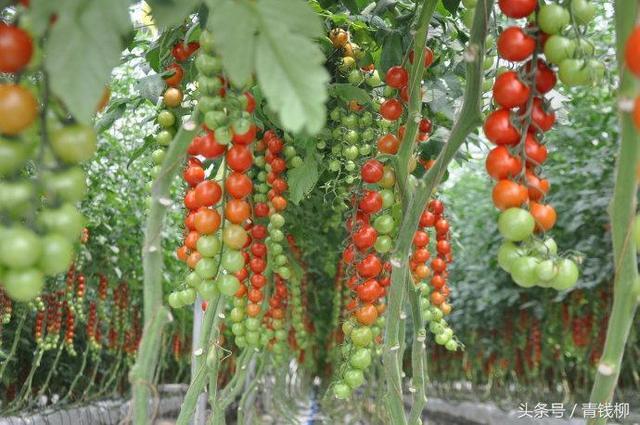
A simple soilless vegetable cultivation technique
Soilless cultivation refers to a cultivation method that uses nutrient solution irrigation instead of natural soil. In vegetable production, it has advantages such as high yield, good quality, early maturity, mild disease, no pollution, water savings, and labor savings, and it is conducive to achieving agricultural modernization. According to trials, the cost of the nutrient solution used to produce 1 kg of vegetables is only a few cents, and the method is simple with great benefits. According to how crop roots are fixed, it can be broadly divided into two major categories: substrate-free (also called medium-free) cultivation and substrate cultivation. Substrate cultivation fixes crop roots in an organic or inorganic substrate and supplies the nutrient solution to the crops through drip irrigation or trickle irrigation. The cultivation substrate can be put into plastic bags or spread in cultivation trenches or troughs. The nutrient solution in substrate cultivation is not recirculated, which can also prevent diseases from spreading through nutrient solution circulation. Substrate cultivation has strong buffering capacity, avoids the contradiction among water, nutrients, and O2 supply, and the equipment is simpler than that of substrate-free cultivation; it may even not require power, so investment is low and cost is low, and it is commonly used in production. An excellent substrate needs to meet the following requirements: it can fix and support the crops; it has water-holding, air-permeable, and buffering properties; it can provide nutrients. In many European countries, the substrate currently used more widely is rockwool. However, inorganic substrates like this need to be thoroughly disinfected before each use, and after several years of use they can no longer be reused, while recycling them is also relatively difficult. In the Netherlands, where the area using rockwool cultivation is the largest, it has already become a public hazard. Therefore, more and more people advocate developing and using organic substrates, which after use can be turned into the soil as fertilizer without polluting the environment.
A simple soilless cultivation technique is introduced below.
1. Fermented straw cultivation substrate
Preliminary preparation work: Select crop straw (wheat, corn, etc.). The amount of straw should be greater than 2 times the volume of the cultivation trough. Chop the straw to a length of less than 4 cm, then soak it in water for later use; use 4 cubic meters of cow dung, and one week before composting the straw, mix it with straw decomposition bacteria so that the straw decomposition bacteria multiply in the cow dung; the amount of urea used is about 0.5% of the straw amount.
Composting the straw: (1) The straw pile has a bottom width of 2 m, and the length is unlimited. For every 20 cm of straw laid down, sprinkle a layer of cow dung mixed with straw decomposition bacteria and an appropriate amount of urea. If the water used to soak the straw is insufficient, spray an appropriate amount of water again, to the degree that when the straw is gripped tightly by hand, water is squeezed out between the fingers. In this way, pile the straw continuously to a height of 1.8-2.0 m, and the pile is completed. (2) Cover with plastic film to reduce water evaporation in the pile. After 2-3 days, the temperature in the pile can reach above 70°C. (3) Turn the pile after about 15 days, turning the straw at the edges into the middle of the pile so that the straw and cow dung are further mixed evenly. If the straw is dry, replenish an appropriate amount of water. (4) After turning the pile, compost for another 15 days or so. When the straw is semi-decomposed, no longer tough, and breaks when gripped, and the C/N ratio is between 30-40, it can be used as a substrate for soilless cultivation.
2. Cultivation management techniques
(1) Set up cultivation troughs: The cultivation troughs use the method of digging trenches in the ground and lining them with plastic film. Design the trench width according to the row and plant spacing of the crop to be cultivated, with a depth of about 25 cm. The trench bottom should be flat to avoid local water accumulation; in the cultivation trough, lay 0.1 mm plastic film; fill the plastic film with fermented straw as the substrate, tread it firm with the feet; and transplant.
(2) Install drip irrigation equipment: Drip irrigation facilities are very important for soilless cultivation and are essential equipment for supplying inorganic nutrients and water. The main drip irrigation equipment includes power equipment, fertilizer tanks, filters, water meters, branch pipes, and capillary pipes. Power equipment includes water towers, centralized water supply variable-frequency submersible pumps, etc.; the fertilizer tank is specially designed to reduce water pressure loss and solve the problem of fertilizer clogging the filter; the branch pipe can use polyethylene pipe with a diameter of 32-40 mm; the dripper spacing of the capillary pipe is preferably 20 cm. For the laying of drip irrigation pipes, the branch pipe should be parallel to the back wall of the greenhouse and preferably disconnected in the middle, connected to the fertilizer tank with a tee so that the water flow splits from the middle to both ends, making the pressure of the entire drip irrigation system relatively uniform; lay one capillary pipe per row, keeping the capillary pipe as much as possible in the middle of the cultivation trough, with the dripper facing upward, which can reduce drip irrigation clogging.
(3) Management of the nutrient solution: Add the macro-, secondary, and micro-element fertilizer nutrient solutions in groups directly into the substrate separately, that is, separate the fertilizers that can form chemical precipitates. First add one group of fertilizers into the fertilizer tank, and during drip irrigation, dissolve the fertilizers and drip them into the substrate. After they are fully dissolved, stop drip irrigation, add another group of fertilizers, and continue until drip irrigation ends. In the early stage after transplanting, the vegetable root system is very small. A bucket can be used to dissolve a certain amount of nitrogen, phosphorus, and potassium fertilizers at a concentration of about 1 g/L, and manually water it around the seedlings once a day for about 10 consecutive days; after the root systems are basically connected, normally use drip irrigation to supply the nutrient solution. In the early stage, 0.5 cubic meters of water and fertilizer can be drip-irrigated per day, once in the morning and once in the afternoon, adding one group of fertilizers each time; in autumn and winter, according to seedling conditions and weather, the daily irrigation amount is generally controlled at about 1 cubic meter. In spring, the temperature is high, light is sufficient, and crop growth is large, so the daily drip irrigation water and fertilizer amount is 1.5-2 cubic meters. Drip-irrigate on sunny mornings, and do not irrigate on cloudy days; the amount of irrigation can be determined by observing the accumulation of nutrient solution in the cultivation trough. Alternatively, do not use a fertilizer tank; use special solid fertilizer for soilless cultivation, and then use drip equipment to spray clear water. In this way, the drip irrigation equipment can be simplified, and there is no need to worry about nutrient solution precipitation.
3. Technical advantages
(1) Digging trenches in the ground can make the temperature of the cultivation substrate relatively stable. Compared with above-ground or semi-above-ground permanent brick-and-concrete cultivation troughs, the day-night temperature difference of the substrate is much smaller, avoiding damage to the root system caused by excessively low substrate temperature at night in winter; it can also reduce the investment cost of cultivation trough equipment.
(2) Crop straw is rich in resources in China and low in price; during use, the straw substrate is decomposed by microorganisms to produce CO2, playing the role of CO2 gas fertilizer. According to measurements, in greenhouses using straw substrate soilless cultivation, the CO2 concentration in the morning exceeds 2000 mg/kg; the straw substrate can regulate the physiological acidity and alkalinity of the nutrient solution. According to measurements, the substrate pH value remains stable at about 7; at the same time, during decomposition, small-molecule organic substances such as sugars and amino acids are produced and can be absorbed by vegetable roots, improving vegetable quality; after use, the straw substrate can be applied to farmland as organic fertilizer and does not cause environmental pollution.
(3) Management is convenient, reducing the traditional operations of preparing nutrient solution and the facilities of nutrient solution tanks; it saves water and fertilizer, has high yield, and increases vegetable farmers' income.