How to grow moringa seedlings, transplant them, and cultivate them in northern regions?
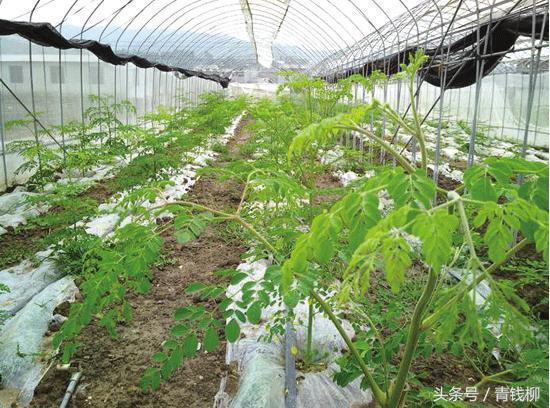
Moringa seedling raising, transplanting and cultivation techniques in northern regions
Moringa, also known as the "drumstick tree", is known abroad as the "miracle tree", "mother's best friend" and "medicine chest". It was recorded as being eaten or used several hundred years ago. It is rich and comprehensive in nutrition and is the best source of plant protein, vitamins, folic acid, pantothenic acid, calcium, iron, selenium and many other nutrients discovered so far. It has unique economic value and health benefits and is a new type of special economic crop.
Moringa belongs to the Moringaceae family, order Moringales. It originated in India and Africa and is a perennial tropical and subtropical multipurpose plant. There are about 13 varieties worldwide, and the following three are the most commonly eaten at present: Indian improved moringa, traditional Indian moringa and African moringa.
In 2015, the Cotton Research Institute of the Hebei Academy of Agriculture and Forestry Sciences introduced 5 new moringa varieties, including African imported, traditional Indian and Indian improved, and began a series of cultivation trials to explore the feasibility of cultivating moringa in Hebei. Through one year of introduction and cultivation trials, the techniques for raising moringa seedlings, transplanting and cultivation in Shijiazhuang, Hebei were summarized.
1 Seed selection
Before sowing, the seeds should be carefully selected, choosing plump, insect-free, mold-free and uniformly sized seeds for sowing. In addition, the seeds should be classified by weight and size, generally into large, medium and small categories, for separate seedling raising and transplanting, and then planted in groups according to seedling size to facilitate field management.
2 Preparation before sowing
Before sowing, pour the selected seeds into the prepared agent and soak for 24 h, ready for sowing. Fungicides such as carbendazim and chlorothalonil can be used as the agent.
3 Seedbed preparation
For seedling raising in a greenhouse, rotary till the land and level it well, making it loose and free of clods. Spray 50% carbendazim solution on the surface for soil disinfection.
4 Sowing and seedling management
Greenhouse seedling raising is generally done in mid-to-late April. Choose a special full-nutrient seedling substrate with good permeability, which helps raise the temperature. Then evenly spray the substrate with 50% carbendazim 500-fold solution for disinfection. Add water and stir evenly, with appropriate moisture, so that it forms a ball when squeezed in the hand and breaks apart when dropped. Put the substrate into 12 cm x 12 cm nutrition bags. Sow one seed in each bag, press the seed into it, with a sowing depth of 1-1.5 cm. Then arrange the sown nutrition bags on the seedbed, with the bags pressed close to each other. After arranging, irrigate the seedbed so that the substrate absorbs water completely.
After sowing, spray water on the substrate surface with a sprayer every 3-5 d, but it must not be too wet, to prevent root rot. The suitable temperature for moringa seed germination is 20 °C-25 °C. The germination period is concentrated 8-16 d after sowing, and viability is lost after more than 20 d. After emergence, keep the nighttime temperature at 15 °C-20 °C and keep the soil moist.
5 Transplanting and planting
In mid-May, when the seedlings are 10-15 cm tall, they can be transplanted to the field. Before transplanting, apply sufficient base fertilizer, mainly organic fertilizers such as manure, and apply 20 kg per mu of N, P, K (15-15-15) fertilizer. Plant spacing is 80-90 cm and row spacing is 100-120 cm. When taking the seedlings out of the nutrition bags during transplanting, protect the soil ball to prevent root damage. After transplanting, water promptly to settle the roots. After 2 weeks, water once more to help the seedlings recover. After the surface cracks and dries, carry out intertillage and earthing up to prevent lodging. Afterward, irrigate in a timely manner according to soil moisture, but water must not accumulate. Because the moringa root system is fleshy, excessive irrigation can easily cause root and stem base rot.
6 Tree management and harvesting
The suitable growth temperature for moringa is 25 °C-35 °C. As long as the temperature is suitable, it grows rapidly, with obvious apical dominance and is not prone to growing side branches. In order to increase the harvest of fresh leaves, when the tree height reaches 50-100 cm, the trunk can be headed and the top removed. When the side branches grow to 20-30 cm, the tender shoots and tender leaves at the top can be harvested. It can be harvested once every 15-20 d. When the harvest volume is large, apply fertilizer promptly after harvesting. Apply organic fertilizer in furrows or holes, supplement chemical fertilizer appropriately, and also spray foliar fertilizer appropriately. With the rapid growth of the tree body and canopy, pay attention to timely earthing up. When the temperature is high, water appropriately, and remember not to let water accumulate.
7 Control of main pests and diseases
Moringa has extremely strong resistance to pests and diseases. In the Shijiazhuang area, the main diseases found are leaf fall disease and root rot. The control method is mainly to prevent water accumulation or excessive watering at the seedling stage. In severe cases, thiophanate-methyl or dinocap can be used for control. The main pests are cutworms and red spider mites. In the early stage after transplanting to the field, cutworms bite off the tender stems, and poisoned bait can be mixed and scattered for control. For red spider mites, spray 20% pyridaben wettable powder 2,000-3,000-fold solution for control. Pyridaben is a broad-spectrum acaricide commonly used on vegetables and fruit trees to control red spider mites and other mites.
8 Overwintering of moringa
In Hebei, moringa can be cultivated in the open field from May to September, with June to August being the vigorous growth period, but it cannot overwinter in the open field. Method one: in early November, dig out the roots and move them into a greenhouse or store them temporarily in a greenhouse. Keep the temperature at 10 °C-20 °C and soil moisture at about 35%, not too wet, to prevent root rot. When planted in a greenhouse, it can grow normally all year round. Method two: dig a ditch in a sunny place in the field, about 1.2 m deep, with the width determined by the number of moringa roots to be stored. Cover with 20 cm of sand or loam to ensure air permeability, then cover with plant straw, and finally cover the top with plastic film. Plant in early May the following year.