How do the number of filled grains, grain weight per panicle, and number of effective panicles affect rice yield
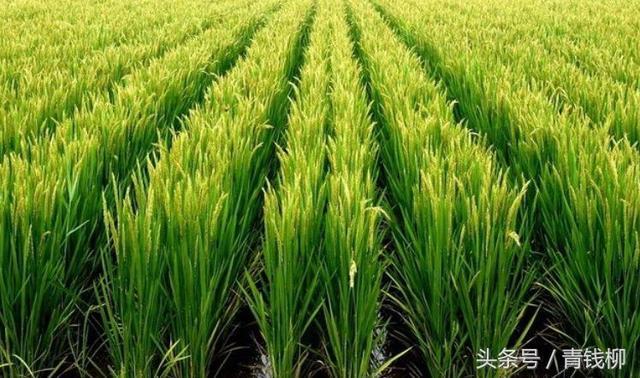
Key technologies affecting rice yield: number of filled grains, grain weight per panicle, and number of effective panicles
1 Key cultivation techniques for rice planting
1.1 Preparatory work for rice planting
1.1.1 Selecting rice varieties
First, excellent rice varieties need to be selected, because ordinary varieties cannot compare with superior ones in characteristics and grain quality. When selecting varieties, choose high-quality varieties with strong tillering, lodging resistance, pest and disease resistance, a high panicle-forming rate, a high seed-setting rate, and large panicles. At the same time, the actual conditions of the planting area should be taken into account, including economic, production, ecological, and cultivation conditions, so that varieties are selected according to local conditions. One should not simply look at the data indicators of a variety, but should determine the final rice variety based on the principles of suitability for planting and high quality. For example, among the rice varieties planted in the Jilin area, there are high-quality rices such as Jijing 83, Jijing 81, Jijing 88, and Changbai 25. Among them, Jijing 83 and Jijing 88 have already been recognized as super rice varieties, but when selecting rice varieties, they should be chosen as appropriate to local conditions.
1.1.2 Seedbed preparation
Before raising seedlings, the seedbed needs to be treated. A thick soil layer facing the sun, flat, and sheltered from the wind is preferable. Level the land or good farmland, remove debris and stones, and break the soil up as finely as possible. Make beds about 1.5 m wide, with a ditch beside the bed about 30 cm deep, and a bed height of about 15 cm. Apply farmyard manure to the seedbed. For 667 m2 of seedbed, the amount of farmyard manure is about 1 500 kg. It is best to appropriately reduce or increase the amount of fertilizer according to local soil fertility. Calcium fertilizer, potassium fertilizer, and others need to be composted before use; after fertilizing, treat the seedbed so that it is level and fertile.
1.1.3 Rice seed treatment
After the rice variety is selected, it can only be used after certain treatments. The treatment process mainly includes: first, sunning the seeds, placing the seeds in sunlight for 2 d, in order to kill bacteria on the seed coat, stimulate new activity in the seeds, and help the seeds germinate after sowing; second, soaking them for 12 h in a 3% concentration fungicide solution and then rinsing with clean water; third, soaking the seeds in clean water, washing them 3-4 times/d, and taking the seeds out after 3 d; fourth, soaking them in hot water at 55 degC; fifth, bagging the seeds, preferably using wet burlap sacks, and placing them at a constant temperature of 32 degC. Usually, sprouts can emerge in 24 h. After the rice sprouts, control the temperature at about 20 degC, then harden the sprouts before sowing.
1.1.4 Preparing the paddy field
The paddy field must be prepared before seedlings can be planted. Usually, after the rice harvest, the field is plowed, turning the rice residue into the soil, and then waiting for the next crop before harrowing again. This harrowing is mainly fine tillage and leveling the field surface to ensure that the water depth is uniform across the entire paddy field when irrigating. In this process, 40 kg of formula fertilizer such as phosphorus fertilizer, potassium fertilizer, and nitrogen fertilizer, and about 8 kg of urea, can be used per 667 m2.
1.2 Sowing and transplanting work
After rice sowing, the seedbed needs to be managed again, weeds removed, and fertilizer and water management done well, always keeping the seedbed moist. When the rice grows to 2 leaves, water and humidity need to be controlled, mainly to prevent disease; at this stage, fertilizer should also be appropriately supplemented to strengthen the seedlings, and attention should be paid to pests and diseases. Once pests and diseases are found, they should be controlled promptly to prevent the affected area from expanding and being brought into the paddy field, which would affect the normal growth of rice.
If dryland seedling raising is used, the seedling root system is very developed and transplanting can be done earlier. If paddy field seedling raising is used, the transplanting time can be appropriately delayed. When transplanting, medium and small seedlings are mainly used, with a seedling age of about 1 month. When the seedlings grow to five or six leaves, it is the best time for transplanting. It is best not to transplant large seedlings, because the root system of large seedlings is too developed and transplanting will affect the integrity of the root system. Attention should be paid to transplanting density; the spacing must not be too large. A normally reasonable density is one that ensures rice can carry out photosynthesis and use soil fertility, allowing individual seedlings to develop and grow normally. The best is a row spacing greater than 20 cm, a hill spacing of 9 cm, and 2 seedlings per clump. Attention should also be paid to the quality of transplanting. To promote early tillering in rice, shallow planting should be used. The main effect is that sunlight can reach the surface soil layer, and oxygen and temperature are sufficient, which can help the growth and development of the rice root system and strive for early tillering and panicle formation. In actual transplanting, there are throwing seedling methods, compartment strip planting, double-row strip planting, and others, but at present, mechanical transplanting is used more, with strip planting being the most common, and seedling growth is better.
1.3 Field management
1.3.1 Additional fertilization
If seedlings are to grow and develop quickly, sufficient nutrients are needed; at the same time, attention should be paid to scientific and reasonable fertilization, applying fertilizer according to the different growth stages of rice and the characteristics of the fertilizer. Usually, 10 d after transplanting, seedling-promoting fertilizer begins to be used, at about 30% of the total amount. Fertilization at this time promotes rice tillering. Fertilization at the booting stage is mainly to ensure the seed-setting rate of rice, accumulate dry matter in rice, and achieve the effect of full grains. Usually, 20 kg of superphosphate, 1.5 kg of zinc sulfate, and 15 kg of urea are used per 667 m2 of field, and ordinary fertilization methods are sufficient.
1.3.2 Irrigation
During the rice greening stage, deep-water irrigation should be carried out to help greening. From the booting stage to the full heading stage, shallow-water irrigation should always be maintained, keeping the soil and water moist. During the tillering stage, shallow water is also needed to promote tillering. After tillering, the field should be sun-dried to control tillering, so as to enhance permeability, reduce ineffective tillering, and ensure healthy growth of rice. During the yellow-ripe stage, the field needs to be drained and sun-dried, which helps rice mature; at harvest, it is best for the field to be in a waterless state, so as not to affect the quality of the rice.
1.3.3 Pest and disease control
As a crop prone to pests and diseases, pest and disease control is mainly based on prevention, with treatment as a supplement. Combined with the actual occurrence of pests and diseases, physical, agricultural, and chemical pesticide control should be carried out.