Cultivation Techniques for Aquilegia vulgaris: Propagation Methods and Key Points for Pest and Disease Control
Cultivation Techniques for Propagation and Pest and Disease Control of Aquilegia vulgaris
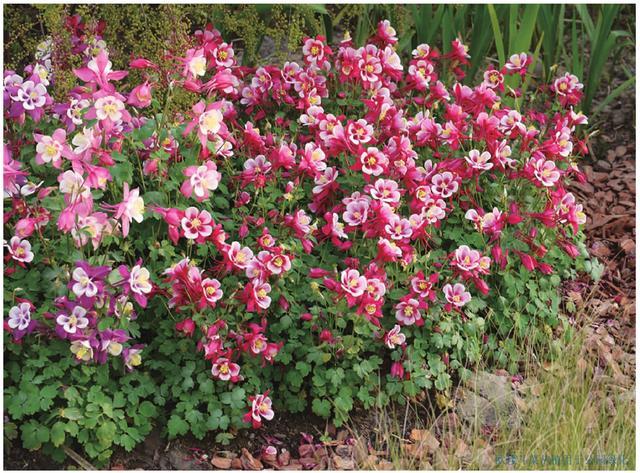
Aquilegia vulgaris (columbine) is a perennial herb in the genus Aquilegia, family Ranunculaceae. Plant height 30-60 cm. Basal leaves have long petioles; basal leaves and lower stem leaves are bipinnately trifoliolate compound leaves, with leaflets in 2-3 lobes, and the lobe margins have rounded teeth. The uppermost stem leaves are nearly sessile and narrowly 3-lobed. The inflorescence is a cyme with several flowers; the flowers are large, usually blue, but also white, red, pink, etc., and nodding. There are 5 sepals and 5 petals, with the spur curving inward into a hook shape. The fruit is a follicle, and the seeds are black. The flowering period is May to July.
Native to Europe, it has been widely introduced and cultivated in China. It has strong resistance and good adaptability, prefers a cool, humid environment with ample sunlight, and has excellent cold tolerance, but it is not tolerant of high temperatures or strong light. The optimal growing temperature is 15-20°C. It prefers loose, fertile, well-drained sandy loam. This species has numerous cultivars and is currently widely used in gardens around the world, often in flower borders, flower beds, or as potted plants. There are single-flowered cultivars, and many double-flowered cultivars have also been bred. It is an excellent ornamental herbaceous plant.
Sowing Time and Substrate Selection
The seeds currently sold on the market are all F1 hybrid seeds with a high germination rate. Sowing is generally carried out in spring and autumn, but the plants usually require low-temperature vernalization to flower, so most spring-sown seedlings do not flower and set seed until the following spring. The substrate should be loose, breathable, and well-drained soil; fine-grained peat, turf soil, or leaf mold can be selected. For large quantities, seedling trays can be used, and for small quantities, flower pots can also be used for sowing.
① Close-up of Aquilegia vulgaris flowers
② Close-up of Aquilegia vulgaris flowers
③ Flowering Aquilegia vulgaris plant
④ Leaves of Aquilegia vulgaris
Sowing and Seedling Raising
Because the seeds are very small, broadcast sowing is mostly used, and the soil cover should not be too thick; just covering the seeds is enough. For watering, use the soaking method or a fine watering can; do not spray with a strong stream, to prevent the seeds from being washed away. After sowing, place in a semi-shaded area for care. Seedlings generally emerge in half a month. After emergence, control moisture to prevent leggy growth, and pay attention to removing weak seedlings in time. After emergence, gradually increase light to help cultivate strong seedlings. When the seedlings have 2-3 true leaves, transplant them, and pay attention to controlling water. Transplanting can promote root growth and enhance stress resistance.
Planting Out
When the seedlings are 5-8 cm tall, they can be planted out into flower borders, flower beds, and flower pots. When planted in the open ground, the spacing between plants and rows is 25-40 cm; in flower beds and pots, they can be planted somewhat more densely. When transplanting, carry as much of the soil ball as possible to help the seedlings recover; planting should cover the root crown, as too shallow or too deep planting is detrimental to plant growth. After transplanting, immediately water thoroughly once; do not spray with a strong stream, to prevent mud from splashing onto the leaves and causing disease.
Fertilization
Apply sufficient base fertilizer at planting. After the seedlings recover, apply a high-nitrogen fertilizer once every 10 days. After flower bud differentiation, switch to phosphorus and potassium fertilizers to promote flowering. Stop fertilizing after autumn begins. Generally, fertilize 3-5 times per year, and the fertilizer concentration should preferably be a 1200-fold dilution; avoid concentrated fertilizer. Fertilization is generally carried out together with watering. If the soil is fertile, the number of fertilizer applications can be reduced.
Watering
This can be considered according to weather and temperature conditions. In most cases, after open-ground planting and establishment, no supplemental water is needed, but in dry weather, replenish water in time, and in rainy weather, drain promptly to prevent waterlogging and seedling death.
Light
This species prefers light, but strong summer light has a certain effect on growth; it grows better when planted under sparse woodland or at the forest edge. However, it grows poorly under high temperature and low light conditions.
Pest and Disease Control
There are relatively few pests and diseases; leaf spot, rust, and aphid damage are occasionally seen. During the growing season, 50% thiophanate 1000-fold solution or 50% carboxin 1000-fold solution can be used for prevention. For aphids, 40% dimethoate emulsifiable concentrate at 800-1000-fold can be used for control.
Container cultivation of Aquilegia vulgaris for landscaping
Applications
This species has many cultivars, with brilliant flowers, a wide range of flower colors, unique flower shapes, and graceful foliage. It is an excellent ornamental herbaceous plant. It can be used for flower border landscaping, and can also be planted at the forest edge, in patches under sparse woodland, or in groups in flower beds and as accents in rock gardens. It can also be potted for beautifying courtyards and rooms.