Succulent Plant Recommendations: 10 Great Varieties That Are Cheap and Easy to Grow
There are more and more succulent varieties on the market today, and their prices vary from high to low, but we absolutely should not rank them into grades based on their different prices. Succulents are lovely living things, and there is no distinction of noble or humble among them. What really matters is whether you, as their owner, care for them properly and attentively. Most of the succulents that are cheap now are cheap because they entered the domestic market early and are mass-propagated on a large scale; according to the principle of market supply and demand, when supply is large and demand grows only slightly, the price naturally drops.
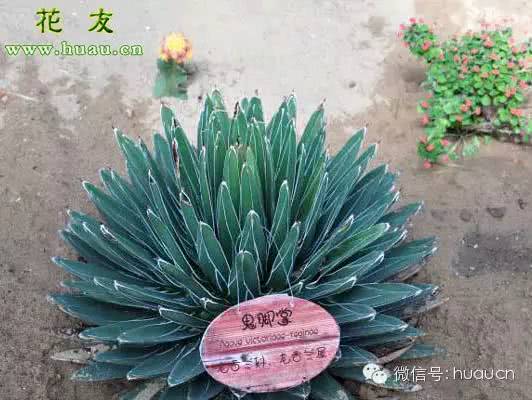
Top 10: Agave victoriae-reginae, also called Queen Victoria agave, family Agavaceae, genus Agave, summer-growing type.
Why we recommend it: Its shape is unique and charming, with short, thick, hard, triangular leaves that bear white line markings. The price is around 4 to 10 yuan. Mature plants may cost a bit more, but we can absolutely start from small offsets and raise them ourselves, which is even more interesting. It is drought-tolerant, heat-tolerant, relatively cold-tolerant and moderately shade-tolerant, so it is very easy to care for. Mature plants form a spherical shape and have a very masculine air, and their base can produce offsets, which we can use for division propagation.
Top 9: Espostoa lanata, family Cactaceae, genus Espostoa, summer-growing type.
Why we recommend it: A cactus-family variety that grows long white hair; the soft white hairs are actually the spines of Espostoa lanata, and at a glance it looks like a high-end, grand and classy variety. Although there are quite a few hairy varieties in the cactus family, it is rare to find one like Espostoa lanata priced at only 5 to 8 yuan. The plant is cylindrical and does not easily produce offsets, but it can be propagated by beheading. Espostoa lanata is also especially easy to care for. One thing to note is that it is best watered by drenching the roots; do not wet the white fuzz, otherwise it will leave water stains and spoil its appearance.
Succulent Plants: Watering Methods and Watering Times for Succulents
Top 8: Haworthia cooperi var. pilifera 'Jing no Hana', family Liliaceae, genus Haworthia, winter-growing type.
Why we recommend it: Among Haworthia, Jing no Hana is a variegated variety with a lower price and strong vitality and propagation ability. It costs about 5 to 10 yuan per plant, tends to form clusters easily, and new plants show considerable variation in their white markings. You can select small offsets with a higher proportion of white markings from the newly grown plants and cultivate them carefully; it is very fun, and some succulent enthusiasts have even selected Jing no Hana plants that are almost pure white, which is delightful and enviable. Because it is a winter-growing type, Jing no Hana is suitable for division propagation in autumn. So let us all select and breed our own Jing no Hana too!
Top 7: Pleiospilos nelii, family Aizoaceae, genus Pleiospilos, winter-growing type.
Why we recommend it: Pleiospilos nelii is a famous species in the Aizoaceae, priced at 5 to 8 yuan per head. We recommend buying seeds and sowing them yourself; seeds cost about 5 yuan for 20, and because the seeds are large and plump, it is an Aizoaceae variety with a relatively high germination rate, reaching over 90%, and the seedlings grow fairly quickly, with their first skin-shedding occurring quite early. Its germination temperature is 15 to 20 degrees Celsius. After germination, be careful to increase the light, otherwise the seedlings tend to grow leggy and fall over. It is more suitable for sowing in autumn, and the seedlings are better able to overwinter in a warm winter. Bringing them from seedlings to mature plants lets us learn a lot and gives us a real sense of achievement.
Top 6: Sedum dasyphyllum, family Crassulaceae, genus Sedum, winter-growing type.
Why we recommend it: Sedum dasyphyllum is very cheap, costing only 3 to 5 yuan. Its plant form is very small and cute, making it a mini succulent variety. It has strong vitality and is an ideal variety for filling a pot, lush and green and truly charming. Its propagation ability is especially strong; adventitious roots grow on the stems, and you can cut these off, let them dry, and then use them for cuttings propagation, preferably in autumn, because the cool season is its growing period. Also be careful to control watering; Sedum dasyphyllum is fairly drought-tolerant, and too much water easily makes it grow leggy, causing the leaves to loosen and spoiling the beauty of its form.
Top 5: Pachyveria 'Clavifolia', family Crassulaceae, genus Echeveria, summer-growing type.
Why we recommend it: Pachyveria 'Clavifolia' costs only 5 to 10 yuan, and the plant is holy and snow-white, covered with a white powder, with the leaf edges turning pink under strong light and a large temperature difference. Its appearance is absolutely no worse than Snow Lotus, Echeveria 'Hamtii' or Echeveria 'Fairy Cup', which often cost 50 or 100 yuan. It is easy to cultivate, easy to propagate from leaves, and very easy to care for, with vitality far stronger than high-priced varieties.
Top 4: Sedum rubrotinctum, family Crassulaceae, genus Sedum, winter-growing type.
Why we recommend it: Its appearance closely resembles the green turtle egg, but it costs only 2 to 5 yuan, and you can even buy a decent-sized plant for 1.5 yuan. It has leaves like a baby's fingers, showing a beautiful green during its propagation period from spring to summer. It begins to turn red in autumn and winter, and can become even redder in a sunny and dry environment. If there is not enough sunlight, the plant easily grows leggy. It is easy to propagate from leaves and readily roots from fallen leaves, making it simple to grow. In addition, Sedum rubrotinctum f. variegata is also a variety well worth recommending, with variegated markings in the leaves; it is slightly more expensive than Sedum rubrotinctum, but still very cheap.
Succulent Plants: 10 Little Secrets of Succulent Growing
Top 3: Fenestraria rhopalophylla, family Aizoaceae, genus Fenestraria, spring-autumn-growing type.
Why we recommend it: Although Fenestraria rhopalophylla is not at all easy to care for, the Flower King still strongly recommends it for the top 3, because it is simply too beautiful, with a peculiar leaf shape and large, lovely flowers, and it costs 5 to 10 yuan per plant. Its fleshy leaves grow vertically in a club shape, with protruding leaf tips that have transparent "windows" to better absorb sunlight. Fenestraria rhopalophylla needs a sunny environment, otherwise its form becomes sparse and its appearance suffers. The difficulty in growing it lies in getting through the summer; during the summer you should pay attention to cooling, shading and controlling water, but do not cut off water completely. You can appropriately "drip" some carbendazim solution once every half month, adjusting the amount yourself but keeping it as small as possible, in order to prevent the roots from drying out completely and dying.
Top 2: Schwantesia, family Aizoaceae, genus Schwantesia, winter-growing type.
Why we recommend it: The leaf windows of Schwantesia are especially transparent, and it costs 5 yuan per head. I remember that in 2012 the Flower King bought them at 2 yuan per head; the price has risen quite a bit since then, but it is still cheap. Although it looks delicate, it is far more vigorous than other Aizoaceae varieties such as Lithops, and it gets through summer relatively easily; you just need to shade it appropriately and drip a little carbendazim solution once every half month. A well-grown Schwantesia has especially clear and bright leaf windows, as if it were holding a bright green light bulb above its head. Schwantesia roughly comes in two varieties, green and brown, and after being grown for a long time it will also form clusters. So, with its low price, strong vitality and distinctive form, Schwantesia takes top 2!
Top 1: Echeveria 'Chihuahuaensis', also called Echeveria 'Chihuahua', family Crassulaceae, genus Echeveria, summer-growing type.
Why we recommend it: The plant is small, and the stemless rosette of leaves is very compact. The ovate leaves are fairly thick with small tips, blue-green and covered with a thick white powder, and the leaf edges are a beautiful deep pink. Echeveria 'Chihuahuaensis' is a Sedum-family variety with a very good appearance and extremely high ornamental value; it is in no way inferior to Echeveria derenbergii, Echeveria elegans or Echeveria 'Moonlight Lady', yet it costs only about 5 to 10 yuan. I believe that if Echeveria 'Chihuahuaensis' had poor propagation ability and very small numbers, its price would sell for a great deal.
·END·
An interactive platform for flower growers, flower planters and green plant enthusiasts to chat, show off and be a bit cheeky. An online home for sharing flower cultivation methods and home flower-growing tips. A fresh flower subscription platform.
Fresh flowers: hyacinth|stock|plum blossom|carnation|camellia|kalanchoe|jasmine|gardenia|peach blossom|balloon flower|osmanthus|calla lily|lily|forget-me-not|clivia|apricot blossom|honeysuckle|milan|peony|sunflower|chrysanthemum|serissa|crown of thorns|tulip|narcissus
Green plants: poinsettia|money tree|pothos|spider plant|alocasia|lucky bamboo|asparagus fern|aloe|ivy|anthurium|monstera|bougainvillea|silk tree|peace lily|schefflera|boxwood|sago palm|rubber plant|maidenhair fern|snake plant|
huau.cn
……
Search the public account "Flower Friends" or "huaucn" for the latest information
Business cooperation and promotion. Please contact WeChat private account:ihuaucn