In autumn and winter, succulents don't grow and don't show their colors either. Is drinking Mizone useless too?
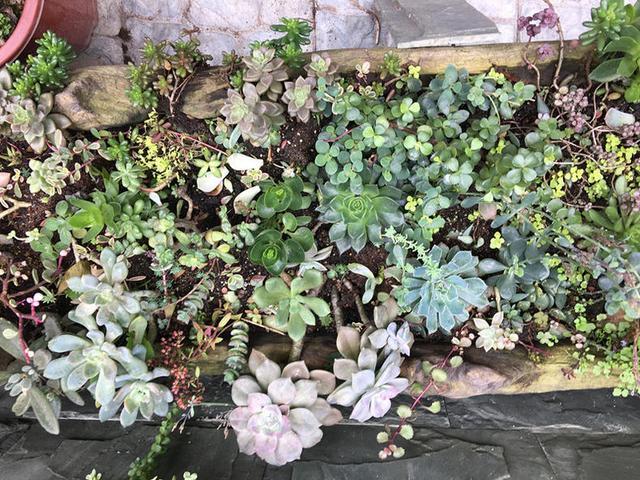
Succulent friend A: How come your succulents never show their colors and always stay so tiny?
Succulent friend B: Ugh! My succulents won't grow and won't show colors. I've tried everything, and even drinking Mizone is useless! I'm worried sick!
Through a familiar advertising routine, we arrive at today's topic: why don't succulents grow or show their colors in autumn? There is a kind of succulent called "other people's succulents." As soon as autumn arrives, they turn all sorts of colors and are full of life. Then you look at your own, all crooked and uniformly green, and it's hard not to feel a little disappointed. Understanding this isn't hard. From the inside out, just a few important points affect succulent growth. Analyze them one by one and everything will become clear! (Saving and sharing recommended)
- Variety:
Variety here should be viewed from two dimensions: one is the distinction between winter-growing types and summer-growing types (spring-autumn types can be ignored), and the other is the distinction between healthy succulents and drugged succulents. For the former, it is determined by the plant's physiological characteristics, but most succulents we can get are still winter-growing types that go dormant in summer and grow in autumn. The second point deserves a good discussion. We often hear succulent friends complain that no matter what they do, they just can't grow succulents well, while other succulent friends say their succulents grow perfectly fine even though they barely take care of them.
Through our long-term investigation and understanding, we can tell you this: ninety-nine percent of the succulents that die after being taken home and cared for for a while no matter what you do are not your fault. These succulents themselves are "drugged" succulents and are destined not to survive! (You can compare it to someone raised on antibiotics, whose resistance, no matter what, is not as high as that of someone who grew up naturally.)
I know this statement may upset some people again. We don't want to make enemies with anyone either, but everything should be based on facts. Recently, we took stock from Yunnan (ensuring the succulents themselves are healthy and problem-free) and conducted comparative experiments using a series of growth-promoting agents such as bud-boosting hormone, variegation medicine, and chlormequat (the difference between using them and not using them). Welcome to follow! Also, local greenhouse owners in Chengdu, Sichuan who honestly grow succulents are invited to contact us!
- Pests:
During this period, diseases decrease, but pests are still fairly rampant. Active in this season are mealybugs, red spider mites, and root mealybugs. I divide ways to deal with them into two methods: one is physical attack and one is chemical attack. So-called physical attack means stabbing them to death with a needle, pinching them to death with tweezers, or crushing them to death with your hands (although it feels disgusting, it is indeed the most eco-friendly method). Chemical attack means using pesticides. Basically Huahuashen is used. If the pests have already become "immune" to Huahuashen, then you need to consider some stronger pesticides (such as Jiebizhi, etc., but they must be diluted to the safest concentration).
Leaves that have already been gnawed by pests must be resolutely removed, and the wounds should be disinfected (mostly with carbendazim).
Note: If you have been infested by root mealybugs, I advise you to just change the soil and the pot! Based on our experience and that of other succulent friends, simply disinfecting the soil makes it very hard to thoroughly eliminate them, and it is also time-consuming and labor-intensive! In addition, many succulent friends cannot distinguish the white fine root hairs from root mealybugs. Just pick it up and shake it a little to see whether they fall off, and that's enough!
- Light:
Light can be called the "provider of food and clothing" for plants. After summer dormancy, autumn and winter usher in the season when succulents grow vigorously. Photosynthesis produces nutrients to supply the plant's growth (getting bigger) and pigment synthesis (developing colors). Therefore, insufficient light will weaken the first two physiological activities.
Here, according to different situations, insufficient light is divided into two factors: region and location. The former is influenced by innate conditions, while the latter can be changed by human effort. If you encounter such a situation, how should you handle it to "mend the fold after the sheep is lost"?
If your local light conditions are very good, then just move the succulents to a place where they can get sunlight (basically on a balcony or by a window). If your geographical location has very poor light conditions, then you need to supplement light artificially, using dedicated plant grow lights (fluorescent lamps cannot replace plant grow lights, because plants have different needs in terms of spectrum and brightness) to solve the problem. Just use grow lights according to your own planting area, and that's enough!
- Watering:
Succulent friends who had the painful experience of succulents dying from water accumulation in summer should not be afraid. Once autumn arrives, you can basically water boldly and confidently. First, true bacterial infections decrease in autumn and winter. Second, succulents have reached a stage of vigorous growth. The specific watering rule is to observe the moisture level of the soil substrate. Once it feels dry, you can water. The principle of "water thoroughly when dry" applies at this time (→_→ at this point there's no need to drink Mizone so extravagantly, ordinary tap water is fine).
One more reminder here: leaves close to the substrate should not touch the substrate, because when watering, moisture from the substrate touching the succulent leaves can cause them to turn to mush!
Substrate:
Substrate can be divided into organic substrate (provides nutrients) and inorganic substrate (anchors roots and provides ventilation). In addition, according to the plant's growth stage (seedling, mature plant, old specimen, etc.), adjust the proportion of each component. Generally, the older the plant, the higher the proportion of coarse particles, and it can even be grown entirely with coarse particles!
What we recommend is changing the substrate once a year (naturally choosing spring and autumn as the time, when succulents grow fast and there are fewer diseases), because the nutrients in the substrate disappear over time and need to be replenished. It also prevents the substrate from compacting, which is bad for root growth! (If you have questions about repotting, follow us for the repotting instructional reference video we will release later!)
Regarding the importance of substrate, here is a case to share: flower lovers who bought succulents from greenhouses in Xichang this year should know that there was a serious shortage there a while ago. A friend from a succulent greenhouse there told me that because the soil used from the manufacturer this year did not meet standards, the succulents did not grow for several consecutive months and also developed many pests. There was no choice but to pull them out, change the soil, and replant. As a result, after a month, both their condition and "height" improved significantly! (Xichang is close to Yunnan and the climate is no different. The natural environment is unquestionably good, but precisely because of the substrate problem, the succulents still would not grow or develop color. This shows how important suitable substrate is for succulent growth!) Friends who have questions about substrate, please follow our substrate ratio instructional video (including an introduction to the two major types of substrate and ratio recommendations).
To sum up: according to the above, the importance of factors affecting succulents growing and developing color in autumn is ranked as: variety > pests > light > watering > substrate. If your succulents do not grow or develop color in autumn, then please check one by one in the above order to find where the problem actually lies.
If you have any other questions about succulent growth, you can reply and leave a comment in the comment section. We will reply to each one and select the problems encountered by most people to make a special topic explaining them (anyway, it doesn't cost money, so just come)!
Hard ad incoming: As a flower lover, in the vast sea of online shopping, demons and monsters run wild, and illusions abound, catching people off guard. Dear flower friends, have you already developed sharp eyes? Can you recognize fakes? Tell apart fake seeds? Fight back against unscrupulous merchants? If not, then Hua Ban Lü is willing to be your Plant 360 behind the scenes, setting off together. Here we provide only valuable content, emotionally resonant feelings, and reliable, cost-effective gardening products. Here, nothing but safety and reliability will happen.
Now that you understand the reasons why succulents do not grow or develop color, you need to prescribe the right remedy. These reliable and good tools can let you get twice the result with half the effort. Maybe one of them can save your succulents! →_→:
★Why buy: Sunlight can be the "provider of food and clothing" for plants, especially when light is insufficient in autumn and winter, you can consider artificial light supplementation. However, it is not very advisable to use ordinary household lighting to supplement light for plants, because different plant varieties have different needs for spectrum (which can be understood as color) and brightness. In general, plant grow lights can play a supporting role (at least they will not become leggy or "wear skirts"). The most direct way to develop color is still to receive sunlight! Also: the area that a single grow light can effectively illuminate is limited. Combine it with your own environmental conditions and configure it according to the instructions to achieve the ideal effect!
★Why buy: Because most succulents bought online have their soil removed, after receiving them you still need to mix the substrate yourself. Organic substrate and inorganic substrate each have their own functions and effects, and only by combining them reasonably according to actual conditions can you get twice the result with half the effort. Here are several ratio plans for reference: ground planting type - 10 parts coarse sand + 2 parts wood chips + 1 part base fertilizer + 1 part garden soil; Haworthia type - 3 parts pond stone + 2 parts ornamental stone + 1 part lightweight material + 1 part peat; Lithops - 8 parts Kanuma pumice + 2 parts ornamental stone + a little shell powder.
★Why buy: Coarse pottery flower pots have inherent advantages in breathability and cost. Their simple and elegant shapes and textures have a classic, plain beauty, making them very suitable for beginners and succulent friends who pursue a rustic style, but the premise is to plant in small-diameter pots. Remember this!
★Why buy: The breathability of purple clay is second only to coarse pottery material, but in terms of aesthetics it has a delicate feel that coarse pottery does not have. The smooth, warm surface makes people feel more peaceful after touching it. Precisely because of this, flower pots made of purple clay are more expensive than pots made of other materials, but for the sake of beautiful succulents and a beautiful mood, thinking about it still makes it quite worthwhile!
★Why buy: For ordinary people, outdoor cultivation of succulents on a balcony is the best location. However, the balcony at home is often used for drying clothes and storing miscellaneous items. At this time, you need it. A flower rack placed outside the balcony railing will not only make the balcony prettier, but more importantly, as home outdoor cultivation, the environment it can provide for succulents is the best!