Succulent leaves turning yellow in summer? Learn these tricks and they will no longer wither or rot at the roots
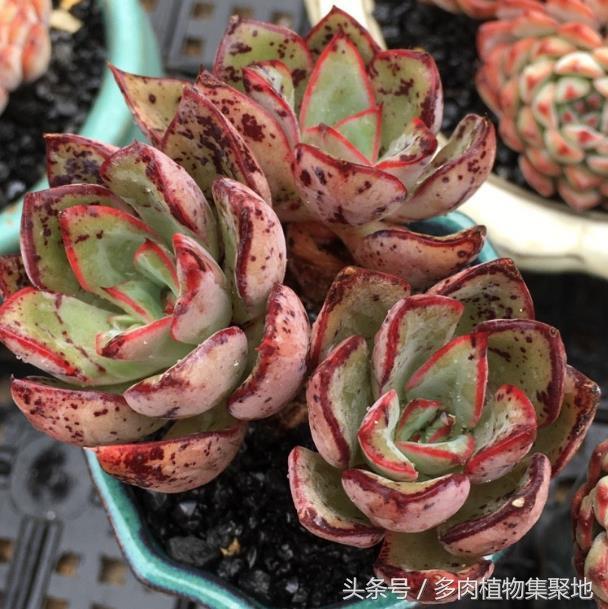
Succulent plants often grow many small offsets at the base of their leaves, and under normal circumstances this needs no attention. But because most of our succulents are grown in pots rather than in the wild, the lower leaves frequently squeeze the small offsets. Especially in summer, if there are too many lower leaves, they can easily smother the small offsets at the bottom. At this point, we can pull off all the leaves around the small offsets; the pulled-off leaves can still be used for leaf propagation, and the extra space lets the small offsets grow better.
The lowest leaves often dry up, fall off, or turn transparent and mushy. This is a normal part of succulent metabolism and there is nothing to worry about. Once the leaves are completely dry and can be removed easily, just take them off and throw them away. To keep our succulents from becoming leggy, we give them only a little water. Conversely, if we water the succulents every few days, their lower leaves certainly will not turn yellow and will always stay plump, but not only will they lose their shape, they will also keep growing taller, and some will even "wear skirts", which is what we call a leggy succulent.
The leaves that turn yellow on the surface actually still store some nutrients. Do not underestimate those few soft, yellowing leaves. Sometimes one or two leaves do not matter much, but accumulated over time, a lot of nutrition is wasted. Generally, after the nutrients in a leaf have been fully absorbed, the remaining leaf will eventually become thin and dry, and older ones may even drop at a touch. This usually happens with succulents grown outdoors. Of course, we do not have to wait until they drop at a touch to pull them off, but we should not rush either.
Summer is the season when succulent root rot is most likely to occur. Too much watering, heavy rain, plus hot, stuffy, poorly ventilated weather, and a succulent can easily run into trouble. When you notice slight rotting on a succulent, immediately move it to a well-ventilated spot so the moisture evaporates quickly, and provide a good airflow environment so the water in the pot drains away as soon as possible. Ensure the soil is permeable by adding more materials that do not hold water, such as vermiculite and river sand.
Fallen leaves that have already dropped should be cleaned up without hesitation. If they are still attached to the succulent and are hard to remove, you can wait a few days before cleaning them up, to avoid damaging the succulent by pulling too hard. Dead leaves that accumulate over a long time can easily contract pests and diseases, and in summer especially they create a closed, stuffy environment, so they must be cleaned up. Those dry leaves that are not easy to remove should be left alone; forcing them off will hurt the succulent.
As for mold on succulents, it has so far been found mostly on succulents of the genus "Crassula". The best way to prevent mold on succulents is to keep them from getting too much rain, and do not water them too much at ordinary times either; also place them in a ventilated spot. As the saying goes, treat both the symptoms and the root cause. There are mainly three ways to treat mold on succulents. First, change the soil: if the roots have become moldy, cut away the affected part and replant in sandy soil, which helps with drainage and moisture permeability. Second, remove the diseased leaves to block the spread of the mold.
This is a gathering place for succulent lovers, sharing succulent care tips. Welcome to follow and join the discussion.