Which plants are suitable for the bedroom? Here are a few recommendations
More and more friends now like to grow flowers at home, but I think you shouldn't just take home every flower you like or find pretty. In fact, many plants are not really suitable for growing at home. I suggest putting as many air-purifying plants indoors as possible.
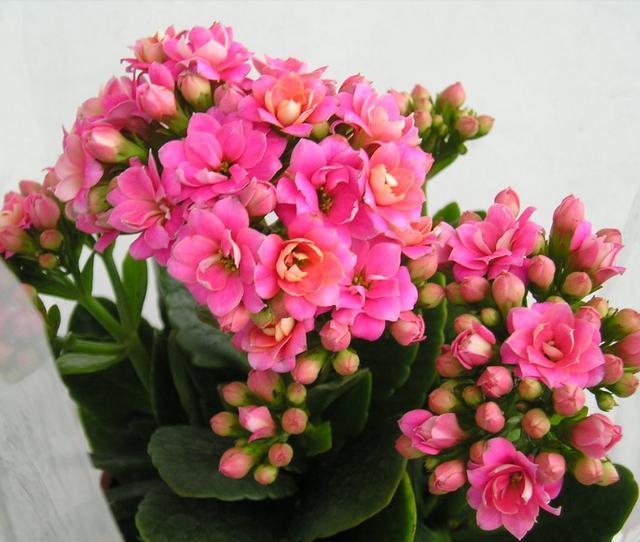
Kalanchoe blossfeldiana (flaming katy)
Kalanchoe blossfeldiana can absorb carbon dioxide and release oxygen at night. It can also increase indoor air humidity. Most importantly, its flowering period falls right on Christmas, New Year's Day and Spring Festival, and when it is not blooming you can still enjoy its leaves. There are also many varieties of Kalanchoe blossfeldiana, and I like every single one of them.
Kalanchoe blossfeldiana likes to grow in a sunny environment. If it is kept in a place without light for a long time, its growth will suffer badly, but it must not be exposed to blazing sun. It also does not need frequent watering; keeping the potting soil slightly moist is enough, as too much water easily causes root rot. During its peak growing season, apply a compound liquid fertilizer once every half month, which helps it produce more flowers.
Snake plant (Sansevieria)
The snake plant is a plant that grows very well without much care. At night while people sleep, it can absorb carbon dioxide and release oxygen, which effectively raises indoor oxygen levels and increases the number of negative ions, very beneficial to human health. The snake plant can also absorb harmful substances such as formaldehyde, benzene and heavy metal particles.
Caring for the snake plant is also very simple; it grows well without any attention at all. It does not need much watering, and a thorough watering once a month is enough. It is a very shade-tolerant plant, so it grows well without any light at all; with light, it is instead prone to a series of problems. If you want the snake plant to grow faster, just water it once a month with fermented rice-washing water.
Clivia (Clivia miniata)
Clivia releases oxygen and is called a natural freshener for absorbing smoke, and it does not release carbon dioxide at night.
Clivia is a succulent plant, so it should not be watered much; keeping the potting soil moist but not soggy is best. Also, during its flowering period, do not use a spray bottle when watering, otherwise the core of the clivia easily rots. Clivia blooms in winter, so in winter apply light fertilizer frequently. During bud formation and flowering, clivia has a relatively high demand for phosphorus and potassium fertilizers.
Cast-iron plant (Aspidistra)
The cast-iron plant can absorb harmful substances in the air such as formaldehyde and hydrogen fluoride, and can also trap dust, purifying indoor air well and helping to improve sleep quality.
The cast-iron plant has strong survival ability and is fairly drought-tolerant; generally a thorough watering once a week is enough, and you can spray water on the leaves often. It is best to keep the cast-iron plant in a bright spot, and never expose it to direct sunlight.
Ivy (Hedera helix)
Ivy can trap particulates, dust and other pollutants in the air, and can also absorb pollutants such as nicotine, formaldehyde and benzene, and convert these harmful substances into harmless components. It is one of the best air-purifying plants.
In everyday care, keep the potting soil of ivy slightly moist; watering once a week is fine, and you can spray water often. Also, keep it in a fairly bright spot.
Maidenhair fern (Adiantum)
The maidenhair fern can absorb formaldehyde, and can also suppress xylene and toluene released by computer monitors and printers.
The maidenhair fern likes to be kept in a spot with scattered light. It likes a humid environment, so in summer you can water it once a day and spray the leaves often; in winter, just keep the potting soil slightly moist.
Asparagus fern (Asparagus setaceus)
The asparagus fern can remove bacteria and viruses from the air. Usually just keep it in a fairly bright and well-ventilated spot, water it when the surface of the potting soil dries, and you can spray the leaves often. Watering it with cool boiled water is best, which can prevent its leaves from turning yellow, and the asparagus fern will grow denser and denser.