Obedient plant has a peculiar appearance and high ornamental value
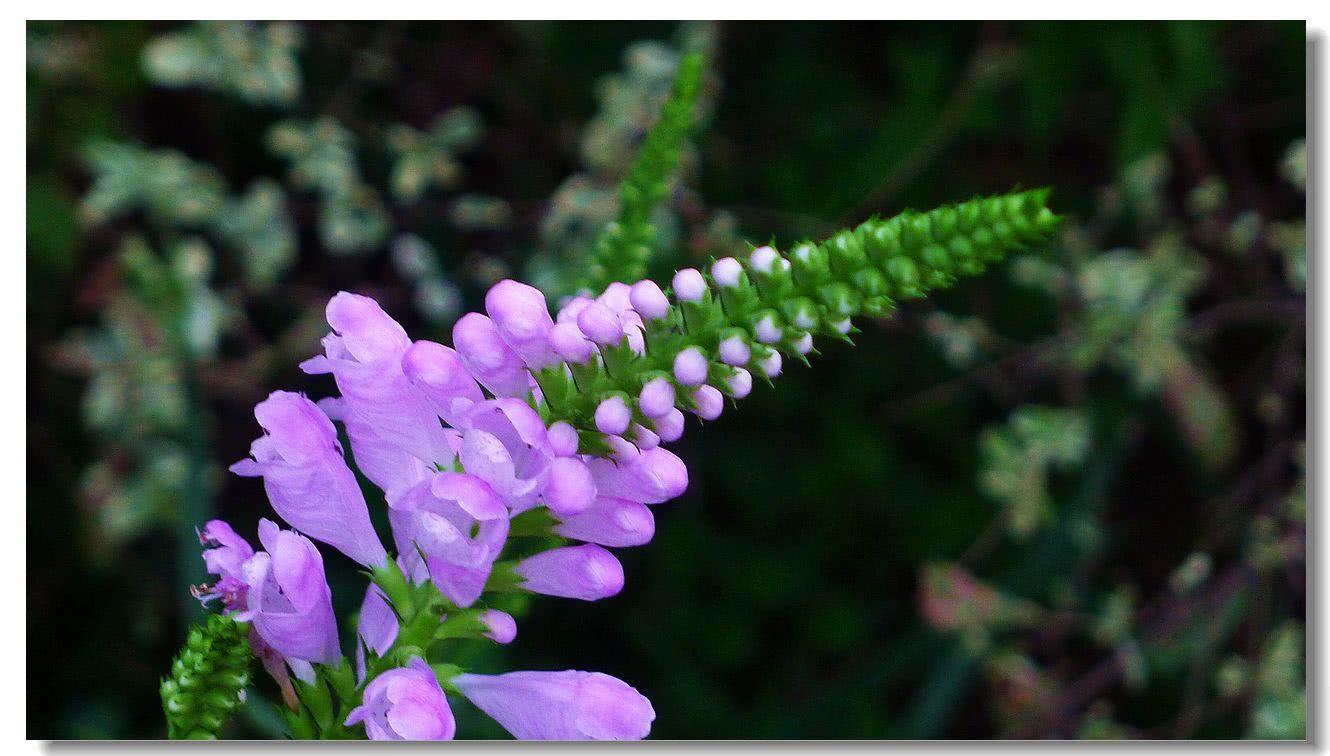
Obedient plant, also known as shellflower, cotton boll flower, false dragonhead, etc., is a perennial herbaceous plant of the order Lamiales, family Lamiaceae, native to eastern North America, belonging to the China climate-type cool-loving plants.
Obedient plant has stolons. Plant height 60-120 cm, stems four-angled. Leaves opposite, lanceolate, leaf margins finely serrate, elegant leaves and brilliant flowers, mature plants form clumps, the blooming flower spikes sway in the wind, graceful and charming. It is robust by nature, and the underground stolons easily produce seedlings; after cultivating 1 plant, it often self-propagates into countless young plants. Suitable for large potted plants or cut flowers, simple to cultivate and manage, and ideal for flower borders, flowerbed backgrounds, or clump planting in wild gardens.
Obedient plant flower
The spike inflorescence gathers into a panicle-like form. The small flowers are dense. If the small flowers are pushed to one side, they will not return to their original position, hence the name. The small flowers are rose-purple. It blooms from summer to autumn; light blue, purplish-red, and pink small flowers appear from July to September in terminal spikes. Spike inflorescence, labiate corolla, the inflorescence gradually opens from the lower end upward, with a long flowering period. Flower colors include white, deep peach red, rose red, snow blue, light red, purplish-red, or variegated-leaf varieties, among other colored varieties. Oblong leaves are opposite. Nutlets, August to October.
Obedient plant flower
Obedient plant is native to the northern United States. It prefers warm, sunny, loose, fertile, well-drained sandy loam. It is cold-resistant, drought-resistant, fertilizer-tolerant, and highly adaptable. Its underground upright rhizomes are relatively well developed; as the plant ages, the aboveground parts wither, and the underground roots form tiller buds, producing new plants. The seeds of obedient plant easily fall off after maturing, and many seedlings are produced before winter.
Obedient plant flower
The stems of the obedient plant stand upright in clumps, are four-angled, and bear long, large inflorescences, which can be used as fresh cut flowers in floral design; the elegant leaves and beautiful flowers should be arranged in flower borders, flowerbed backgrounds, or wild gardens in the garden. The obedient plant has a long flowering period; the flowering period in 2012 lasted as long as 89 days. It is an excellent summer and autumn flowering plant. It performs well in the north and can overwinter safely in the wild. In landscaping, plant landscapes are used to create artificial communities and complex structures.