The beauty and romance of Qiong flowers symbolize perfect love
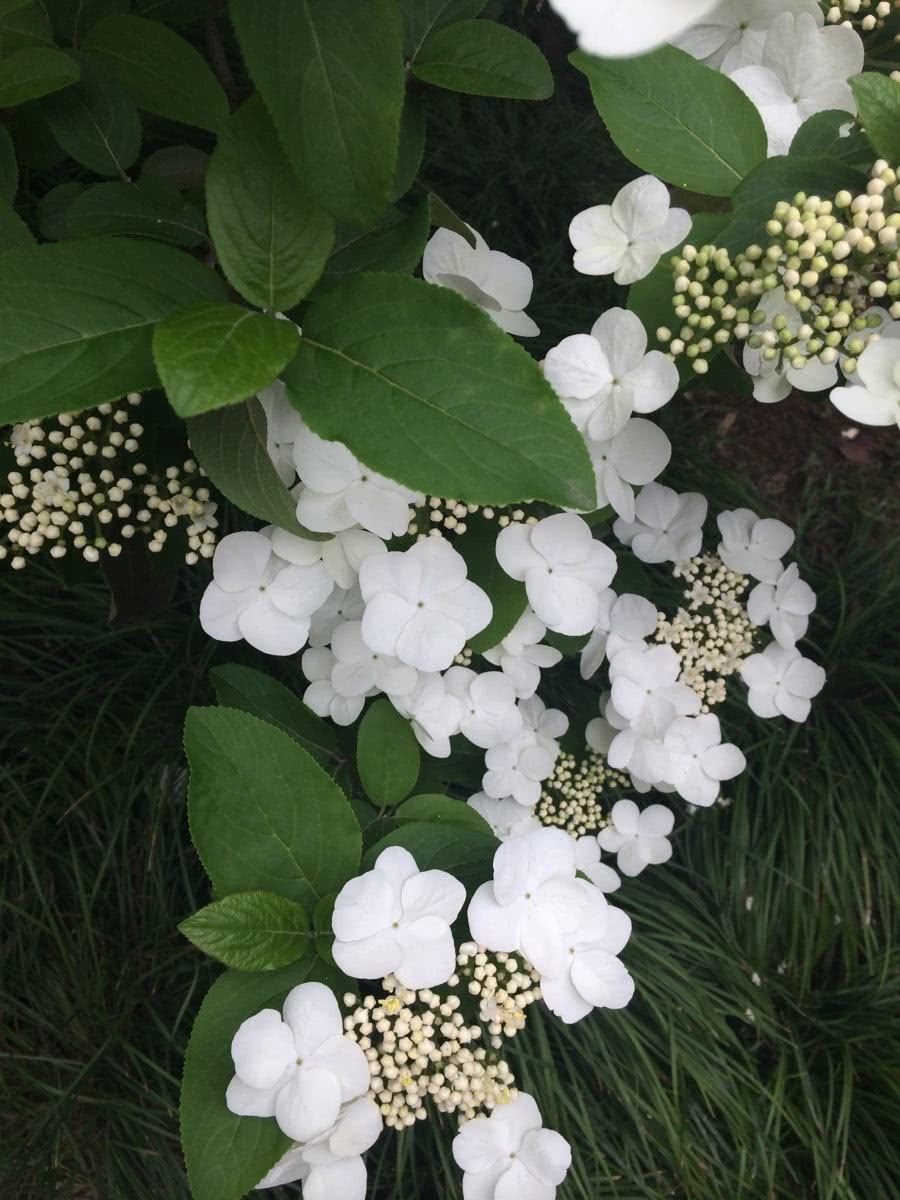
Qiong flower, also known as Jubaixian, butterfly flower, and "Niu'er Baozhu." A deciduous semi-evergreen shrub of the honeysuckle family. It blooms between April and May, with flowers as large as a plate, pure white as jade. The cyme grows at the branch tips, with eight surrounding flowers being sterile flowers developed from sepals, and in the center are small bisexual flowers. It is distributed in southern Jiangsu, western Anhui, Zhejiang, northwestern Jiangxi, western Hubei and southern Hunan. It is also the city flower of Yangzhou and Kunshan.
Qiong flower
Viburnum macrocephalum f. macrocephalum (the original form) is a deciduous or semi-evergreen shrub, up to 4 m tall; bark grayish-brown or grayish-white; buds, young branches, petioles and inflorescences covered with grayish-white or yellowish-white tufted short hairs, gradually becoming glabrous. The leaves gradually fall completely from the winter solstice to the following spring. Papery, ovate to elliptic or ovate-oblong, 5-11 cm long, apex obtuse or slightly acute, base rounded or sometimes slightly cordate, margin serrulate, upper surface initially densely covered with tufted short hairs, later only the midvein hairy, lower surface covered with tufted short hairs, lateral veins 5-6 pairs, anastomosing before the margin, together with the midvein slightly impressed above, prominent below; petiole 10-15 mm long.
The cyme is 8-15 cm in diameter, composed entirely of large sterile flowers, the peduncle 1-2 cm long, with 5 primary rays, flowers borne on the tertiary rays; calyx tube tubular, about 2.5 mm long, about 1 mm wide, glabrous, calyx teeth nearly as long as the calyx tube, oblong, apex obtuse; corolla white, rotate, 1.5-4 cm in diameter, lobes orbicular-obovate, tube very short; stamens about 3 mm long, anthers small, suborbicular; pistil sterile. Flowering period April-May.
Qiong flower
Ornamental value:
The Qiong flower is mainly used for ornamental purposes, and its branches, leaves and fruits can all be used as medicine, having the efficacy of dredging meridians, detoxifying and relieving itching. The stem has medicinal effects of dispelling dampness and relieving itching, clearing heat and reducing inflammation, and detoxifying.
The Qiong flower has a relatively long lifespan. A Qiong flower planted during the Kangxi period of the Qing Dynasty at Daming Temple in Yangzhou has a history of more than 300 years, and it is still flourishing today, with its graceful bearing as before and its charm undiminished. The beauty of the Qiong flower is a beauty with a distinctive charm. It does not charm with brightly colored flowers, nor intoxicate with heavy fragrance. At the turn of spring and summer, when the natural world is a riot of purple and red, the Qiong flower blooms pure white as jade, graceful and elegant, exceptionally delicate and quietly refined; and when the autumn wind sighs and the flowers fall in profusion and wither, what the Qiong flower displays is the charming autumn scenery of green leaves and red fruits. Its leaves and fruits, red and green setting each other off, are exceptionally vivid and long-lasting without withering, adding brilliant color and a cheerful atmosphere to the bleak autumn scenery. The Qiong flower's branches spread widely, the crown is spherical, the tree posture is graceful, and the tree form is unrestrained and distinctive.
The beauty of the Qiong flower lies even more in its distinctive flower shape. Its flowers are as large as a jade basin, with eight large five-petaled flowers forming a ring around the white pearl-like small flowers in the center (the not-yet-opened bisexual small flowers), clustering a mass of butterfly-like stamens. Under a gentle breeze, they sway lightly, like butterflies playing with a pearl; and also like the Eight Immortals dancing, with ethereal and graceful immortal bearing, fascinating to behold. "A thousand dots of true pearls hold up plain stamens, a ring of bright moon breaks through fragrant blossoms." When there is no wind, it is also like eight fairies gathered around a round table, sipping tea and chatting. This unique flower shape is rare among plants, and thus people particularly love it, and bestow on it the elegant name "Jubaixian."
Qiong flower
The Qiong flower is the city flower of Yangzhou and one of the Three Treasures of Kunshan. Since ancient times it has enjoyed the reputation of "only one flower in Yangzhou, no equal in the four seas." The Qiong flower is a famous flower unique to China, and documentary records show it was cultivated as early as the Tang Dynasty. With its quietly elegant posture and unique charm, as well as various legendary and romantic tales and anecdotes, it has won the deep affection of the world and the endless praise of literati and poets, and is called a "rare and exotic flower" and "China's unique immortal flower." In 1998, the Standing Committee of the Yangzhou Municipal People's Congress passed the decision to make the Qiong flower, recommended by the general public, the city flower of Yangzhou, and two sessions of the "China Yangzhou Qiong Flower Art Festival" have been held, with considerable response. The Qiong flower is unmatched in the world. As the city flower of Yangzhou, the Qiong flower is fully deserving. The most famous thing in Yangzhou is of course the Qiong flower. The Qiong flower is renowned throughout the world for its luxuriant leaves and abundant flowers, pure and flawless.
Flower language:
The name Qiong flower originally referred generally to flowers bearing beautiful blossoms. "Qiong flower" is also written as "Qiong hua"; in ancient texts "hua" means "flower," and what is called "qiong" is fine jade. Later generations generally regard the flower language of the Qiong flower as beauty, romance, and perfect love. "Qiong flower and jade tree" also originates from the delightful Qiong flower, referring to rain and mist condensing into ice layers and icicles, like jade trees soaring in the air, with Qiong flowers in full bloom, exquisite and translucent; meteorologists call this glaze ice and rime, presenting a scene of jade carving and ice sculpture.