What Are Epiphytes? A Little Rainforest Plant Knowledge for You
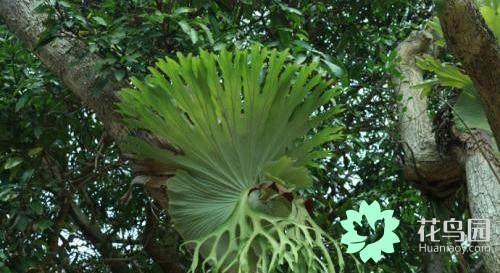
Epiphytes
Also called adhering plants or perching plants, they are the phenomenon of plants growing on or attaching themselves to other living plants. This relationship is usually mostly associated with higher plants, although epiphytic bacteria, fungi (epiphytic fungi), algae, lichens, mosses, and ferns also thrive on them; their root masses attach to the branches and trunks of other trees to grow, living on rain and dew, water vapor in the air, and limited humus (rotted dead branches and fallen leaves or animal excrement, etc.).
They usually do not grow very tall, can carry out photosynthesis themselves, and do not plunder the nutrients and water of the plants they attach to (unlike parasitic plants); the significance of this growth pattern is that by clinging to tall trees they can better absorb light. As one of the signature plants of tropical rainforests, beautiful epiphytes have already been widely used for horticultural cultivation.
These include most orchids, bromeliads, ferns, and Araceae, as well as the popular air plants (Tillandsia) and tank bromeliads.
Epiphytism refers to a life phenomenon in which two organisms live closely together but do not exchange nutrients with each other. One plant lodges on the living body of another plant species and can absorb water and manufacture nutrients on its own. This phenomenon of "shelter but not food" is called epiphytism.
The most common characteristic of epiphytes is that they grow on the horizontal branches and trunks of the host plant and at the fork points of branches and trunks, because these places most easily accumulate dust; some lower plants even grow epiphytically on leaves; apart from leaf-dwelling epiphytes affecting the host's light conditions to a certain extent, epiphytes generally do not cause damage to the host.
The epiphytic phenomenon of plants is one of the main signature features of tropical rainforests. The reasons for this phenomenon forming lie mainly in satisfying certain environmental conditions. First, the air humidity of the environment is high; second, a certain amount of humus exists on the host's surface. The epiphytic phenomenon of organic matter exists among plants, and is most common in tropical and subtropical forests.
The types of epiphytes are relatively rich; from lower plants to higher plants, all have epiphytes. According to statistics, there are about 65 families, 850 genera, and 30,000 species of epiphytes worldwide. Common epiphytic ferns include Lepisorus, Pyrrosia, Polypodium, Microsorum, and Haplopteris of the Polypodiaceae, and the bird's-nest fern (Asplenium nidus) of the Aspleniaceae; the main dominant species of epiphytic bryophytes include Bazzania japonica, Bazzania minutissima, Plagiochila sciophila, Homaliodendron flabellatum, Symphysodontella, Dicranoloma, Meteorium, and Oxyrrhynchium; the lichen Usnea; orchids such as Phalaenopsis, Phalaenopsis ... , and Dendrobium; the Ericaceae Vaccinium emarginatum; the Araceae ...; the Gesneriaceae ...; the Moraceae banyan, ... and ...; the Bromeliaceae air plants (Tillandsia) and tank bromeliads, and so on...
In tropical rainforests, plants grow densely, and because competition among plants for sunlight is fierce, epiphytic plants can more easily obtain hard-won light sources. Epiphytes have developed very adaptive characteristics in morphology and physiology; for example, the bird's-nest fern has a bird's-nest-like shape that can intercept as much rainwater as possible as well as fallen litter, bird droppings, etc.; the sponge-like litter can store water and provide nutrients.
In ecosystems, epiphytes have ecological functions in many aspects; they play a certain role in the formation and maintenance of forest ecosystem diversity and in nutrient and water cycling, and epiphytes also have an indicator function for environmental change. Human activities can affect the existence of epiphytism; where human activities are intense, epiphytism greatly decreases or even disappears.
Epiphytes evolved gradually from terrestrial plants, so their degree of epiphytic ability varies greatly.
Common ornamental plants that are highly adapted to epiphytic environments include Vanda, Phalaenopsis, Tillandsia, staghorn fern (Platycerium), and ... ferns. The characteristics of these plants are often drooping stems, leaves, and inflorescences, or even the whole plant growing downward; in the wild they grow directly on completely bare tree trunks or rocks. These plants are extremely drought-tolerant, have low requirements for environmental humidity, and are relatively suitable for indoor cultivation in the north.
The choice of potting medium is very important; it is best to cultivate them with fern roots, crushed stone pieces, or large bark chunks. They can even be tied directly to bark or ... and grow well. Yet when potted, they instead grow poorly. There are also some plants, like Dendrobium, Cattleya, Oncidium, bird's-nest fern, crown fern, and epiphytic plants of Araceae. Some plants can adapt to dry climates, but in the wild most are epiphytic in dense forests; in places with higher humidity they are generally more suited to potting, with upright stems and leaves, and the cultivation medium can use chunk materials such as bark, or some moss can be added. Most bromeliads and ... in the wild grow on the soil layer on tree trunks.
What is the soil layer on tree trunks?
It means that on tree trunks, over years and months, the remains of other epiphytes and dust, etc., form a thick layer of humus, providing a good growing place for other epiphytes and animals such as earthworms. For this kind of epiphyte, the cultivation medium can use pure peat or sphagnum moss; the stems and leaves are upright, leaning toward ordinary plants.
To judge which type of epiphyte it belongs to, the simple way is by the stems, leaves, and inflorescences.
The stronger the epiphytic nature, the more pronounced the drooping of stems, leaves, and inflorescences. With moderate epiphytic nature, the inflorescences or leaves tend to extend horizontally.
The weaker the epiphytic nature, the more upright both inflorescences and leaves are.
PS: By the way, let's talk about the difference between epiphytes and parasitic plants
1. The characteristics of epiphytes and how they absorb nutrients
Epiphytes do not grow on the ground, but on the stem surfaces or branch forks of other plants. Their roots cling to the bark of the tree they attach to, and they additionally grow aerial roots that can absorb water from the air and water accumulated on the tree surface. Because epiphytes all grow in hot, humid, shaded mountains and forests, the places where they grow are certain to have large amounts of moss growing; this moss often covers the roots and stems of epiphytes, adding a layer of protection to retain water for the epiphytes (at this point the moss is also an epiphyte). After the moss dies of old age, together with old residual bark, fallen leaves, accumulated grime, and so on, it provides nutrients for the epiphytes.
Places that are arid and lack sufficient air humidity cannot support epiphytes, because the water they absorb comes mostly from the air and the tree surface.
2. The characteristics of parasitic plants
Parasitic plants: their roots also do not grow in the soil, but penetrate into the body of the host plant (mainly in the cortex and cambium), becoming integrated with it, and absorb water and nutrients from inside the host.
3. The difference between the two
What differs between epiphytes and parasitic plants is that the roots of epiphytes do not become integrated with the plant they attach to; their acquisition of water and nutrients is solved independently, and their existence and growth have no direct stake in the plant they attach to (that is, they do not directly harm the plant they are attached to).
Parasitic plants are the opposite: their roots penetrate into the host, becoming integrated with it, and water and nutrients are obtained directly from the host, seriously affecting the host's growth, causing poor growth, failure to flower and fruit, and in severe cases eventually death by withering.
4. A brief additional note
In the plant kingdom, saprophytic or symbiotic relationships may also exist between two plant bodies; these two relationships must be distinguished from epiphytism and parasitism.