Detailed Explanation of Ginkgo Tree Planting Techniques and Management Methods
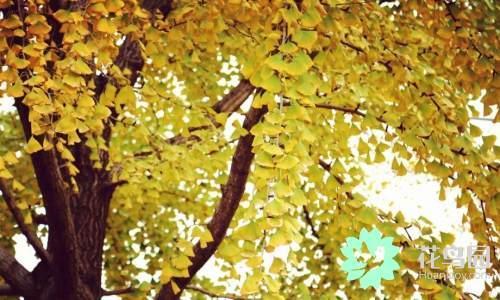
The ginkgo tree is an excellent tree species valued for both fruit and timber, with a tall and beautiful tree shape, and it is also a lovely ornamental tree. Ginkgo has strong adaptability to soil, tolerates acid, alkali, and drought, and has a lifespan of several hundred years, even over a thousand years, and people call it the "grandfather-grandson tree." Its fruit is rich in ginkgoic acid and ginkgol, is nutritious, can be eaten, and can also be used as medicine; the leaves can be used to make drugs such as "guanxintong," and can also be used as paddy field fertilizer and insecticide. Its wood is light, soft, and tough, with fine grain, and is not prone to warping or cracking, making it a fine material for construction, crafts, and furniture.
Growth Habits
Ginkgo is a deciduous fruit tree that grows slowly, bears late, and has a long lifespan, with separate male and female plants, and often forms a tall canopy with strong trunk dominance and obvious layered branching. Seedling trees mostly have tower-shaped, conical, or oval canopies; for grafted trees, when the central leader is lacking or its growth is hindered, the canopy can begin to become semicircular or open-centered in the later growth stage. Branches within the canopy are clearly divided into two types: long branches and short spur branches. Long branches are formed by several buds at the tips of branches extending upward and outward, and are the basis for forming the canopy.
Short spur branches are formed by buds in the middle and lower parts of branches first forming leafy cluster branches, and then weakly extending and accumulating each year, with extremely short internodes, also called "scale branches" or "milk branches." Under certain conditions, short spur branches can also produce long branches. For young trees under 10 years old, the proportion of long branches produced is relatively high, accounting for about 70% of the total branches produced. For large trees over 50 years old, the number of long branches produced drops sharply, and the proportion of short spur branches increases significantly, accounting for more than 80% of the total branches produced, so the canopy of mature large trees is often relatively sparse. Sometimes, latent buds on old trees or large branches can also directly sprout to form short spur branches.
After reaching the fruiting age, the female flowers and male inflorescences of the ginkgo tree are respectively clustered on the short spur branches of female and male plants. A short spur branch has 5 to 14 leaves, and generally a sturdy short branch with more than 6 leaves can form flower buds. The flower buds are mixed buds, terminal, and in spring produce an extremely short shoot before flowering in the leaf axils. Each short spur branch on a female plant can bear 2-14 seeds (generally 5-6). Whether flower buds can form on a short spur branch is related to the nutritional status of the tree and the branch age and growth status of the base branch on which the short spur branch is borne. Generally, on base branches 3-12 years old, short spur branches bear the most fruit, and afterward the fruiting ability gradually declines.
The sprouting rate of long branches in ginkgo is extremely high; in addition to the top several buds producing long branches, the axillary buds on the other nodes can all produce short branches and form flower buds, flower, and bear fruit, thus very easily forming alternate bearing. However, short spur branches on the same base branch sometimes show alternating fruiting. Male inflorescences are borne in the leaf axils of short spur branches on male plants, and each short spur branch can bear 4-6.
Propagation Methods The propagation methods of ginkgo trees include seedling propagation, division, and grafting, among others, and those widely used in production are division and grafting. Seedling propagation bears late, and the seed kernels produced are small, so it is mostly used to cultivate trees for both timber and fruit, or to cultivate rootstock seedlings. Seeds can be sown in winter or sown in spring after sand storage; every 1,000 sq m of seedbed requires about 600 kg-750 kg of seed kernels. When ginkgo emerges, the cotyledons do not come out of the soil, so the soil covering can be appropriately thicker. Seedlings grow quite slowly, and shade is suitable during high summer temperatures. One-year-old seedlings have poorly developed lateral roots, and the seedling height is only 20-30 cm. They are not suitable for leaving the nursery or for grafting. Generally, they need to be transplanted and cultivated for 2-3 years, and only when the seedling height reaches 60-100 cm can they leave the nursery.
Division uses the sprouts that emerge from the base of the ginkgo plant, carried out in spring from February to March before sprouting. Taking along some old roots and fibrous roots helps survival. The fruiting age of division-propagated seedlings is earlier than that of seedling-propagated seedlings, but it still takes about 10 years. After cultivation, division-propagated seedlings can be directly planted in the field, or used as rootstock for later grafting. When dividing, it is best to select more roots from female plants.
The survival rate of ginkgo cuttings is lower than that of generally easy-to-root tree species, but propagation by cuttings can save seeds and expand the source of seedlings. Cutting methods are divided into hardwood cuttings and greenwood cuttings. Hardwood cuttings use one-year-old branches as cuttings, cut to about 20 cm, with the lower end cut into a horse-ear shape, treated with a 30 ppm to 50 ppm naphthaleneacetic acid solution (the active ingredient of rooting agent) for 12-24 hours, or soaked in 50 ppm ABT-1 rooting powder for 1 hour, then inserted, with a soil insertion depth of about 10 cm.
Ginkgo trees propagated by grafting bear fruit the earliest, and the trees are relatively short, making management convenient. In the past, production areas mostly used large rootstocks with high-trunk grafting, which is not conducive to large-scale rapid seedling cultivation and orchard establishment. At present, production mostly promotes grafting of small seedlings, that is, using 2-3-year-old rootstock seedlings, grafting at a relatively low position 30 cm-50 cm above the ground, with one-year-old branches as scions. The specific grafting methods are mainly cleft grafting and bark grafting. The grafting period is from mid-to-late March to early April.
Planting and Management
For ginkgo orchards planted in blocks, it is best to choose open land with deep soil and good drainage; sites that are low-lying and damp, high in salinity and alkalinity, and heavy in soil texture are all unsuitable for establishing orchards. The planting distance can generally be 4 m-5 m between plants and rows; if planned close planting is implemented, the spacing can be further reduced. Ginkgo leaf-harvesting orchards are planted at high density, with a spacing of only 0.7-1 m. Ginkgo trees planted scattered around the four sides can mostly form large canopies, and the spacing can be expanded to 6-8 m. Ginkgo roots recover slowly after being injured, and the larger the sapling, the longer the recovery time. When planting and transplanting seedlings, the roots should be injured as little as possible, so as not to lengthen the recovery period and affect growth and fruiting.
Ginkgo trees grow slowly, and strengthening soil and fertilizer management can accelerate growth. In addition to appropriately increasing base fertilizer according to the tree's growth condition, apply topdressing 1-2 times before sprouting to promote new shoot growth, applying 0.8 kg-1 kg of compound fertilizer per tree or watering with decomposed human manure. Ginkgo is averse to wetness and waterlogging, so attention should be paid to ground drainage during the rainy season.