Cymbidium goeringii has new shoots but no new roots - does that count as successfully established? Don't be careless, it may be a false take
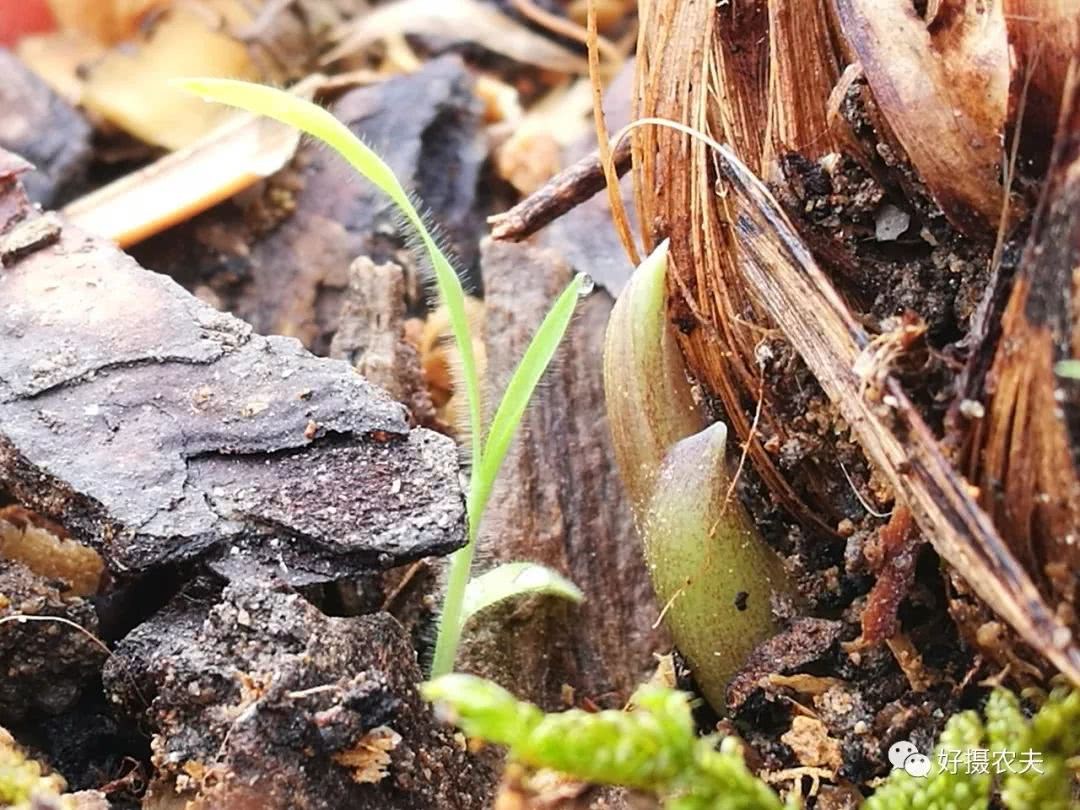
The thing orchid growers (especially beginners) care about most after acquiring a plant is nothing other than whether their orchid has survived. How can you tell whether an orchid plant has taken? Anxious growers often dig into the potting soil to take a look, or simply knock the plant out of the pot to inspect it, and that is entirely understandable
A few days ago an orchid grower sent a message to Haoshe Farmer, saying that a Cymbidium goeringii he had bought online had produced shoots. He discovered this when he knocked it out of the pot - it had actually put out three shoots (on an orchid with only three pseudobulbs in total), so he was very happy. Haoshe Farmer asked him, how are the new roots growing? He answered that the roots had not grown and even felt a bit rotten, but since the new shoots had come out there should be no problem
This is where many beginners often come to grief: the roots are the most important part of any plant. Why does the Chinese language have the word "genben" (root and base)? Because the root is the base of the plant. As for shoots, those are the tip, an outward manifestation. Orchid growers will say, if the shoots have grown, surely there is no need to fear about roots? Yes, you really should fear it. Haoshe Farmer has come across such cases, where a Cymbidium goeringii with nicely growing shoots suddenly gave up one day, and the grower still did not know the reason
The normal performance of an orchid after potting is that it first pushes out roots with crystal tips, and then comes shoots; generally the shoots are slightly shorter than the roots. But some orchids already had a problem when the seedlings were acquired, while their own leaves and pseudobulbs store nutrients.
As long as the weather, temperature and moisture are all suitable (in the spring season), it will likewise produce shoots, but simply will not grow roots. That is because the nutrients for its shoots are supplied by the plant itself, so it is effectively living off its savings, and once those savings are used up the plant will inevitably decline. In this situation it would be better to have no shoots at all, and first nurse the roots well and grow them strong - with roots, is there any fear of no shoots?
There is a rural saying: as long as the horizontal, so high the vertical. It means that a plant's roots and its above-ground parts are usually in proportion; the taller and larger the plant, the longer its roots certainly are. And the growth of a plant's above-ground and below-ground parts depends on and follows each other, so neither can be neglected. So if your orchid only produces shoots and does not grow roots, you had better be careful - it may well give you a hollow joy.
If you like it, follow and share it with more friends