What is Agate Palace? Get to know this succulent plant
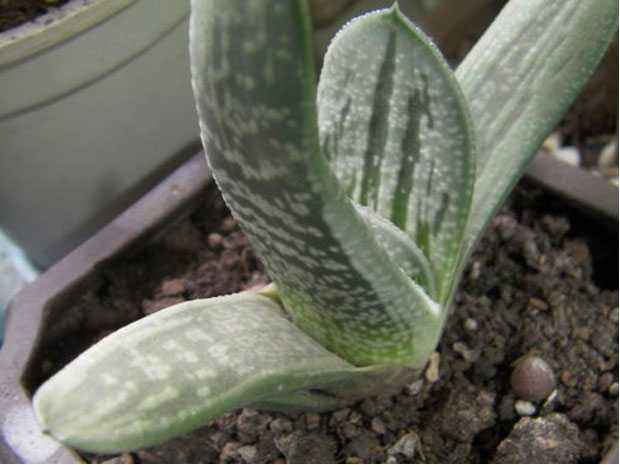
Agate Palace is a small succulent plant. It has almost no stem, and its leaves are thick and fleshy, tongue-shaped, decussate, emerald green, with dense white spots and longitudinal markings on the surface. The old leaves are grayish green and lack luster, and the plant grows relatively slowly. Racemose panicle, tubular flowers, red. Native to southern Africa.
Agate Palace likes a warm, dry environment and full sunlight. It is relatively cold-tolerant, drought-tolerant and tolerant of partial shade. It prefers fertile, well-drained sandy loam. In winter the temperature should not be lower than 5°C.
Agate Palace
Agate Palace is a small succulent plant with thick, grayish green leaves and white dotted markings, exceptionally fresh and elegant. It is very suitable for pot cultivation, and using it to decorate a study, guest room, windowsill or balcony is very elegant.
Agate Palace
Propagation:
Division and cuttings are commonly used for propagation. For division, the plant can be lifted out of the pot in spring or autumn each year, and the offsets beside the mother plant can be pulled apart and replanted separately. For cuttings, use the leaves of Agate Palace, cut them off, let them dry, and insert them in a sand bed; about 120-150 days after insertion, roots will grow from the callus and new shoots will grow.
Cultivation:
For potting soil, choose loose leaf mold and coarse sand with a small amount of dry cow manure added. During the growing period, diffused light is best, making the fleshy leaves emerald green and attractive. In midsummer, when the light is too strong, the tips of the leaves tend to turn red. During the summer and winter dormancy periods, keep the potting soil slightly dry. Apply fertilizer once a month during the vigorous growth period. In winter, if the potting soil is too wet and the temperature is low, the roots and leaves are prone to frost damage, so the plant should be moved indoors for care in winter.
Pests and diseases:
Root rot and leaf spot sometimes occur; spray with a 1000-fold dilution of 70% thiophanate-methyl wettable powder. Among insect pests, scale insects are harmful; spray with a 2000-fold dilution of 40% omethoate emulsifiable concentrate.
Agate Palace