Mass deaths of hard clams in summer heat; experts identify the real culprit through three experiments
By Liu Yi-hsin, Lin Pei-chun and Tsai Chia-shan, reporters for Upstream/Downstream
In recent years, the mortality rate of hard clams has soared, and last year it was reported that some fishermen saw hard clam mortality reach 90 percent, leaving them with nothing and lamenting that hard clams are becoming harder and harder to farm. Outsiders point to environmental changes as the key factors, such as abnormal climate, water pollution and rising Vibrio levels. Improper farming methods make matters worse, including excessively high stocking density, which lengthens the growing period and increases risk; or overfeeding, which causes algae blooms in the pond and excess organic matter in the bottom sediment, leading to hard clam deaths.
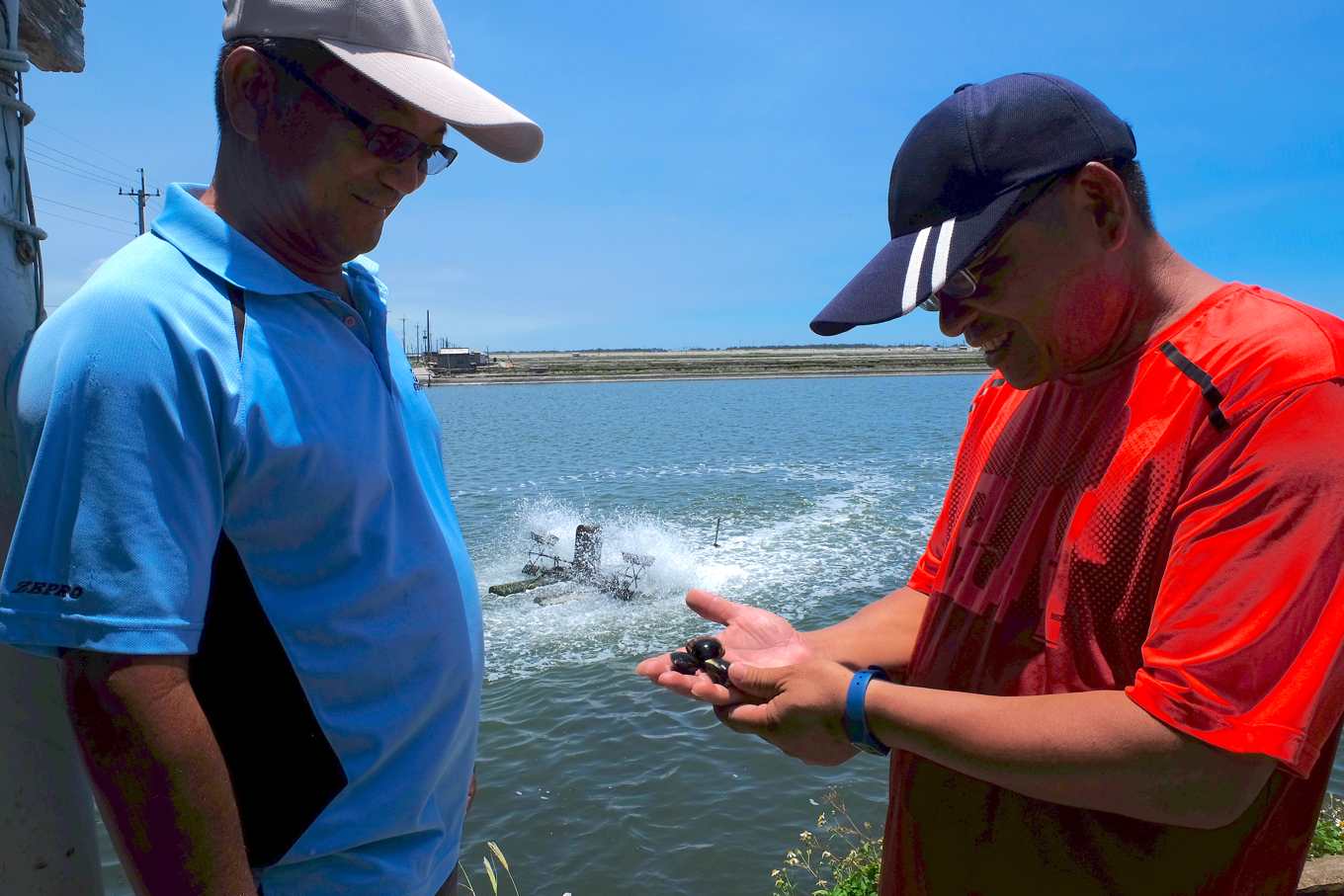
With the hard clam industry facing a fight for survival, three research units - the Fisheries Research Institute, National Chiayi University and National Taiwan Ocean University - are conducting separate experiments, hoping to find the most suitable scientific farming model. However, because their methods differ from traditional ones, the cost-effectiveness is still being evaluated. Upstream/Downstream asked experts to detail the three experimental approaches one by one, and visited Yunlin in person to interview demonstration farmers and traditional farmers, closely examining the causes of hard clam deaths and possible solutions.
(Note) Chlorine dioxide (ClO2) is a yellow-green gas at room temperature and a strong oxidising agent, often used for water disinfection, sterilisation and deodorisation, and for reducing organic matter in water. For the pros and cons of chlorine dioxide, see the Fisheries Research Institute's fisheries Q&A.
Hard clam crisis! Abnormal climate and contaminated subsoil: hard clam mortality reaches 40 percent in Yunlin, and Tainan is also hit
Hard clams dying suddenly with no remedy | Farming methods? Water quality? Problems with broodstock genes? Fisheries Agency: experts are conducting trial farming to find the answer