What should you do when a rose bought home gets yellow leaves and pests?
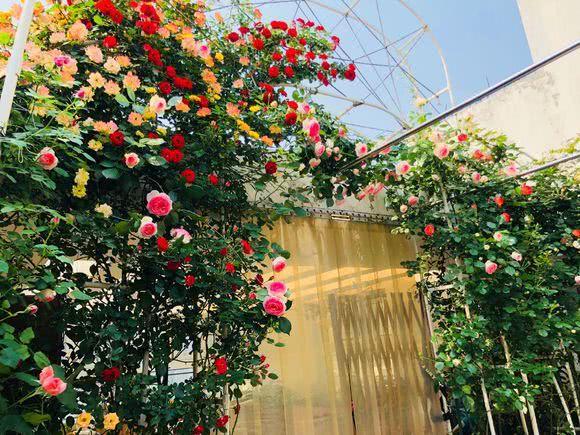
A newly bought rose starts getting yellow leaves before it even blooms, and gets pests too, with some leaves black and some yellow, which is very sad. So let's listen to Huahua ramble on about a few aspects to pay attention to when caring for roses!
Causes
Excessive fertilizing
Roses like fertilizer, so fertilizing should use diluted fertilizer water, and be sure not to overdo it, otherwise it will cause fertilizer burn and the leaves will turn yellow.
Solution: Therefore, fertilizing should be mainly with organic fertilizer, and generally it should be diluted more than 500 times, then poured into the potting soil. Do not use undecomposed organic fertilizer or high-concentration chemical fertilizer, because they will scorch the roots of the rose, causing wilting and yellow leaves.
Excessive watering
If a newly bought rose has young leaves turning yellow, lacking luster, and even the branches about to turn yellow-green, while the old leaves show no change, and new shoot growth is also abnormal, this is a sign of overwatering. If not dealt with in time, it will not only easily cause root rot, but also easily lead to infection by other bacteria, causing the whole plant to die.
Solution:
Immediately take the rose out of the pot and place it in a ventilated and shady place. You can also use a hairdryer on the cool setting to blow on it. After the soil dries out, repot it. From then on, be sure to pay attention: water thoroughly until water comes out of the bottom of the pot, and the next time you water, be sure to wait until the potting soil is dry before watering.
Notes on rose care
Field-planted roses
Generally, the types of field-planted roses include large-flowered roses, climbing roses, miniature roses, floribunda roses, groundcover roses and various other types of roses.
Field-planted roses generally need winter pruning, and in normal times dry branches, diseased branches and dense branches should be cut off. After pruning, fertilizer must be supplemented, and chemical fertilizer must not be used. It is best to fertilize 1 week after pruning, letting the plant recover on its own for a period, and with a continuous supply of nutrients, the rose will sprout more and bloom more.
When the rose buds are about to sprout, a comprehensive pest and disease control should be carried out. Broad-spectrum fungicides such as lime sulfur mixture or carbendazim can be used to sterilize the whole plant and even the ground. Then, after the rose turns green and unfolds its leaves, promptly control the damage of piercing-sucking pests such as aphids and red spiders.
Potted roses
This refers to potted roses, balcony roses and commercial potted flowers, most of which are large-flowered rose varieties and miniature roses.
When the climate is stable, generally after Qingming in the north, watering and fertilizing should be strengthened, with fertilizer water twice a week, applied continuously for three weeks, to ensure a sufficient nutrient supply for the growth and development of the roses. Pest and disease control should be carried out in time, especially the control of aphids and red spiders.
If potted plants are found to be growing excessively weak, the pots should be changed in time, or if the potting soil is compacted, ignoring it will affect the growth of the rose or even cause death.
Planting rose seedlings
The planting site should be prepared by tillage; base fertilizer should not be omitted, weeds should not be left uncleared, and disinfection treatment should not be skipped.
The rose seedlings to be planted should be pruned in branches and roots; they should not be planted without regard to variety, without pruning, and without sterilization treatment.
Irrigation and watering should be done well to ensure sufficient water; do not plant carelessly, water without soaking through, and think everything is fine after watering once or twice.
The whole year's work depends on a good start in spring. In short, the care and management of roses, starting from spring sprouting, must begin with the details of pruning, fertilizing, watering and disease prevention, and with careful tending, it will surely meet our expectations, and the blooming of roses will bring us a beautiful spring.