During the progression of pulmonary bullae, hemopneumothorax and various infections can occur.
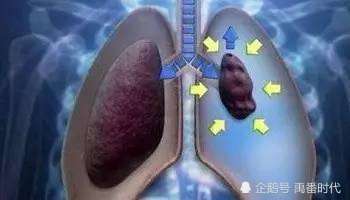
Pulmonary bullae can develop from emphysema, pneumonia, pulmonary tuberculosis, and other conditions, and as they continue to progress, new symptoms can form, such as spontaneous hemopneumothorax, tension pneumothorax, spontaneous pneumothorax, spontaneous hemothorax, tension hemothorax, and various secondary infections. From this it can be seen that the harm of pulmonary bullae becomes especially severe as they progress, and symptoms such as difficulty breathing, shortness of breath, palpitations, and rapid pulse often appear in the presentation of this condition.
In the early stages or with small granular pulmonary bullae, there may be no symptoms at all while at rest, but when coughing occurs, or during strenuous exercise or physical labor, changes in intrathoracic air pressure and other factors can easily cause some pulmonary bullae to rupture, and air will leak into the pleural cavity, or even the abdominal cavity; when symptoms are mild, spontaneous pneumothorax forms.
Pneumothorax
When air in the pleural cavity suddenly increases, it may also exert pressure on lung tissue, causing hilar collapse and other effects. The amount of air entering the pleural cavity determines the degree of collapse of the hilum and lung lobes. This variability is very great; in some cases, collapse of one lung lobe can reach 90%. When lung tissue rapidly collapses, the amount of air entering the pleural cavity is also considerable, spontaneous pneumothorax is more severe, cyanosis may appear, and a pneumothorax line may be visible on chest fluoroscopy.
Tension pneumothorax refers to the formation of a flap valve after rupture of a pulmonary bulla; during inhalation, negative pressure in the pleural cavity increases, air enters the pleural cavity, and during exhalation, air is difficult to expel, and pressure changes may also occur with coughing. All of these increase the air within the pleural cavity, thereby forming tension pneumothorax, which compresses lung tissue and causes it to collapse more and more.
Hemothorax
This can also lead to dangerous conditions such as mediastinal shift toward the healthy side, displacement of the heart and great vessels, twisting and deformation of the great veins, severe respiratory impairment, decreased blood pressure, and asphyxia and shock. In pneumothorax, blood seepage and other phenomena may also occur, and in some cases there may be "massive bleeding." Therefore, it is mainly manifested as hemothorax, while in fact hemopneumothorax is the accurate description after rupture of a pulmonary bulla. During these processes, various infections will also naturally occur.