Air plants need no water and no soil, and can survive in the air
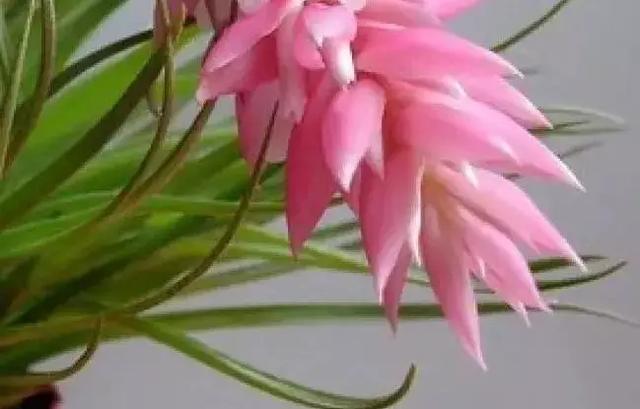
Air plants, also known as tillandsia and air flowers, are the only plants on Earth that live in the air without water or soil. They need neither water culture nor soil culture, and they can bloom with brilliant flowers.
Air plants tolerate drought and strong light, and a small number of them prefer humid environments. Most air plants look grayish-white because their leaves are covered with fine hairs that reflect light.
I. Care
1. Growing containers: mainly shells, stones, driftwood, tree fern boards, etc. They can be fixed by hanging or glued in place.
2. Water and humidity: the so-called no-watering applies when air humidity is at 90%. Generally, during the growing season, mist the plant frequently, using a spray bottle to spray evenly over the leaf surface so that the entire leaf surface is moistened, and be careful not to let water accumulate in the center of the rosette. If too much water is sprayed, turn the plant upside down to drain the excess. In dry seasons, do it once a day; in humid seasons, 2-3 times a week is enough.
3. Light control: the light needs of air plants depend on the variety. If the leaves are hard and gray, they need plenty of sunlight and can be placed by a window or in a spot with indirect sunlight; if the leaves are green, they can grow normally in partial shade or indoors.
4. Proper fertilizing: during the peak growing season, spray once a month with Huabao, monopotassium phosphate plus a small amount of urea; stop fertilizing in winter and during the flowering period.
II. Simple decoration
1. You can hang the plant by a window;
2. Place it on a stand;
3. Pair it with a frame to form a picture;
4. Glue it to a vertical wall;
5. Place it on a desk.
Note: never keep it in a tank. Air plants need a large amount of air circulation, and being sealed in a tank will make them rot.