What is a tree covered in stars? Introducing this unusual tree
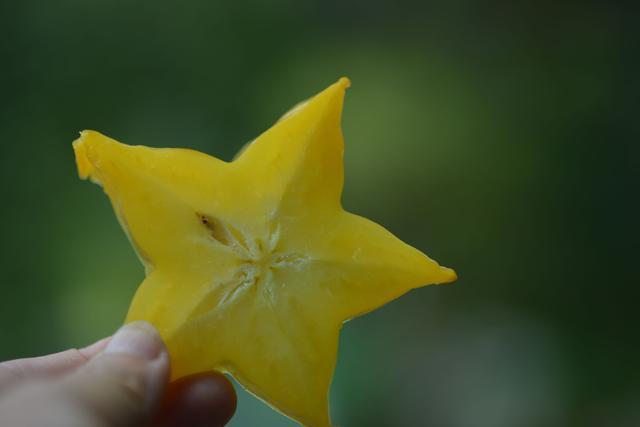
There are many trees in our lives. Today we introduce the carambola tree, which is easy to climb and also produces delicious fruit. It is often planted in gardens and courtyards, and its fruit tastes both sour and sweet, with high edible value. Now let us introduce the relevant knowledge about growing carambola trees.
The carambola tree (also known as yangtao or wulianzi) is an evergreen shrub or small tree in the genus Averrhoa of the family Oxalidaceae. It originated in tropical Asia, is abundantly produced in southern mainland China and Taiwan, China, and from the tropics to the subtropics in the Philippines, among other places. People in Fujian call it yangtao, and in English it is called the "star fruit." Its fruit is about 6-8 cm in diameter and can be eaten as a fruit or used as a culinary ingredient, such as in salads, Western-style pickles, and candied fruit; it tastes like pear.
In Hainan, the carambola is an extremely common tree, like the girl next door. It seems that almost without notice, it has already grown from a thin, frail sapling into a large tree with luxuriant branches and abundant fruit. The carambola flowers are very small and fragmented, hardly brilliant, let alone delicate and charming; they seem to have no fragrance either. In small clusters of vermilion, faintly visible among the branches, they nevertheless have a unique charm. But the carambola flower has no long stem to support it. Once picked, it can neither be pinned to a bun nor placed in a vase, so it seems its purpose from birth is to bear fruit, with no extravagant hope of competing in beauty. Year after year it quietly blooms all over the branches according to the season, making the whole tree look as if it is covered with red stars.
Planting tips
1. Except in excessively cold weather, the four-season sweet carambola can be planted throughout the year.
2. The earlier it is planted, the longer the growing time, and the higher the yield in that year.
3. For planting depth, place the root ball into the hole slightly below ground level. Too deep and the fruit seedling grows slowly; too shallow and the fruit seedling is prone to drought damage, reducing the survival rate.
4. When planting, be sure to water thoroughly to settle the roots, then water every day or every other day until the plant survives.
5. Before planting, dig a large planting hole and apply sufficient decomposed organic matter as base fertilizer. Once the soil has settled, it can be planted.
6. When planting, the seedling should be held upright, the soil around the roots should be pressed firm, and grass should be spread over the surface.
7. After planting, cultivation is needed at least once a year to promote soil weathering, achieve good aeration and good water permeability, and benefit root growth.
Sweet carambola has the habit of bearing fruit early. Generally, it is planted at the beginning of the year and harvested at the end of the year, but in the early stage there is a lot of open space between rows and plants, and carambola is afraid of intense sunlight, so it grows best under semi-shade and humid conditions.