Selaginella Bonsai Is Extremely Drought-Tolerant: Detailed Guide to Daily Care Methods and Precautions
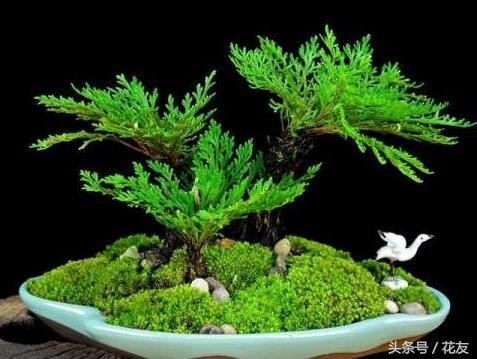
Selaginella has certain medicinal value and also relatively high ornamental value. Grown as a potted plant, it has an elegant form and is easy to care for. If it can be combined with rocks to create a bonsai, its ornamental value will be further enhanced and displayed. Placing a Selaginella bonsai indoors not only helps resist radiation, but also beautifies and decorates the environment.
Bonsai: Production and Care of Asparagus Fern Bonsai - Place One in the Living Room and Your Taste Instantly Improves
Selaginella Bonsai
It has extremely strong drought tolerance. When drought-stressed, it curls inward into a ball, and after timely watering, it easily unfolds again. Watering should be adjusted accordingly in different seasons, and Selaginella tolerates poor soil and has low fertilizer requirements. It prefers a loose, breathable, well-draining sandy soil environment. Based on these characteristics, we can apply the correct care methods to keep it in good condition.
Bonsai: Styling and Fertilizer and Water Management of Chinese Fringetree Bonsai
I. Soil
Since Selaginella prefers a loose, breathable, well-draining sandy soil environment, we should prepare a loose potting soil with good permeability for it. Because Selaginella tolerates poor soil, mixing soil or garden soil with fine sand at a ratio of 1:4 is usually enough to meet its soil environment requirements.
II. Light
Like pines and cypresses, Selaginella has tenacious vitality and relatively prefers a warm and semi-shaded growing environment. When grown as a potted plant, it is generally enough to provide a shaded and humid place without direct strong light for its care and management.
Selaginella
III. Temperature
Since Selaginella relatively prefers warmth, keeping its growing environment at around 20°C is more suitable. In summer when temperatures are high, in addition to avoiding direct strong light, it is also necessary to spray water more often to maintain humidity and lower the temperature; in winter when temperatures are too low, especially when they drop to 0°C, cold protection and warmth measures should be taken promptly.
IV. Watering
Selaginella has relatively strong drought tolerance. Apart from the growing season, when a large amount of water is needed to keep the potting soil moist for sprouting and growth, its water demand is often relatively low at other stages. Therefore, to maintain humidity, it can be sprayed with water more often, especially in summer, but when the weather is too hot, it is not suitable to water with cooler water.
V. Fertilizing
Selaginella is not highly dependent on fertilizer and relatively tolerates poor soil, so during ordinary care and management it does not need much fertilizer. Usually, applying a supplementary fertilizer once every half month is enough.
VI. Repotting
Selaginella can be grown in a shallow pot, but after a long time it still needs timely repotting. Repotting is usually carried out in spring. If repotting is not needed, changing the soil should also be considered, because after growing for a long time, the soil structure will undergo some changes, and the nutrients will also be depleted.
VII. Pests and Diseases
Selaginella is relatively susceptible to attacks from pests and diseases such as leaf spot, anthracnose, and brown soft scale, and the harm from these pests and diseases is often relatively serious, so we should promptly prevent and control them in ordinary times. In addition to using chemicals for spraying and killing, manual removal of insects can also be combined with treatment. Of course, it is very important to always ensure the environment is sufficiently ventilated.
Selaginella Bonsai
In addition to the care measures in the above aspects, during management we also need to pay attention to the following aspects:
1. Selaginella prefers a warm and shaded-humid growing environment, so in ordinary times, in addition to providing suitable temperature guarantees, watering should be moderate, especially not too much, since Selaginella is relatively drought-tolerant. In summer when temperatures are high, spray water more often to maintain humidity and lower the temperature, but absolutely avoid using cooler water, otherwise it will cause a certain amount of stimulation and harm to the plant.
2. Selaginella prefers a semi-shaded growing environment. In summer, avoid exposure to the scorching sun, and even in ordinary times pay attention to light intensity. Generally, letting it receive scattered light is enough to meet its growth needs.
3. Selaginella relatively tolerates poor soil and does not particularly like fertilizer. If fertilizer is applied blindly, it may cause fertilizer damage and thus cause major harm to the plant.
4. In ordinary times, ensure that the growing environment of Selaginella is well ventilated, and especially avoid the appearance of a hot, humid, and unventilated environment, otherwise the plant is prone to infection by pests and diseases.
Friends interested in growing flowers can follow the public account: Hua You. Every day there are wonderful articles on growing and appreciating flowers to share with you, and like-minded flower friends to enjoy the sea of flowers with you. Submission email: [email protected].