What plants are suitable for the living room? You need to know these taboos in advance
Tips for choosing living room plants:
(1) Choose plants according to the living room's decorative style
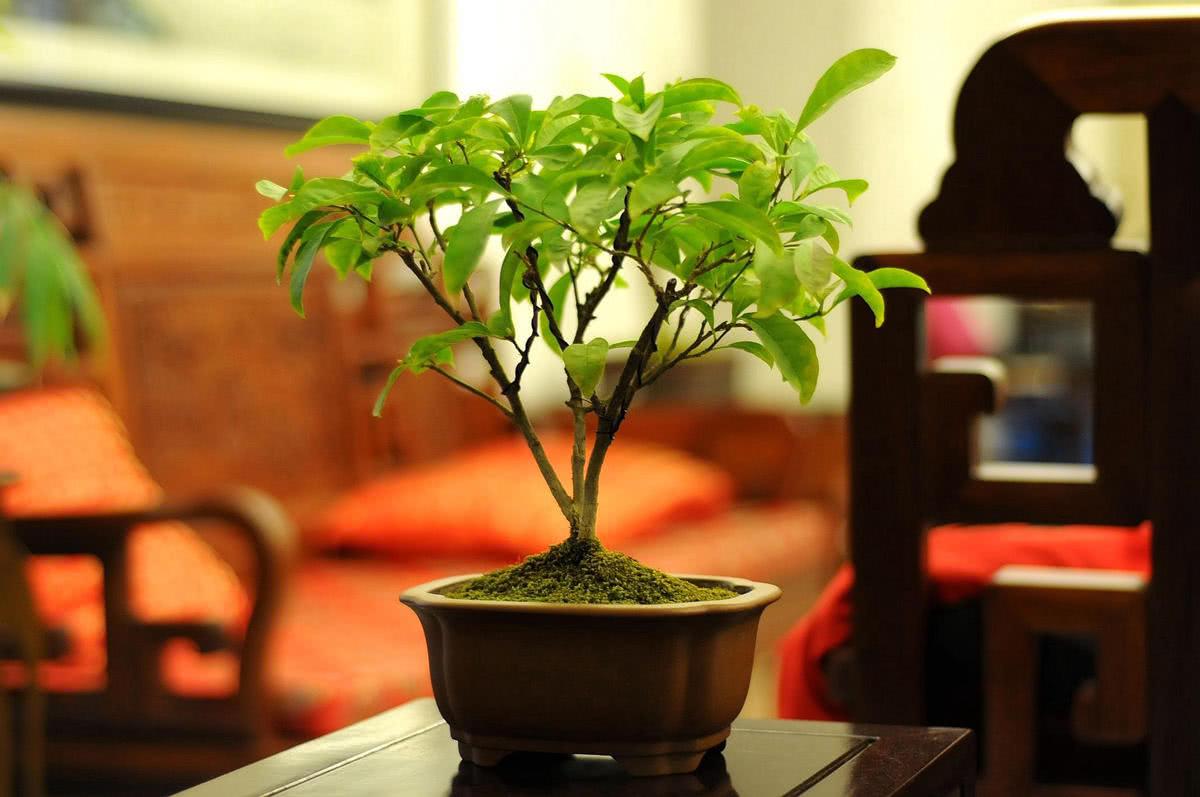
For an antique and elegant traditional Chinese style, you can choose a tree-stump bonsai as the main feature, or place a tall, upright, wide-crowned Brazil wood (Dracaena fragrans), cordyline (Cordyline fruticosa), or croton (Codiaeum variegatum) in the corner, or place a pot of lucky bamboo (Dracaena sanderiana) on a long console table. For a grand and luxurious modern style, you can choose rubber plant (Ficus elastica), palm, and other plants with larger leaves and taller forms, placed in a corner or in front of a floor-to-ceiling window, with a pot of trailing plants on a wall shelf, letting the branches and leaves hang and cascade down, which can give the whole room a feeling of "fineness within coarseness, strength within softness." For an artistic, romantic, abstract style, you can choose some trailing plants, such as various imported ivies, fine-leaved Chinese orchids, etc., or arrange a tall tree-stump bonsai along the wall.
Choose plants according to the living room's orientation
South-facing living room: most flowering plants and colorful-leaved plants are ideal choices, such as camellia, azalea, crown of thorns (Euphorbia milii), clivia (Clivia miniata), bougainvillea, kalanchoe, mock orange (Aglaia odorata), geranium, etc. East- or west-facing living room: an east-facing living room can usually grow plants that do not tolerate high temperatures, such as calamus (Acorus calamus), calla lily (Zantedeschia aethiopica), cyclamen, asparagus fern (Asparagus setaceus), arrowhead (Syngonium podophyllum), caladium (Caladium bicolor), African violet, etc. A west-facing living room can usually grow plants that tolerate high temperatures, such as bromeliads, begonia, gloxinia (Sinningia speciosa), primrose, Christmas cactus, cactus, fittonia (Fittonia albivenis), etc.
(3) Choose plants according to the living room's area
In a large living room, beside the sofa or in unused space, you can place some large and medium-sized foliage plants such as bamboo (Bambusa), sago palm (Cycas revoluta), rubber plant (Ficus elastica), or bamboo fern (Bambusa multiplex), etc. In a medium or small living room, you can choose medium and small trailing plants such as ivy and spiderwort (Tradescantia), or grow some shorter plants such as cactus and aloe, and you can also choose small potted citrus, rosemary, myrtle, spider plant (Chlorophytum comosum), etc.
(4) Choosing decorative plants for a newly renovated living room
Place some plants that can purify the air, such as:
ivy, spider plant (Chlorophytum comosum), peace lily (Spathiphyllum), snake plant (Sansevieria trifasciata), bamboo grass (Setaria palmifolia), etc.
(5) Choosing plants to improve air humidity
In modern homes built with steel bars and cement precast slabs, the air humidity is below the normal standard, and sedges like water, so placing hydroponic sedges indoors can raise the indoor air humidity.
Taboos in selection
(1) Avoid choosing plants whose light habits do not match the living room's light conditions.
(2) Avoid choosing plants that friends who visit often do not like.
(3) Avoid choosing plants whose size is out of proportion to the living room space and whose color is too close to the living room's color.
This article is originally created by Life Honey Pot, taking you to learn knowledge together!