How should Dendrobium be fertilized to grow vigorously and achieve higher quality?
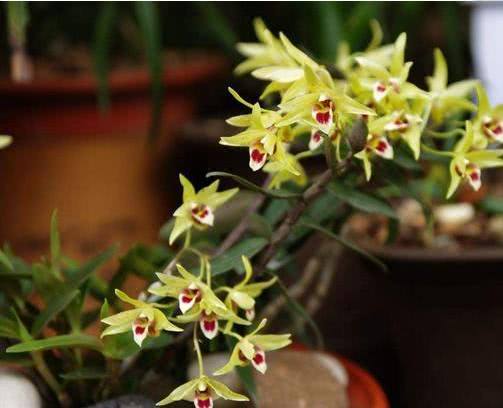
Tiepi Shihu (Dendrobium officinale) is quite precious, so there are some unscrupulous merchants on the market who sell poor-quality Dendrobium seedlings as inferior substitutes, and some even pass off ordinary Dendrobium seedlings as Huoshan Shihu. So for beginners, the Dendrobium seedling market is still quite murky, so I suggest that friends who want to grow Dendrobium at home do some homework in advance, study its characteristics, and buy Dendrobium seedlings from relatively reliable merchants.
When buying seedlings, choose ones that look healthy and have not been infected by pathogens; it is best if the stems of the Dendrobium seedlings are relatively thick, not too tall, and preferably have four or five leaves. This kind of Dendrobium seedling has a relatively high survival rate. Of course, I think the best option is that if any of your friends grow Dendrobium, you can ask an experienced grower for cultivation methods, and you can also transplant one or two plants from a friend. Dendrobium growth requires relatively strict environmental and nutritional conditions.
Fertilization is one of the important steps, because only with proper fertilization will the Dendrobium plants grow vigorously and the Dendrobium quality be higher. Fertilization should be reasonable, using small amounts and frequent applications; when fertilizing, it is best to use organic fertilizer or special-purpose fertilizer, and the fertilization plan should also be adjusted according to the plant's growth stage to ensure normal growth of the plant. Potting soil replacement: after taking the plant out, first remove the old growing medium, cut off the rotten old roots, and if the plant is relatively large, you can use a larger flower pot.
Fill a layer of charcoal in the bottom of the pot, then place the large plant in, firm the new growing medium, and place it in a semi-shaded place. The time for repotting should be after flowering. Propagation key points: Dendrobium is mainly propagated by division. Dendrobium planting is generally carried out in spring, because spring has high humidity and gradually increasing rainfall, making it easy for planting to survive. Choose healthy, pest- and disease-free Dendrobium, cut off stems older than 3 years for medicinal use, and use two-year-old new stems for propagation. During propagation, cut off the overly long old roots.
Leave 2~3 cm, separate the clumps, with each gram containing 2~3 stems, then plant them; methods of planting against stones and planting against trees can be used. Because Tiepi Shihu (Dendrobium officinale) is suitable for growing in a semi-shaded and semi-moist environment and needs good air permeability, when choosing a flower pot you must pay attention to choosing one with good air permeability; an ordinary clay pot can be chosen, but the bottom of the pot should preferably have multiple drainage holes. Next is the most important step, the preparation of the growing medium. When beginners prepare the growing medium, they can directly choose from the market.
ready-made growing medium specially used for cultivating Dendrobium. If you want to make the growing medium yourself, you can first place stones with good air permeability at the bottom of the flower pot, then add coconut husk, crushed wood shavings, pine bark (nail-sized), etc., and some moss can be placed on top. However, before putting the growing medium into the flower pot, you must do a good job of disinfection; you can soak the growing medium in potassium permanganate for a day and a night, then wash it clean, dry it, and only then can it be put into the pot.
Use the growing medium to cover the roots of the Tiepi Shihu (Dendrobium officinale); there is no need to bury it too deep. Then just water it thoroughly, but avoid too much water. After potting, the Tiepi Shihu should be moved to a cool place. Tiepi Shihu is relatively delicate, so it must be carefully cared for in ordinary times. Tiepi Shihu likes a cool and moist environment, so avoid direct sunlight in ordinary times, but it also cannot be kept completely without sunlight; growers can choose to move the Tiepi Shihu out when the sun is not too harsh, and let it get some sun to promote growth.
When the weather is too dry in ordinary times, you can use a spray bottle to spray some water on the Dendrobium leaves. The best temperature for Dendrobium growth is around 25 degrees; too hot or too cold is not good for Dendrobium growth. Because Dendrobium relatively likes acidic growing medium, you can collect some rainwater, let it sit in the sun, and then water the Dendrobium with it. However, when watering, you must control the amount; it must not be too much or too little, which requires growers to accumulate more experience. In ordinary times, Dendrobium does not need too much fertilizer; during the Dendrobium growth period, fertilizer can be applied about once every half month, and orchid-specific fertilizer is enough.