High temperatures make succulents cry: a few tips to guarantee a perfect summer escape
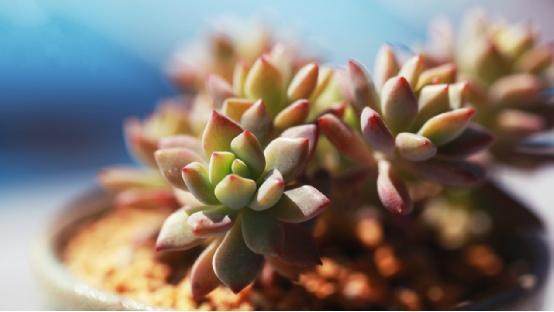
June is near, summer is here; temperatures rise, and succulents cry... As everyone knows, summer is absolutely the "season of suffering" for most succulents. Without timely care, at best the plants wilt and roots rot; at worst, it may lead to mushiness, black rot, or even the death of the entire plant. All the grower's hard work goes to waste just like that. So how can this kind of "tragedy" be avoided? Today I will introduce several methods to you, so your succulents can successfully "pass the tribulation" and grow more vigorously and beautifully.
Water control must be careful!
First, a "much-repeated" issue - watering. Succulents are drought-tolerant, but most go dormant in summer, so controlling the amount of water becomes especially important. Generally speaking, dormant succulents have a poor ability to absorb water, and if you water without restraint, root rot is bound to happen. Here we can use the "gradual water cut-off" method: when the temperature is around 30°C, water thoroughly once every 10 days; if the temperature exceeds 35°C, stop watering.
Of course, one thing to note here is that watering is best done in the cooler early morning or evening, and you should try to water the soil, avoiding water droplets left on the succulent leaves. Why such strict requirements? Actually, it is to avoid the leaf scorching caused by sunlight hitting water droplets on the leaves - after all, the beauty of succulents lies entirely there!
Temperature differences must be taken seriously
Many people have studied plant watering to some degree, but their understanding of temperature differences may not be so clear. Although a large temperature difference can make succulents more colorful to a certain extent, it is also an important cause of succulents "turning to mush", so when growing succulents, you must always pay attention to the weather. Never water when the short-term temperature difference is too large, and pay attention to shading after rain.
To improve the resistance of succulents, you can usually use an organic nutrient solution diluted more than 800 times to maintain fertility. It is rich and balanced in nitrogen, phosphorus, and potassium, and has added various organic matter, minerals, and amino acids, promoting plump succulents and enhanced resistance.
Maintain a ventilated environment
A hot and unventilated environment will affect the transpiration of succulents. If they grow in such an environment for a long time, the death of the entire plant can happen in minutes. So friends who choose to grow succulents at home must place the succulents in a place with good ventilation. If conditions do not allow it, opening the windows every day to strengthen air circulation is also very effective.
Put up shade netting
In the previous precautions, we have mentioned the sun-shading treatment of succulents in summer many times. In fact, this can be discussed entirely on its own. During the relatively cooler periods in the morning and evening each day, you can let the succulents get some sun. As for the rest of the time, you can set up a shade net on the balcony to maintain a cool temperature.
Do not cling to dead leaves
If, due to a mistake in operation, dried or fallen leaves appear in your succulent pot. Wake up - now is not the time for "burying flowers" or sentimentality. Immediately remove them with tweezers. This is to prevent the breeding of bacteria. Of course, during the cleaning process, it is best not to touch the new leaves. If there are dried but not fallen leaves, just gently cut them off with small scissors.