Bonsai technique: Using a sacrifice branch for air layering = making use of waste
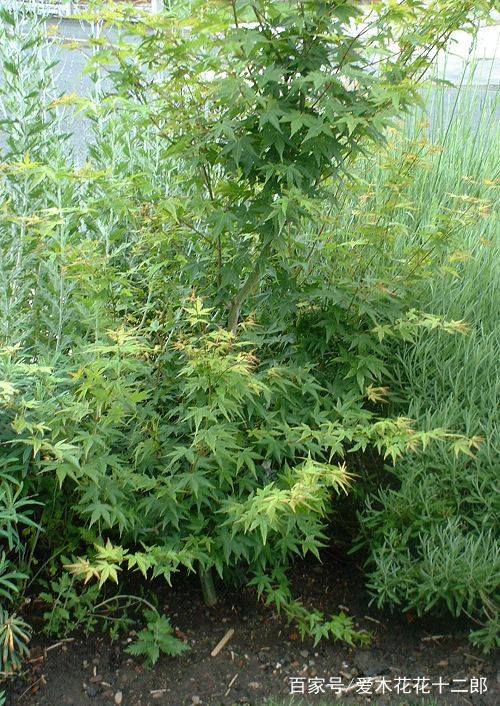
This Japanese maple, also called mountain maple, has been planted in the ground for several years. When it was planted, a tile was placed under its roots to help them grow nicely. It has always been left to grow freely. The upper part of the trunk was used as a sacrifice branch, but the sacrifice branch could not be allowed to grow too large, so at this point it should be cut off. But the branches above the sacrifice branch were so lush that cutting them off would be a shame, since growing from a seedling to this size takes three or four years. The best approach was to first do an air layer, and then cut it off, which counts as making use of waste.
So the guy chose a suitable position, selecting the cut location according to the lines and branching points of the upper part, and did an air layer. The layer was very successful. Two months later, many roots had grown out, and it was ready to be harvested.
The new plant branch obtained from the air layer was pruned a bit and potted up. After taking the air layer, it is best to cut off part of the branch, which can reduce the load on the new root system and improve the survival rate. However, the guy did not mention what happened later to the plant obtained from this air layer.
After the air layer, the lower part continued to grow in place, with a new sacrifice branch, and after two years it had grown quite a bit. If kept in the ground all along, many trees will maintain a state that looks very young, so at this point it can be considered for potting up. On one hand, this speeds up the aging of its bark; on the other hand, its future also needs to be planned.
After another year, it was dug up and potted. All the branches were cut off, letting it regrow a new branch and foliage structure.
The image below is already the result 3 or 4 years after potting. If it had stayed in the ground all along, the bark might still be somewhat green, but now it looks relatively mature. After multiple rounds of building branches and pruning, the branches have grown into a fairly ideal structure.
Another year later, the appearance when it buds in early spring. This figure is very tempting.
In summer, the leaves turn green, full of vitality.
Look at this angle again, the curve is still the same. The trunk diameter is 6 cm, and the height is 55 cm.