Gladiolus Potted Care Guide: The Flower That Can Monitor Fluorine Gas
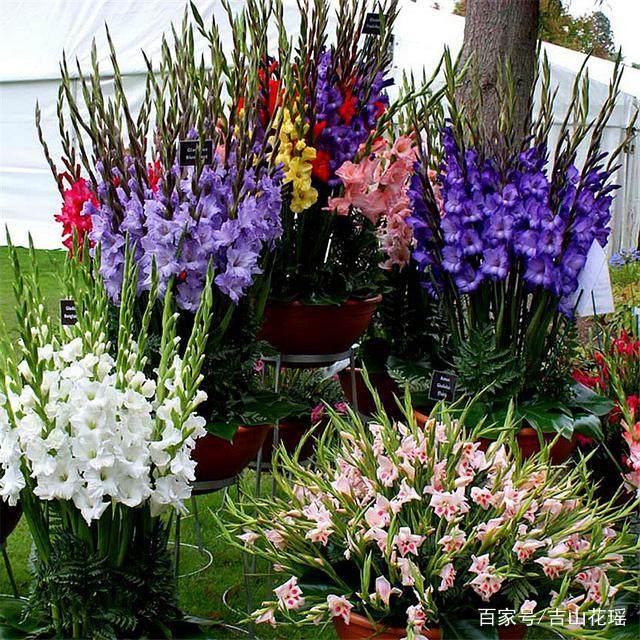
The "fluorine gas-monitoring" flower, Gladiolus. Gladiolus Potted Care Guide
Gladiolus is also known as shanglan, sword lily, water chestnut lily, and shiyangjin. It is currently cultivated all over the world, with a wide variety of cultivars. The flower spike of the gladiolus is taller than the leaves, and the corolla is broad, usually funnel-shaped, with a great variety of colors: not only single-color cultivars in red, yellow, white, blue and purple, but also bicolor cultivars. The photo shows a potted gladiolus.
Potted gladiolus
1. Monitoring effect
Gladiolus mainly monitors fluorine. If a gladiolus lives in an environment with a fluorine concentration of 0.1 .u.L/L for 30 h, spots, usually brown, will appear on its leaf margins and leaf tips.
2. Care guide
(1) Choosing a pot When growing gladiolus as a potted plant, it is best to choose a clay pot; do not use plastic or porcelain pots with poor air permeability, otherwise its normal growth will be affected.
(2) Choosing soil Gladiolus has no strict requirements for soil; generally a sandy soil is chosen, as long as the soil is loose, fertile and drains well, with a soil pH of 5.6-6.5.
(3) Planting Before planting, first select good gladiolus corms; corms without markings or spots are best, with the root-producing part and the sprouting part undamaged, and it is best to choose small flattened round corms. Prepare the soil in the pot and transplant the small corms into the pot. If the corms are relatively large and the soil is loose, the planting depth needs to be 8--10 cm; if the corms are relatively small and the soil is rather sticky and heavy, a planting depth of 6-8 cm is enough. After potting, water once thoroughly and keep the soil moist, then place it in a well-ventilated spot with sufficient light for normal care and management.
(4) Light Gladiolus likes sun and is a long-day plant; it is best to receive 16 h of light per day. During the growing period of gladiolus, the plant needs a minimum of 10 h of light per day. When planting in winter, if there are cloudy and rainy days with insufficient light, supplemental artificial light should be provided as appropriate.
(5) Temperature Gladiolus likes a warm environment and fears severe cold and freezing. In the hot summer it cannot tolerate intense heat, and it is suitable to place it in a fresh, cool environment. When planting gladiolus in winter, the temperature must not be lower than 0°C, otherwise the plant will suffer cold damage. After the corms sprout, the optimum daytime growing temperature is 20-25°C, and the optimum nighttime temperature is 10-15°C.
(6) Watering After seedlings emerge, water once every 2-3 days. In summer, water once every 1-2 days. After flower buds form, the plant needs enough water, so water once a day or every other day, and at the same time shade it slightly from the sun. After October, stop watering.
(7) Fertilizing Gladiolus does not need too much fertilizer. After the seedlings grow 2 leaves, apply decomposed organic fertilizer once about every 15 days; apply phosphate fertilizer once at the bud stage; apply superphosphate and bone meal once while watering; apply potassium fertilizer once after flowering.
(8) Propagation Gladiolus can be propagated by the cut-corm method, the corm division method, sowing and tissue culture, with the corm division method mainly used.
(9) Placement Gladiolus is mostly used as a cut flower to decorate the home, and it can also be grown in pots and placed on balconies, windowsills, rooftops and other places with good light; planting it directly in the courtyard for viewing is also a good choice.