Root cutting propagation method for winter jasmine: cut roots during flowering season to make bonsai
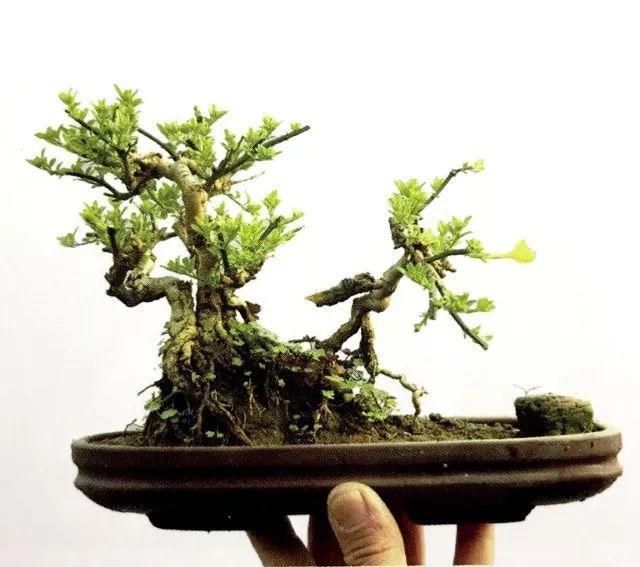
Winter jasmine
Also known as yingchun, golden belt, and little yellow flower,
it is a deciduous shrub in the genus Jasminum of the family Oleaceae.
Horticultural cultivars include 'Huti Yingchun' and 'Longzhua Yingchun',
and similar species include four-season winter jasmine, Yingxia, and yellow jasmine.
Sourcing materials for winter jasmine bonsai
When it comes to sourcing materials, plants propagated by cuttings, layering, division, and other methods can be used to make miniature winter jasmine bonsai, and old stumps with good form can also be selected.
If you or a friend already has a winter jasmine bonsai, the editor also recommends a good method for fellow enthusiasts. When repotting a larger winter jasmine bonsai, combine it with pruning, select well-formed roots that have been cut off, and use them for cuttings as material for making miniature winter jasmine bonsai.
Shaping a winter jasmine bonsai
Although winter jasmine (including other types of flowering and fruiting plants) is mainly grown for its flowers, in bonsai its roots, trunk, branches, and leaves can all be appreciated. When shaping, pay attention to the overall arrangement of the branches and trunk so that it can be enjoyed in all four seasons.
Because winter jasmine is a trailing plant, although its branches grow very quickly, it has no obvious main trunk, and even relatively thick branches are hard to find. Therefore, the method of "using the root in place of the trunk" can be considered, lifting the gnarled and varied roots above the soil surface to replace the trunk, and pruning the branches to be firm and vigorous with pauses and turns.
Root and trunk styles:
Literati style, exposed-root style, bridge-crossing style, rock-clinging style, cascade style, waterside style, etc.;
Branch cluster styles:
Weeping branch type, imitation plum stump type, large tree type, etc.
Editor's tip: The shaping method for winter jasmine bonsai is mainly pruning, supplemented by wiring.
Care of winter jasmine bonsai
1. Temperature
Winter jasmine likes a warm, humid environment with plenty of sunlight, can also grow in semi-shade, and is tolerant of drought and cold.
2. Watering
Winter jasmine is very afraid of waterlogging. During the growing season, watering should follow the rule of "do not water until dry, and water thoroughly when you do." After September, watering should be reduced to avoid excessive branch growth and help it overwinter safely.
3. Fertilizing
Each spring after the flowers fade, apply decomposed organic liquid fertilizer 1~2 times to replenish the nutrients consumed by flowering and help the plant recover its vigor as quickly as possible.
June to August is its flower bud differentiation period. The use of phosphorus and potassium fertilizer can be increased, and watering should be controlled to help bud formation. Fertilizing in autumn can increase the plant's cold resistance and promote the development of flower buds.
Applying some fertilizer before flowering can not only make the flowers fuller and more beautiful, but also extend the flowering period.
4. Repotting
Repot each spring after the flowers fade. The potting soil should be loose, fertile, and well-drained sandy soil.
5. Base fertilizer
Mix 1 part each of garden soil, humus soil, and sandy soil evenly, and add a small amount of decomposed cake fertilizer, poultry and livestock manure, etc. as base fertilizer. After planting, water thoroughly, first place it in a spot without direct light for about a week, then move it to a wind-sheltered, sunny place for care.
6. Pruning
Winter jasmine bonsai can be pruned after the flowers fade. Cut off dry branches, diseased and pest-damaged branches, and leggy branches, and shorten long branches, keeping only 2~3 pairs of buds on each branch.
Editor's tip: This is because the flower buds of winter jasmine grow on branches produced in the current year. This can promote new branches and the formation of more flower buds, which is good for flowering the following year. Winter jasmine has strong sprouting ability, so during the growing season, branches and buds not needed for the shape should be removed at any time, and tip pinching and heart removal should be carried out to control branch growth and keep the tree form beautiful.
Editor's tip: If a careful pruning is carried out once every year before winter jasmine blooms, making it well-spaced and orderly, then its posture will look very perfect.
Alright, that is all for this article. If fellow enthusiasts still have any questions, check in in the comment section below.
I do not know whether the editor explained it clearly and in detail. For fellow enthusiasts who did not understand, the editor has specially written an acrostic poem for you. It may not be written well, but it can help you find the editor.
More wonderful articles are all in an acrostic poem:
A gentle breeze lightly strokes, flowers remain ever there
Strolling freely in spirit, wandering south of the mountain's sunny side
Searching for wonders and seeking clever finds at Bronze Sparrow Terrace
Planting red and cultivating green, above the blue clouds
--Come challenge: four lines of an acrostic with hidden ends, connect the first characters + connect the last characters, and you can get an eight-character motto, summoning the editor's true form! When you come, remember to say: "Editor, your secret has been cracked by me"!