Bonsai Root Grafting Tutorial: A Detailed Step-by-Step Guide to the Approach Grafting Method
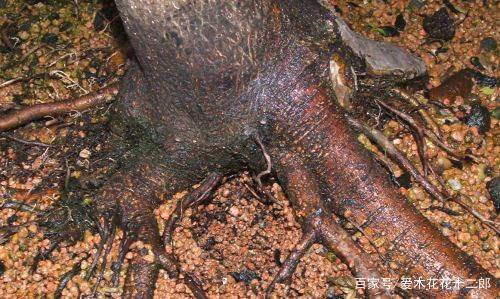
It is very common for a bonsai tree's root flare to be missing roots. If you can add one in the spot where a root is missing, it will look even more perfect. There are only a few methods for adding roots, and grafting is one of them, while approach grafting is one of the grafting methods. The approach grafting method has a very high success rate; as long as the season is suitable, it can basically reach 100 percent. It is usually carried out during the plant's vigorous growth period.
For example, on this Japanese maple (Acer palmatum), there is a blank spot at this position in the picture. If a root is added there, it will fill in this blank.
First, cut a small groove at a suitable position, cutting away the bark down to the woody part; cutting a bit deeper is also fine.
Next, find a good position for the young sapling to be used for approach grafting and fit it into the small groove, secure it with aluminum wire, and then seal the cut with sealing compound.
Since the sapling is very young, its bark is green and does not harmonize with the old tree, so you need to bury everything below the approach grafting point with soil; over time it will take on the color of the tree's roots.
Once the sapling has filled the groove and fused together with the large tree, you can cut off the upper part.