Illustrated Guide to 12 Bonsai Styles, Practical and Worth Saving
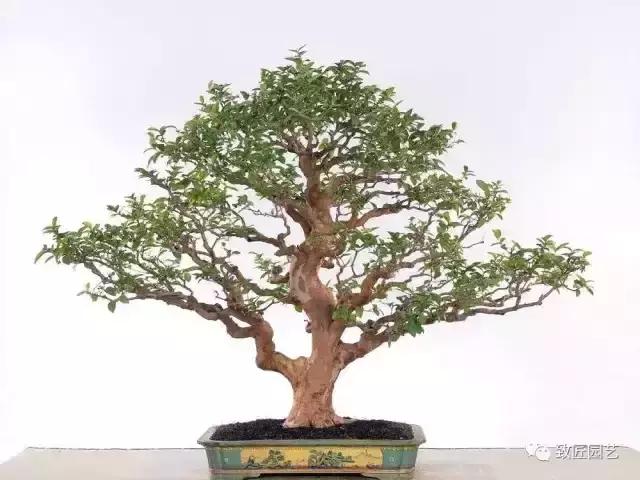
Formal Upright Style:
The tree stands upright, with the imposing presence of an ancient towering tree; in Lingnan it is also called the "large tree type."
Slanting Style:
The trunk lies sideways, while the branches and crown spread out beyond the pot, like an ancient tree by the water, so it is also called the waterside style.
Cascade Style:
The trunk hangs and droops outward, resembling an ancient pine on a sheer cliff. If the trunk hangs no lower than the bottom of the pot, it is called semi-cascade; if it hangs below the bottom of the pot, it is called full cascade. In Yangzhou it is also called "guakou."
Horizontal Style:
The trunk lies horizontally on the soil surface, while the branches and crown rise and extend, as if struck by lightning or blown down by wind.
Curved Trunk Style:
The trunk coils and twists like a dragon, commonly seen in traditional forms.
Multi-Trunk Style:
The trunks grow in clusters, uneven in height, with twisted branches extending in all directions. Among these there are also the double-trunk style, triple-trunk style, or single-base multi-trunk style.
Deadwood Style:
The main trunk is mottled, hollowed and eroded through, full of an ancient, weathered air.
Weeping Branch Style:
The branches and leaves droop and spread profusely, like a willow trailing over green waves.
Wind-Swept Style:
The branches and leaves drift to one side in the wind, full of movement, like grass bending in a strong gale.
Connected Root Style:
Thick roots are exposed and connected, with stems of uneven height, arranged in a pleasing, scattered order. In Yangzhou it is commonly called "crossing the bridge," and in Guangdong and Guangxi it is called "connected-branch tree."
Raised Root Style:
Through cultivation techniques and styling methods, the twisting, winding form of the root system is transformed, presenting an ancient, weathered presence.
Forest Style: