4 kinds of houseplants tossed into the yard, and within a few months they take over completely
Some plants are simply suited to rough, low-maintenance care. If you want them to do well, don't fuss over them too much; they can thrive even when left alone, and their reproductive capacity is extremely strong. Their defining trait is an extremely strong ability to adapt to their environment, and this type of plant usually easily turns into an invasive plant. If you are growing one in a pot, don't casually toss it into the yard or the wild.
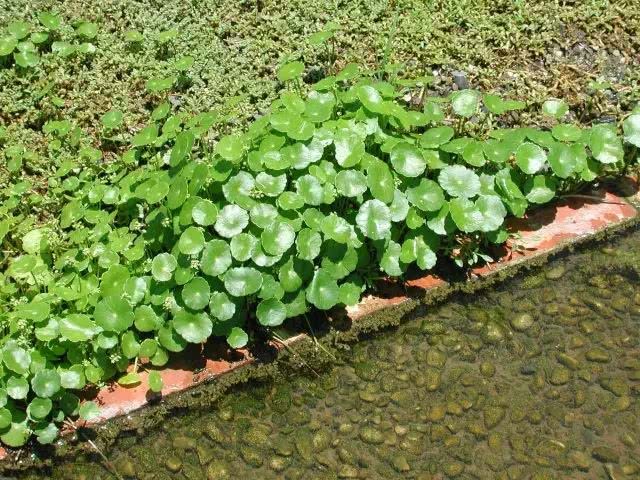
1. Pennywort (Hydrocotyle vulgaris)
Why does pennywort multiply so fast? Because it grows by creeping, relying on the aerial roots of its stems to keep propagating, its runners keep multiplying, and it quickly covers a large area. It can also grow in water, in soil, or in half-water half-soil spots, and its ability to adapt to the environment is truly unbeatable.
Especially in places with plenty of sunlight and water, it covers everything in no time. If you can't grow it well, don't just throw it away carelessly.
2. Mother of Thousands (Kalanchoe daigremontiana)
On the rooftops back in my hometown, you can often see large patches of mother of thousands, especially when I go home for Chinese New Year, which happens to be their flowering season, when a big expanse of red flowers blooms on the rooftops. Of course, these rooftops are all old-style tile-roofed houses, and only when no one manages them do they become covered with mother of thousands.
In fact, they are also called chandelier plant (Kalanchoe delagoensis), and they sprout from seeds in bird droppings, after which their leaves keep producing small plantlets that can regrow after falling off. A single leaf can produce dozens of them, and in less than 3 years they can cover a whole rooftop.
3. Purslane (Portulaca oleracea)
Purslane is originally a kind of wild weed with a particularly strong ability to adapt to the environment; even a tiny crack can produce a large patch of it. The large-flowered purslane (Portulaca grandiflora) that people are willing to cultivate has inherited these traits as well, making it very simple to care for. Snap off a segment and drop it into the soil and it will grow; care is especially simple, and just tossing it onto the soil in the yard can also produce a large patch.
4. Inch plant (Tradescantia zebrina)
In parks in the south, you can often see inch plants covering the hillsides and fields, and they can be seen everywhere in the shade of trees, growing very lushly. As long as there is plenty of water, plus appropriate scattered light and a warm environment, they will keep growing, which shows just how strong their ability to adapt to the environment is.
5. Showy stonecrop (Hylotelephium spectabile)
Showy stonecrop is a common landscaping plant in the north. Its leaves are round and plump, hanging in clusters on the branches, and even when it isn't flowering, it is quite good-looking.
When it blooms, small wind-red flowers cover the branches, blooming in clusters at the top, and when a large patch is in bloom it is even more enchanting. They like full sun and well-drained soil, are suited to rough, low-maintenance care, and are relatively cold-hardy, so they can adapt to cold winter weather.