Tea and passion fruit may get new pesticide residue standards; Chen Chi-chung: If there's a problem, I'll step down
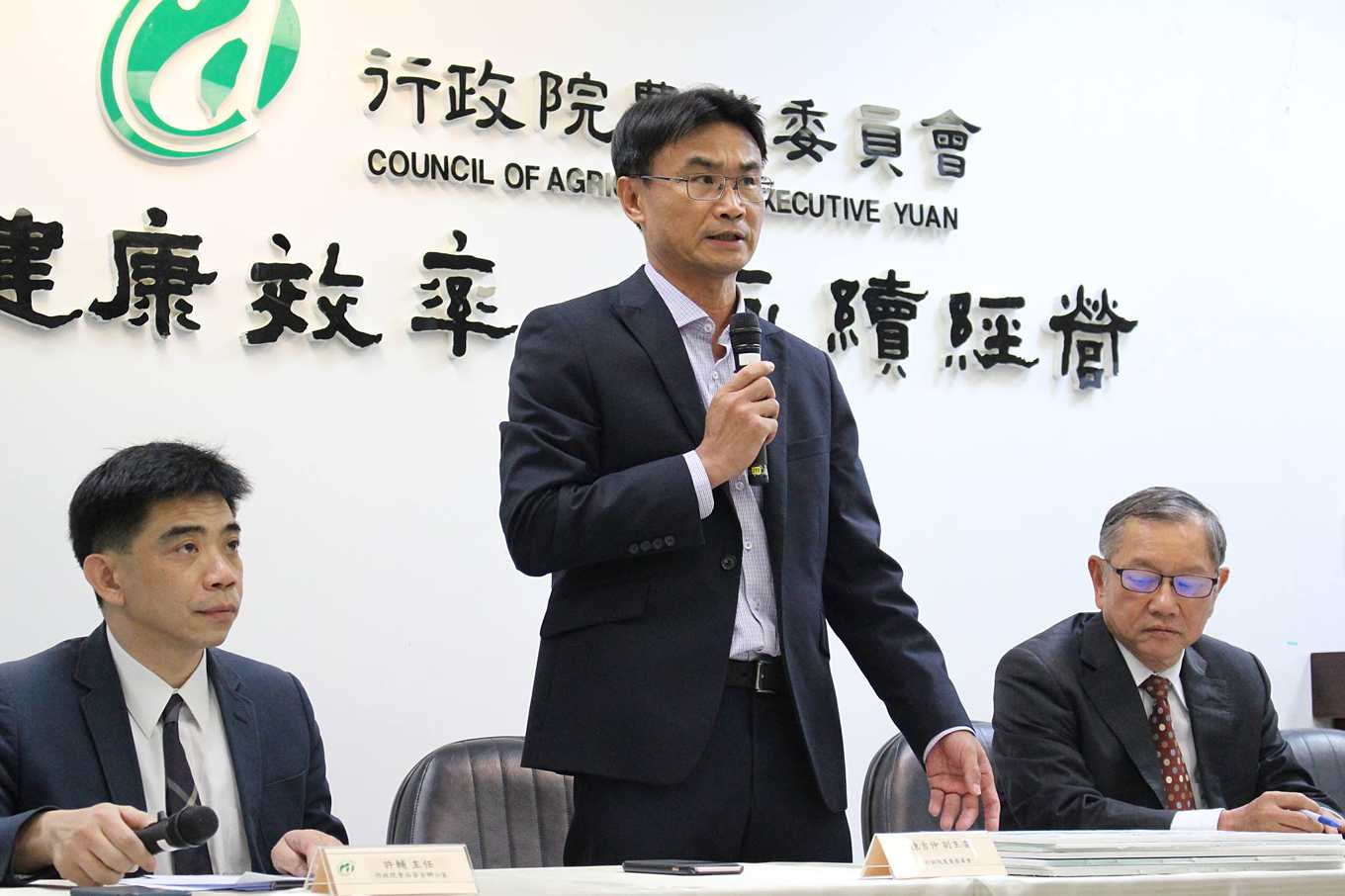
The Food and Drug Administration pre-announced amendments to the "Standards for Pesticide Residue Limits," adding the pesticides "cyantraniliprole" and "spirodiclofen" for tea; for passion fruit, five new pesticide residue standards were added. The move was questioned by outsiders as throwing the door wide open to pesticides and breaking the five links of food safety. In response, Council of Agriculture Deputy Minister Chen Chi-chung held a press conference on the 21st to clarify that standards had absolutely not been relaxed, that all new drug registrations undergo scientific review, and that agricultural product safety and consumer food safety are the priority; if any problem is detected, he guaranteed it would be withdrawn immediately and that he would step down to take responsibility.
Two new pesticides added for tea; Chen Chi-chung: Without new drugs being introduced, old drugs cannot be phased out
In March last year, the Ministry of Health and Welfare's Food and Drug Administration planned to allow the pesticide "fluopicolide" to be used on tea, sparking controversy and being halted immediately. Then in May this year, the FDA again pre-announced amendments to allow the use of "cyantraniliprole" and "spirodiclofen" on tea, with tolerance levels of 1.5 ppm and 20 ppm respectively. Chen Chi-chung pointed out directly that after the addition of fluopicolide for tea caused controversy in March last year, it was discontinued, but agricultural products need pesticides, and "if new drugs don't come in, old drugs will continue to be used." Taking tea as an example, if fluopicolide is used, it only needs to be sprayed once, while other pesticides must be sprayed two to three times. "Which one uses more?"
"If we don't defend this from a professional standpoint, this country will not progress." Chen emphasized that although the aim is clearly to solve farmers' needs and ensure consumer food safety, it is being treated as if introducing new drugs equals relaxing standards. "Without new drugs being introduced, old drugs cannot be phased out." Not only would farmers be unable to solve pest and disease problems, but consumer food safety would face even greater challenges.
Five new residue standards added for passion fruit; Institute of Toxicology: Extended use is not a relaxation
For passion fruit, three pesticide residues were set last year: acetamiprid, fluazinam, and fenazaquin. This year, thiamethoxam and methomyl were added. The Bureau of Animal and Plant Health Inspection and Quarantine explained that passion fruit has more than ten major pests and diseases, including anthracnose, phytophthora blight, thrips, aphids, and spider mites. To address control needs, the government proactively handles extended use of pesticides, and through scientific assessment of safety and effectiveness, opens pesticides originally registered for use on crops of the same production type to control the same types of pests for use on passion fruit. The setting of relevant pesticide residue standards is based on use needs, changing from the original "not established" status to "established," and is by no means a relaxation.
Chen Chi-chung explained that passion fruit has low production volume and a small economic scale, so pesticide companies will not develop pesticides for passion fruit pests and diseases, but farmers still have this need. Therefore, extended use is adopted from similar fruits, and relevant requirements and regulations are then made. "You cannot say that using extended-use pesticides means relaxing standards; there is a big difference."
Fei Wen-chi, director of the Council of Agriculture's Institute of Toxicology, further explained that passion fruit is becoming increasingly popular, but the market is small, so no manufacturer handles pesticide registration. However, crops certainly have many pests and diseases, and if no pesticides are available, farmers will spray randomly, resulting in failed inspections. Now standards are set based on daily human intake, which not only gives consumers more protection but also meets farmers' pest and disease control needs. "Having a regulatory method is better than farmers using pesticides randomly on their own."
Outside concerns about safety; Bureau of Animal and Plant Health Inspection and Quarantine: Introducing new drugs slows resistance
However, are there safety concerns about the five extended-use pesticides added for passion fruit? Feng Hai-tung, director-general of the Bureau of Animal and Plant Health Inspection and Quarantine, explained that different pesticides target different control objects. Five pesticides may be available, but when a certain pest or disease occurs, farmers may only need to use one, and will not use five pesticides at once. "Pesticides also cost money; farmers won't spray if there is no need." However, when setting standards, they are still viewed under strict standards, and the residue standards are set by considering the situation of five pesticides being used simultaneously.
Feng also explained that pesticides are controlled by total amount, weighing risk against a fixed amount, and the allowable daily intake per person must not exceed 80%. Although individual drugs can be used in extension, overall risk will be weighed, and once it exceeds the limit, use will no longer be expanded. Because different age groups eat different foods, when 70% is reached, intake will be calculated according to different age groups to ensure that no age group reaches 80%.
Regarding the newly added pesticides "cyantraniliprole" and "spirodiclofen" for tea, Feng Hai-tung explained that "spirodiclofen" registered for tea is a general acaricide. Everyone thinks there are already pesticides available, so why add new drugs? "Mites develop resistance. Introducing drugs with new mechanisms of action is precisely to delay the development of resistance."
Feng further explained that the two new drugs "cyantraniliprole" and "spirodiclofen" are not necessarily meant to replace any particular old drug. Rather, there are now more than ten types of drugs targeting mites, but half are of the same type, making resistance easy to develop, so introducing new drugs of different types can slow resistance. Otherwise, with only old drugs and resistance developing, farmers would increase dosage and frequency to achieve mite control, which would have negative effects on agricultural products.
"Spirodiclofen" has carcinogenicity level C, with some evidence of carcinogenicity
Chen Chi-chung pointed out that Taiwan has set a 20 ppm residue standard for "spirodiclofen," which is lower than other countries. For example, Japan has set it at 60 ppm. "Japanese people love tea and care about safety, but what we set is one-third lower than theirs."
Fei Wen-chi stated that pesticides have both registration and phase-out systems. If better replacement new drugs are found for early pesticides, they will be gradually eliminated. New drugs are relatively safer drugs, and after evaluation experiments, they have pest and disease control effects without harming the environment or human health.
Fei emphasized that for a pesticide to be registered and used in our country, there must be physical and chemical data, including efficacy, phytotoxicity, residue levels, and toxicological tests such as acute toxicity, chronic toxicity, carcinogenicity, and even effects on bees, birds, and aquatic organisms. Experimental reports must all be provided. "From development to registration is not so easy; only after review and approval is it possible to handle registration."
Pan Chih-kuan, section chief of the Food Division of the Food and Drug Administration, further stated that pesticide standards must be premised on safeguarding food hygiene and safety and national health, refer to international norms, and use scientific methods and evidence to assess safety, including front-end pesticide use needs, toxicity data, residue tests, and national intake assessment. Only after review by the Food Safety and Nutrition Advisory Council and determination of safety will the pre-announcement procedure continue, along with a 60-day comment period.
"Spirodiclofen" has carcinogenicity level C, and outsiders have repeatedly questioned the drug's impact on human safety. Feng Hai-tung explained that level C is based on animal experiments, with some evidence of carcinogenicity, but it cannot be confirmed whether it is carcinogenic to humans. Therefore, for such pesticides, certain standards and tolerance levels are set according to toxicology, and each time a drug's use is expanded, the drug's safety is reassessed.
Tseng Te-tsu, honorary distinguished professor in the Department of Plant Pathology at National Chung Hsing University, pointed out that these two new drugs are very good pesticides, relatively safe, and effective. Many tea farmers are now suffering because of mite problems and need new pesticides. However, "spirodiclofen" has carcinogenicity level C. Will there be no concern for human health? Tseng believes that the residue standards for these two new drugs are very safe for humans, and level C is generally not something to worry too much about. "Tea won't be eaten as a meal."
Chen Chi-chung: If there's a problem, I'll step down immediately
Chen Chi-chung promised that if experiments prove "spirodiclofen" poses a carcinogenic risk to humans, he guarantees it will be withdrawn, and he is willing to fully disclose all materials from the pesticide advisory committee. "Whether introducing new drugs helps tea farmers and whether it improves consumer safety, if it is not safer, I will take 100% responsibility." He also emphasized, "The Council of Agriculture is not only responsible for agricultural production, but also for agricultural product safety. If the introduction of new drugs and extended use cannot make agricultural products safe, I will absolutely take responsibility. If there is a problem, I will step down immediately."
Homemakers United Foundation: "Extended use is possible, but there should be better regulation"
Chang Yu-ling, administrative director of the Homemakers United Foundation Environmental Protection Foundation, stated that all pesticides cause some harm to the human body and the environment, and the number used should be as small as possible. Since new drugs or extended-use drugs are introduced, other pesticide use should be relatively reduced so as not to affect human health. "If drugs come in, drugs must go out. Otherwise, if new drugs keep being allowed in, how can pesticide use be halved in ten years?" Consumers will only feel that there are more and more pesticides, rather than how safe the new drug is.
Chang questioned that since use is extended, whether other pesticides are reduced accordingly. Otherwise, before, one only needed to worry about eating one vegetable and ingesting this drug, but now one might ingest it from three kinds. "Extended use is understandable, but there should be better regulation." Chang emphasized that the fundamental approach should still be to encourage farmers to adopt no-pesticide methods and use other biological control methods.