What plants are best for growing at home in summer?
In the scorching summer, choosing some flowers and green plants can add a touch of coolness to your home.
So what flowers and plants should you choose in summer? And how should you care for them?
There is quite a lot of knowledge involved.
If they are brightly colored flowers, they are more likely to give a strong visual impression and make people restless and uneasy,
so for potted flowers in summer, it is best to choose flowers with light colors and a relatively long flowering period,
and you can also choose some elegant green plants as accents.
1. Mint
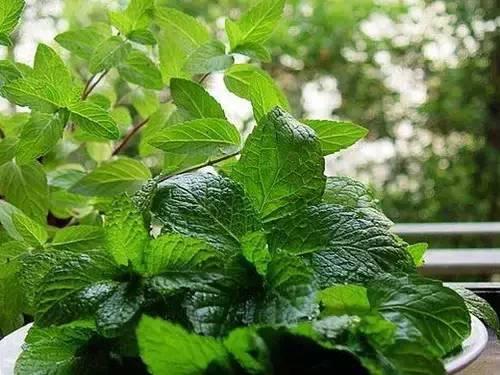
Mint leaves grow in opposite pairs at the stem nodes, with shapes such as ovate and elliptical, and leaf colors including green, dark green and grayish green. Mint has a fresh fragrance with a slight spiciness. In summer, it can dispel indoor dampness and miasma, and has the effect of refreshing the mind and repelling mosquitoes and flies.
Care tips:
Mint likes bright light but not direct sunlight, and at the same time needs abundant moisture. For watering, it is recommended to water when dry and let it dry between waterings ("water when dry, let dry between waterings" is a common term in flower cultivation, meaning to water thoroughly each time and then wait until the soil is almost dry before watering a second time; its purpose is to prevent root rot caused by overwatering and pests and diseases caused by dampness.)
In addition, note that potted mint sold in flower markets cannot be confirmed as having been sprayed with pesticides or not, so it is best not to eat it.
2. Lavender
Lavender flowers are shaped like wheat ears, the narrow leaves are gray and downy, and the flowers are blue-purple, growing on slender stems. Although it is not blooming now and grows best in August and September, it has a unique herbal scent, so it can also be chosen at this time. The cultivation of lavender was already quite widespread in Roman times, and it is called the "queen of herbs." Its fragrance can refresh the mind and brighten the eyes, make people comfortable, relieve anxiety, and also repel mosquitoes and flies.
Care tips:
Lavender needs sufficient sunlight and a moderately humid environment; it is better to provide full sun. It is semi-heat-tolerant, prefers coolness, and likes warm winters and cool summers. In summer, at least 50% of the sunlight should be blocked, and ventilation should be increased to lower the ambient temperature. Lavender does not like water to remain around the roots for long. After watering thoroughly once, water again only when the soil is dry. For the second watering, it is best if the soil surface is dry and the interior is moist, and the leaves are slightly wilted.
3. White Phalaenopsis
Phalaenopsis has broad, large leaves, and one to several arching flower stems. The flowers are large and shaped like butterflies, with graceful flower forms. It is a treasure among tropical orchids and has the reputation of being the "queen of orchids." Phalaenopsis comes in many colors; in summer, white is suitable, as white is a cool tone and looks cool, elegant, peaceful and quiet.
Care tips:
Phalaenopsis likes shade, and room temperature should not be too high. It likes a ventilated and humid environment, and requires air humidity to be kept at around 60%-80% regularly, while maintaining air circulation, preferably with a gentle breeze. It dislikes dry, hot winds, and there should not be too much water accumulation in the pot.
When choosing Phalaenopsis in summer, you can focus on two points: first, there should be many flower buds, and second, the petals should be thick, so that the flowering period can be maintained for a relatively long time.
4. Jasmine
Jasmine has emerald green leaves and pure white, elegant flowers, and is divided into single-petaled, double-petaled, single-leaf and compound-leaf types. Its fragrance is fresh and assails the nose. It blooms in late spring and early summer each year, with July to October as its flowering period.
Care tips:
Jasmine likes fertilizer, especially because its flowering period is long, so it needs more fertilizer. During the growth period, apply a thin cake fertilizer once a week. It likes warmth and humidity by nature, and grows best in a well-ventilated, semi-shaded environment. In midsummer, water it in the morning and evening every day. If the air is dry, supplemental misting is needed.
5. Golden-edged Snake Plant
The rhizome is rolled-sheet shaped, the leaves are sword-shaped, the leaf margins are broad yellow edges, and the center of the leaf has green-white horizontal stripes alternating in a water-wave pattern.
Care tips:
Golden-edged Snake Plant is a perennial herbaceous plant, evergreen throughout the four seasons, and will grow taller year by year. With proper care, it will also bloom. Golden-edged Snake Plant likes sunlight, so it can be placed in a balcony, sunroom or other sunny place, and watered once every two or three months.
6. Pothos
A climbing vine foliage plant, with heart-shaped leaves that have yellow spots. The vine stems are slender and soft, and as its "age" increases, the rhizome gradually grows longer, potentially reaching the ground.
Care tips:
Pothos is also evergreen throughout the four seasons and shade-tolerant, so do not place it in a strong-light environment. If the growing medium or nutrient granules feel dry when touched by hand, it needs watering. You can let it climb on a cylinder made of palm fiber and place it in an entrance hall, or train it into a hanging form and place it in a study or on a windowsill. You can also place a nested pot high on top of a furniture cabinet and let its vine stems hang down freely, or after the hanging vine stems grow too long, loop and hang them into a circle, just like an emerald relief.
·END·
"Succulent Botany" - the most academic WeChat public account in the succulent field
Succulent news | Expensive succulent photos | Succulent care tutorials | Disease research | Leaf propagation exploration
Cooperation WeChat ID 343660451