These potted plants absorb formaldehyde and lint better than an air purifier
Summer has arrived, and lint and dust are flying everywhere, making your nose and throat itch when you breathe them in - it is so uncomfortable! Faced with such poor air, you are not only attacked outside, but lint also drifts into your home. These plants can not only purify indoor air, but also have a strong ability to adsorb lint.
Are you tempted after hearing this? Let's take a look at which plants there are!
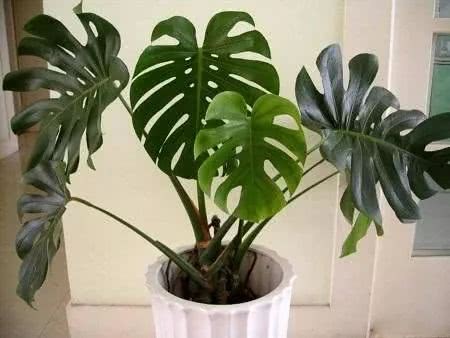
Monstera (Monstera deliciosa)
Monstera has unusual leaves and is a perennial herbaceous foliage plant. Placing it on a windowsill can set off a wonderful tropical rainforest atmosphere. It also has a super strong ability to absorb carbon dioxide, making it a great choice for a study or living room.
Care notes:
1. Monstera loves a warm and humid environment very much, and must never be exposed to strong direct sunlight or dryness.
2. Monstera requires fertile, loose, slightly acidic soil with high water absorption and good water retention. Leaf mold or peat soil is what Monstera loves most.
3. In spring and autumn, water once every two days. In midsummer, besides watering every day, you also need to gently spray the leaves of Monstera several times to keep the leaf surface fresh; for hanging cultivation, spray even more frequently. In winter, the leaf transpiration rate weakens, so the amount of watering should be reduced.
Rubber plant (Ficus elastica)
The thick, large leaves of the rubber plant can adsorb tiny dust particles in the air, and its ability to absorb harmful substances is also very strong. Not only that, it also has high ornamental value. Although the rubber plant likes sunlight, it is also tolerant of shade and has strong adaptability to light, so it is extremely suitable for indoor decorative arrangements.
Care notes:
1. The rubber plant likes a cool and humid growing environment, so planting it in a spot with indirect light is enough. Replace it with fresh potting soil in spring to meet its growth and development needs.
2. Be careful to keep the leaves clean. Leaves with dust attached will have a greatly reduced ability to absorb dust and harmful substances.
Snake plant (Sansevieria trifasciata)
Plant lovers, did you know that one pot of snake plant can absorb more than 80% of various harmful gases in a room of about 10 sq m, and two pots of snake plant can completely purify the air in an ordinary home. During the day, it can also release a large amount of oxygen.
Care notes:
1. Usually, just place it in a bright environment with good light, but in the hot summer, be careful to provide shade to prevent sunburn.
2. The snake plant has low soil requirements and can grow normally even in a very small volume of soil. It likes loose sandy soil and humus soil, and is tolerant of drought and poor soil. Repot it in spring, generally once every two years, and you can use standard compost when repotting.
Silver queen (Aglaonema commutatum)
Silver queen is the most unique of all plants. Its air-purifying ability increases as the concentration of pollutants in the air increases. Therefore, growing a pot of silver queen indoors is simply the best - it has both ornamental value and practical value, a natural air purifier!
Care notes:
1. Silver queen likes a constant-temperature environment, so you should often spray the leaves with clean water to keep them clean and moist.
2. Never let the sap of silver queen come into contact with your skin or eyes, because the sap of silver queen is toxic. Once it touches you, it will cause a burning sensation, so keep it away from the elderly and children.
Ivy (Hedera helix)
Ivy is known as the champion plant for absorbing formaldehyde. It can effectively absorb formaldehyde and nicotine in the air and convert them into harmless sugars and amino acids. At the same time, it can also absorb smoke produced by smoking.
Care notes
1. An environment with sufficient light is suitable for the growth of ivy. Indoors, it can be used as a wall-greening material. Stretch a thin string up the wall, and it is perfect as a wall-climbing plant.
2. Ivy is beauty-loving, so besides watering frequently, you should often spray clean water around the leaves. Every half a month, add one spraying of a 0.2% potassium dihydrogen phosphate solution to keep the leaves glossy.
Peace lily (Spathiphyllum)
The peace lily can absorb harmful substances exhaled by the human body. It can also filter benzene, trichloroethylene and formaldehyde from the air. Its high transpiration rate can keep the air moist and quickly prevent the nasal mucosa from drying out, greatly reducing the possibility of illness.
Care notes:
1. For soil-cultured peace lilies, there is no need to water too much; watering once a week is enough. Each time, water thoroughly and pour off any standing water.
For water-cultured peace lilies, be sure to keep the water clear. Once you see the water becoming cloudy, it is time to change it.
2. Use a fine-nozzle spray bottle to spray water on the leaves to keep them clean, which can greatly improve the peace lily's purifying ability. Or we can add a little beer to the water, which will make the nutrients absorbed by the peace lily richer and its purifying ability stronger.
If you like growing flowers, please follow the WeChat official account: Balcony Garden Vegetable Garden
We answer your flower-growing questions, and welcome discussion