There are tricks to supplementing nutrients for succulents; use them right and your succulents will plump up a size
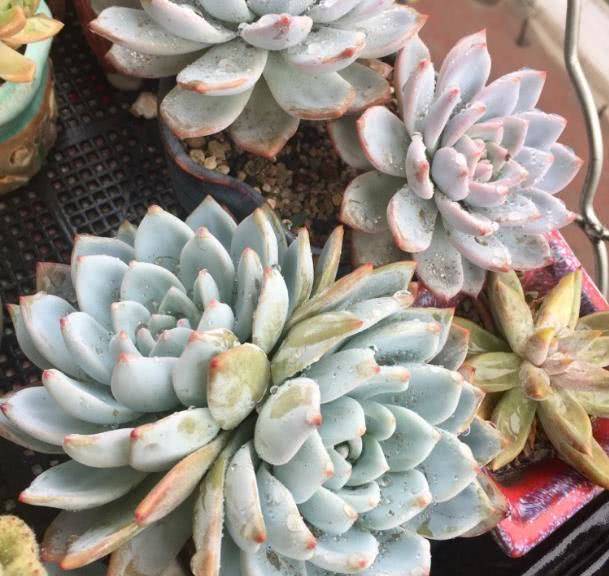
In spring, succulents grow quickly and need a lot of nutrients. Without enough nutrients, not only will their growth slow down, but the succulents will also become thinner and thinner. We need to fertilize succulents regularly. Liquid fertilizer is quite convenient at this time; pour it directly into the soil and the roots can absorb it right away, which is good for the growth of succulents. There are many nutrients that can be put into the soil. The more common ones are various bones, such as fish bones and meat bones, which can be crushed and placed in the soil, but they must be treated first. Using them directly tends to attract small bugs. Wash the oil off them, let them dry, crush them with a small hammer, and then they can be mixed into the soil.
Do succulents normally need nutrient solution supplements? Whether to use nutrient solution depends on the growth condition of the succulent. This plant needs plenty of sun. When grown indoors, place it by a sunny window, and rotate the pot often so it gets sufficient light. In summer, water less, about once every week or so. Check often to see whether the roots have rotted. If the roots have rotted, leaf-propagate the healthy leaves, then check whether the soil has become compacted. If it has, replace it with soil that drains well. If the soil is not nutrient soil, apply a little organic fertilizer about every ten days; this keeps a good plant shape. The fertilizer can be rice-washing water fermented for half a month and mixed with water at a 1 to 1 ratio. Generally, no nutrient solution is needed.
When do succulents need repotting? When they have grown too large and the original pot feels small, you can repot them. I basically repot whenever I want, without choosing any particular season. When repotting, it is recommended to put the plant into the new pot together with the original soil, then just add soil around the sides. Try not to replace the original soil, so the succulent will take less time to adapt to the new pot, which helps it settle in, unless the previous soil had bugs or the like.
Soil is mainly divided into organic potting media and inorganic potting media. Organic media provide nutrients, while inorganic media mainly provide aeration and drainage. Mix them in a certain ratio to make soil suitable for succulents. The special feature of coarse sand is that its particles have large gaps and it is heavy, enough to support the plant. It has good drainage and also retains some moisture. When choosing the type of sand, it is recommended to use natural sand with relatively round shapes; the plant's roots can stretch out more easily. As for particle size, you can screen it according to the size of the plant or the roots' demand for water. The black sand we often use at construction sites for mixing cement, site sand, has particles that are too fine and drains poorly, so it is rarely used as the main growing material.
In fact, when growing succulents at home, if you bury some slow-release flower fertilizer or organic fertilizer at the bottom of the pot, plus regular repotting and soil changes, slow-growing succulents hardly need extra fertilizer supplements. Unlike herbaceous flowers, succulents grow only a few leaves a year, which means they consume very little. Less consumption naturally means less food, and on top of that, they also have several months of dormancy during the year. So as for nutrient needs, what is already in the soil is enough.
This is a gathering place for succulent lovers, sharing succulent care tips. Welcome to follow and exchange ideas.