Are you using the right cultivation method for the ornamental plant Christmas cactus?
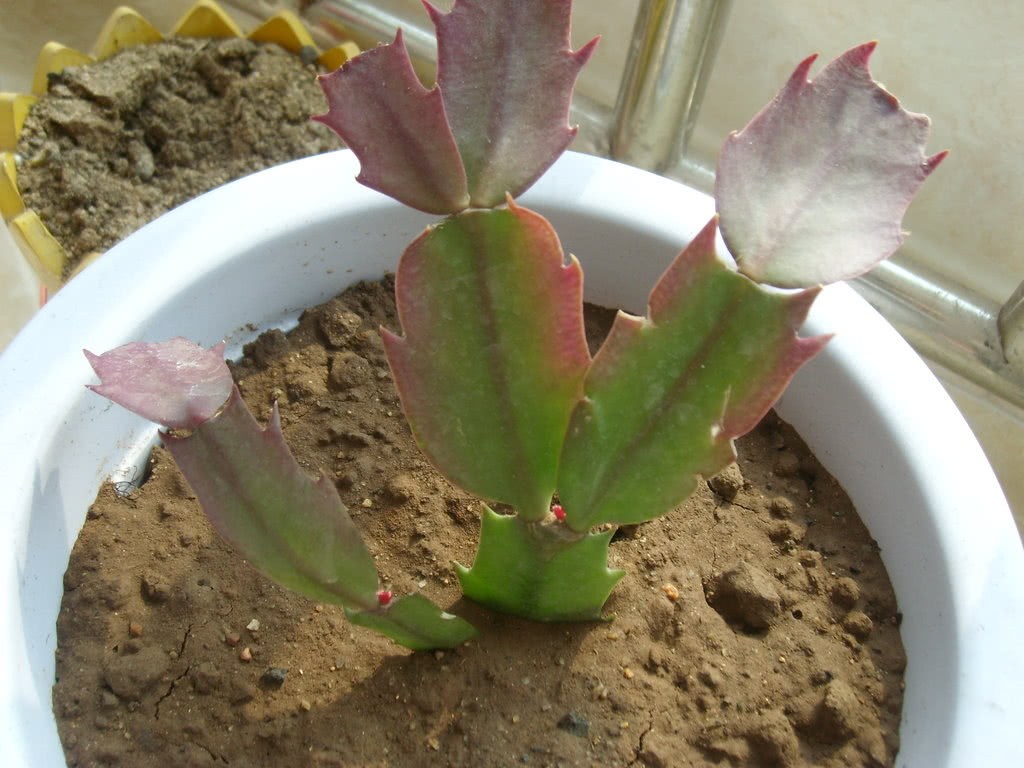
Christmas cactus is an epiphytic succulent of the Cactaceae family, shrub-like, with pendulous stems, many branches and no spines, old stems woody, young stems flat; bright green or slightly purplish, truncate at the apex, flowers solitary at the tip of the branches, bilaterally symmetrical; calyx lobes free at the apex; corolla in several whorls, stamens numerous, berry pear-shaped. The flowering period runs from October to February of the following year; indoor-grown Christmas cactus can have its flowering period regulated by controlling light. Native to Brazil; commonly cultivated in parks and flower nurseries throughout China. It is an ornamental plant, often grafted onto Hylocereus undatus or other rootstocks to obtain vigorously growing plants.
Epiphytic succulent, often shrub-like, without leaves. Stems spineless, much branched, often pendulous, old stems woody, slightly cylindrical, young stems and branches flat; each segment oblong to obovate, 3-6 cm long, 1.5-2.5 cm wide, bright green, sometimes slightly purplish, truncate at the apex, with 2-4 coarse teeth on each side, and a thick midrib in the center of both surfaces; areoles sometimes with a few short bristles. Flowers solitary at the tip of the branches, rose-red, 6-9 cm long, bilaterally symmetrical; calyx in one whorl, shortly tubular at the base, free at the apex; corolla in several whorls, tubular below, free above, the tube growing longer toward the inside; stamens numerous, in 2 whorls, exserted, arching upward; style longer than the stamens, deep red, stigma 7-lobed. Berry pear-shaped, red, about 1 cm in diameter.
Common hybrids of Christmas cactus include the white-flowered 'Christmas White', 'Dossey', 'Gina' and 'Snowflake'; yellow varieties include 'Gold Charm', 'Christmas Flame', 'Golden Fantasy' and 'Cambridge'; orange ones include 'Ante' and 'Frido'; purple varieties include 'Madoga'; pink varieties include 'Camilla', 'Diesto' and 'Eva', most of which were introduced from the United States, Japan, Denmark and other countries. Standard varieties include the round-toothed Christmas cactus with pale purple stems and red flowers, the beautiful Christmas cactus with white buds opening pink, the red-flowered Christmas cactus with red buds, as well as 'Russell', 'Buckley', 'Obtusangulus' and Christmas cactus.
Christmas cactus prefers a cool, warm environment, is fairly drought-tolerant, fears the high heat of summer, and is fairly shade-tolerant. The optimum growing temperature is 20-25°C, and the temperature during the dormant period is around 15°C. It likes a loose substrate rich in organic matter with good drainage and aeration. Christmas cactus is a short-day plant; under 8-10 hours of daylight per day, it can bloom in 2-3 months, and the flowering period can be regulated by controlling light. Insufficient fertilizer and water only results in poor growth, but excessive fertilizer and water may cause the plant to die. Chemical fertilizers should not be used on Christmas cactus; generally, use self-made, thoroughly decomposed, dilute liquid fertilizer, and from early autumn to flowering, the amount of water and fertilizer can be appropriately increased. In summer, high temperatures and dry air, combined with poor ventilation, affect the plant's growth; during this period, place it in a shaded spot with ventilation and diffused light, and do not move it easily. Water less and avoid rain, so as to prevent root rot; you can spray water on the plant and the ground near it to increase air humidity and lower the temperature. During the growing season, keep the potting soil moist, avoiding both excessive dryness and excessive wetness. When the air is dry, spray water on the leaves; especially during the bud-setting period, spraying water on the leaves helps produce more buds.