Once a hated paddy weed, water dragon is now a cash crop earning 8,000 per mu
After spring arrives, all kinds of wild grasses begin to grow in the rural countryside, and at this time farmers also head out to the fields one after another. Besides planting crops, the busiest task is removing the weeds from the fields. In fact, friends living in the countryside are very fond of most wild grasses, because many of these wild grasses can be eaten as wild vegetables and can also be used as herbal medicine to treat illnesses. However, they deeply hate the wild grasses that grow in farmland. Below, the author introduces one such wild grass. It likes to grow in paddy fields, making many farmers love and hate it at the same time.
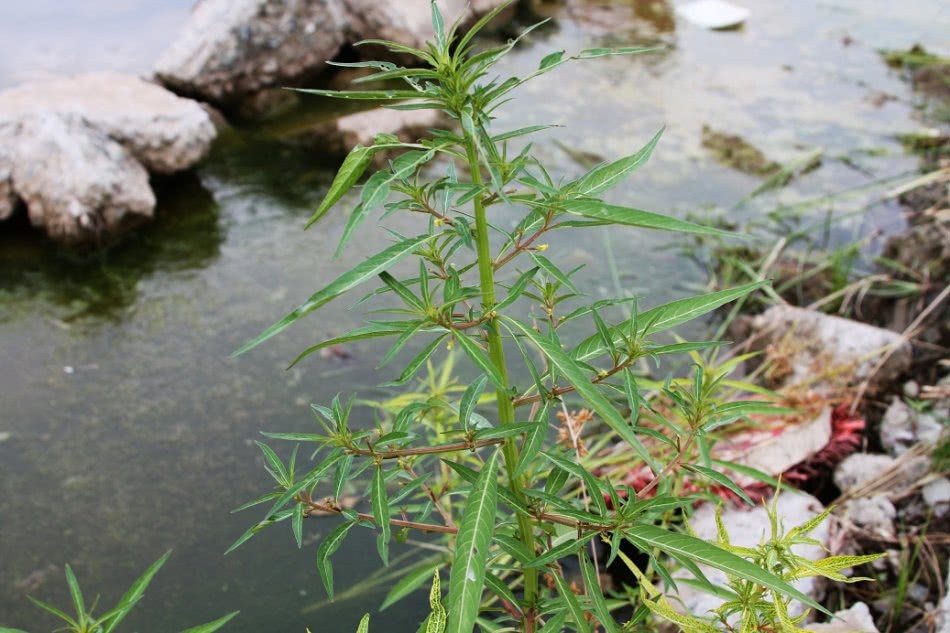
In the past, whenever rice was planted, farmers would go into the fields to remove this kind of wild grass. It resembles clove and gives off a fragrance. This wild grass is "shuidinding" (water clove), though farmers like to call it "maocaolong" or water dragon. Many friends may not have seen this shuidinding wild grass, but if farmers who have planted paddy fields saw it, they would probably cut it down, because in the past, shuidinding was a major "pest grass" in rural paddy fields.
The reason is that shuidinding very much likes to grow in paddy fields, and as can be seen from the picture, shuidinding has thick stems and leaves and strong vitality, and most importantly, its reproductive capacity is also very strong. Therefore, once a little attention is not paid, it will reproduce in large numbers and cause serious harm to paddy fields, robbing crops of nutrients and causing poor crop growth and thus reduced yields. So farmers who planted rice in the past all deeply hated shuidinding. As long as they saw shuidinding in a paddy field, they would cut it down to avoid affecting crop growth.
But now shuidinding has turned things around. Many farmers no longer hate it so much. Instead, they treat it as a cash crop and specifically plant it, because shuidinding has great medicinal value.
According to the "Chinese Materia Medica", the whole plant of shuidinding can be used as medicine. It has the effects of clearing heat and detoxifying, promoting diuresis and treating strangury, and resolving blood stasis and stopping bleeding. It can be used to treat enteritis, dysentery, infectious hepatitis, nephritic edema, cystitis, leukorrhea, hemorrhoids, carbuncles, furuncles and boils, snake and insect bites, cough due to lung heat, sore and swollen throat, red and swollen eyes, damp-heat diarrhea and dysentery, jaundice, painful urination, edema, vaginal discharge, vomiting blood, blood in urine, intestinal-wind bloody stool, furuncle swelling, scabies, swelling from falls and blows, external bleeding, snake and insect bites, rabies bites, and as many as dozens of other symptoms.
It is precisely because shuidinding has so many uses that it is loved by people, and therefore its price has also been rising continuously. According to a farmer friend in the village who grows shuidinding, shuidinding is relatively easy to grow. Its adaptability and vitality are both strong, it is convenient to manage, and the price is generally around 30 yuan per jin, which is considered quite good. If the harvest is good, it can also bring in 7,000 to 8,000 per mu in a year, so it can indeed be considered a cash crop.
Dear friends, have you ever seen shuidinding? You are welcome to leave a message and share your thoughts.