Prune and care for bougainvillea like this for nonstop blooms, and the cut branches can also be used for cuttings
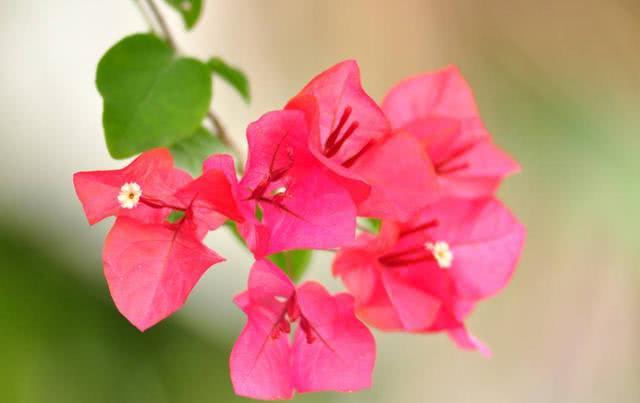
Recently, a gardening friend sent a message saying that the first flush of blooms on their bougainvillea had already faded, and watching the leggy branches and spent flowers hanging on the branches, they did not know how to prune. In fact, many experienced gardening friends know that for repeat-blooming plants like bougainvillea and jasmine, the flowers all bloom on new growth, and branches that have already flowered will not bloom a second time. Keeping them only causes them to compete with other branches for the plant's nutrients and affects flower bud differentiation on new growth. So we need to promptly cut off spent flowers and excess branches, and combine this with temperature, light, fertilizer and water control management to promote faster sprouting of new branches and flower bud differentiation, so that it will bloom continuously all year round.
It is generally recommended that after new buds sprout in spring, according to your bougainvillea's plant shape and growth vigor, cut off weak branches and keep the main trunk and robustly growing branches. To make the plant shape full, keep 2~3 leaves on each branch, so as to concentrate nutrients and promote lignification of the retained branches. To avoid leggy branches, when new buds have sprouted 2~3 cm, spray the plant once with a paclobutrazol solution (paclobutrazol can shorten internodes, make stems thicker, thicken leaves, develop the root system, improve the plant's stress resistance and does not affect flowering. This is personal experience; if you find it troublesome, you can also skip it). At the same time, combine this with water control (the water control method was highlighted in a previous article about promoting bougainvillea flowering) and spraying with monopotassium phosphate solution and sufficient light to promote flower bud differentiation.
After the first flowering period, cut off spent flowers and one third of each branch, and you can also heavily prune newly grown leggy branches to prevent them from competing with the main branches for the plant's nutrients. At the same time, cut off overly dense branches and terminal branches. Cut off weak parallel branches, keep strong branches and give them a short pruning. At the same time, combine this with applying a comprehensive compound fertilizer twice, with an interval of once every half month, to supplement the nutrients the plant used during the flowering period. After that, carry out another round of water control and spraying with monopotassium phosphate solution, strengthen light, and promote another round of flower bud differentiation.
Bougainvillea is a plant that grows under strong light and flowers under short-day conditions. After the Start of Autumn, because daylight gradually becomes shorter, bougainvillea enters the natural flower bud differentiation period at the leaf axils of branch tips. You can pause pruning or lightly prune weak branches. At this time, heavy pruning may cut off branches with naturally differentiating flower buds, causing no flowers after autumn.
The pruned bougainvillea branches can be used for cuttings. Select healthy one-year-old branches, cut them to about 8~10 cm, keep two bud nodes, make a slanted cut at the bottom and a flat cut at the top. Keep two leaves at the top for photosynthesis, soak in a naphthaleneacetic acid solution for about 30 minutes, and after drying, insert into clean, slightly moist river sand, vermiculite or potting soil. You can put a plastic bag over the top of the flower pot to maintain humidity, and poke a few small holes at the top for ventilation. Place it in a cool, ventilated place for care. Generally, it will sprout in about 30 days, root in about 40 days (bougainvillea cuttings sprout first and then root), and can be moved to a pot in about 50 days.