What varieties of Pilea are there, how do you tell them apart, and are they easy to grow?
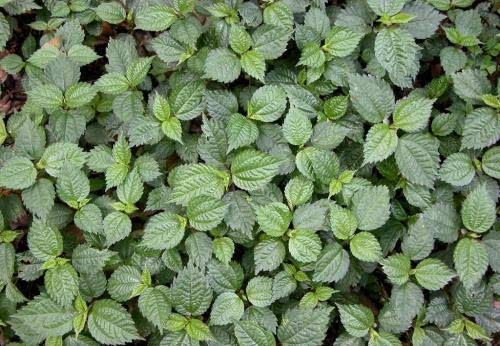
The Pilea's flower colors are very beautiful, and its textures are also deeply admired by flower lovers. Pilea is actually an ornamental plant placed in the living room, and there are many cultivation methods, such as growing it in pots or as a hanging basket.
Pilea varieties: common Pilea varieties include Pilea nummulariifolia, Pilea mollis, and Pilea pubescens.
(1) Pilea nummulariifolia
The stems of Pilea nummulariifolia are very thin, and roots easily grow from the fine details of the stems. The leaves are round, and the flowers are relatively small. Pilea nummulariifolia is mainly suitable for us to enjoy as a hanging basket.
(2) Pilea mollis
Pilea mollis is most special because the leaves it grows have wavy wrinkles, and the wrinkling even has a certain artistry, which is deeply loved by flower lovers. One use of Pilea mollis is for ornamental purposes in gardening, and it can be seen in parks. Besides this, Pilea mollis can also be used to clear heat and detoxify, and it is also very useful for reducing swelling, and it is good for our stomach.
(3) Pilea pubescens
The reason it is called Pilea pubescens is mainly that in the center of the leaves of Pilea pubescens there is a silvery-white stripe, which distinguishes it from other Pilea plants. Pilea pubescens can also be used to clear heat and detoxify, and can also be used to inhibit the growth of Mycobacterium tuberculosis.
Cultivation methods: 1. Pilea plants all like a semi-shaded environment and do not like direct light, so when growing them it is best to use diffused light.
2. Pilea likes a humid environment, so when growing it, keep the potting soil moist. In summer, it needs to be watered at least once a day, and if the weather is relatively hot, you can spray some water mist on the leaf surface of the Pilea. In early winter, you must not keep watering the Pilea all the time, to avoid spots growing on the leaf surface.
3. Usually, prune the Pilea frequently, which can promote branching and make the overall shape of the Pilea more satisfactory.
4. When the Pilea reaches the propagation season, the best method to use is cuttings, which can be used in both spring and autumn.
5. When growing Pilea, remember to keep repotting it once a year, and fertilize the Pilea about once a week. Otherwise, the growth of the Pilea will slow down and its ornamental value will decrease.
In summer the sunlight is too intense, so remember to shade it, blocking at least 50 percent of the sunlight. In winter it can be left without shading, and the temperature must be kept continuously above 15°C, so that the Pilea can develop normally. In dry seasons, you can also place a bucket of water under the flowerpot, and when the water evaporates, the humidity around the Pilea can reach the required level.