What kind of succulent plant is the air plant (Bryophyllum)?
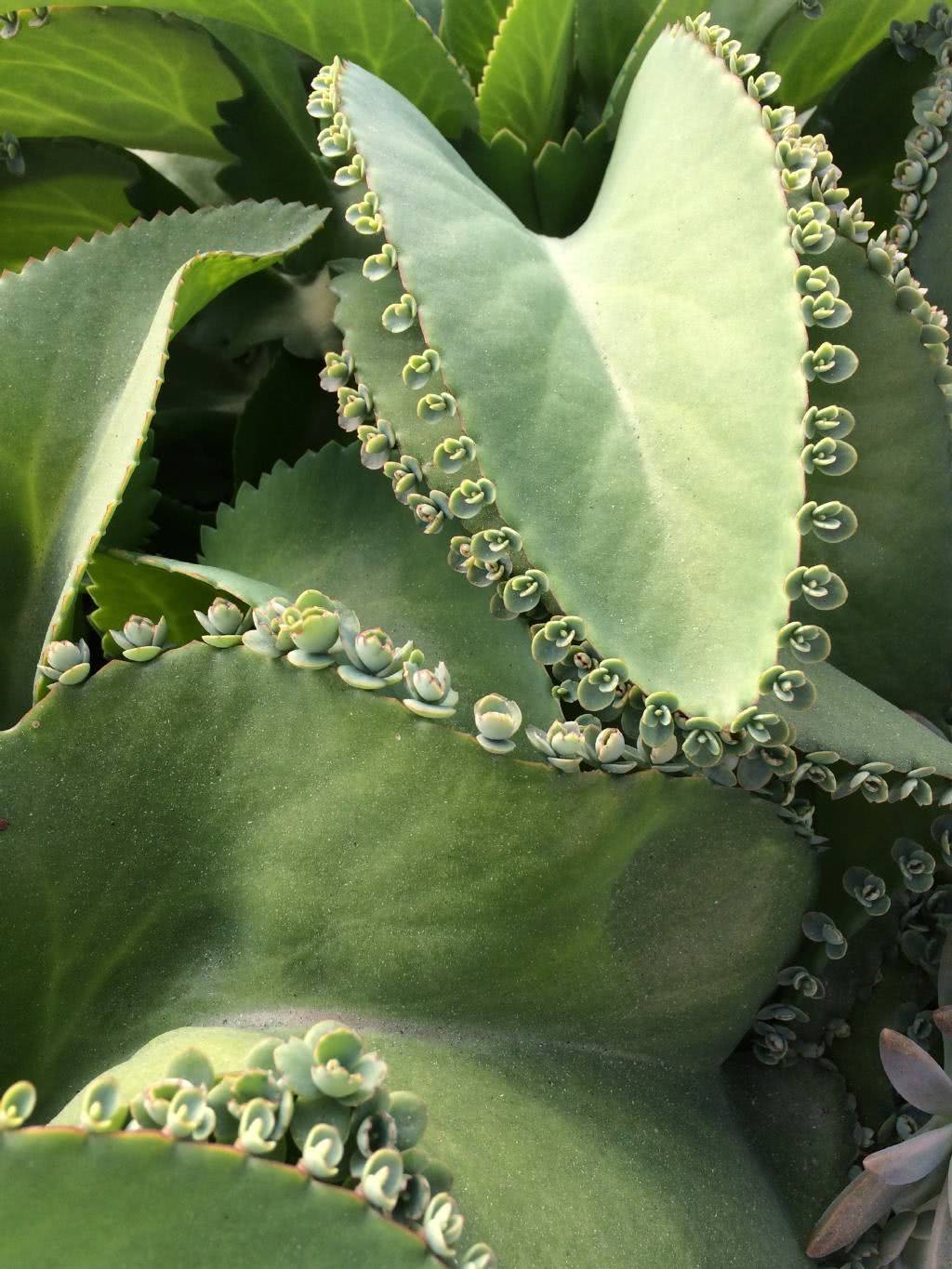
Air plant (Bryophyllum): perennial herb, 40-150 cm tall; stems branched. Pinnate compound leaves, 10-30 cm long; leaflets oblong to elliptic, 6-8 cm long, 3-5 cm wide, apex obtuse, margins crenate; plantlets readily form at the base of the crenations, and once the plantlets grow larger they fall to the ground and become a new plant. Panicle terminal, 10-40 cm long; flowers nodding, corolla salverform, up to 5 cm long, base slightly swollen, tubular above, lobes 4, ovate-lanceolate, pale red or purplish red. Follicles enclosed within the calyx and corolla; seeds small, striped. Flowering period January-March.
Air plant (Bryophyllum)
Native to Africa. Cultivated throughout China, sometimes escaping and growing wild. The whole plant is used medicinally: it can detoxify and reduce swelling, invigorate the blood and relieve pain, and draw out toxins and promote tissue regeneration. Cultivated for ornamental use. Commonly propagated by leaf cuttings. In warm seasons, pick mature leaves and lay them flat on moist sand; within a few days they take root at the notches along the leaf margin and grow small plants, which can then be cut off and moved into small pots.
Air plant (Bryophyllum) is a perennial succulent herb in the Crassulaceae family, capable of growing into a subshrub-like form, with thick fleshy leaves; at the serrations along the leaf margin, two opposite small leaflets can sprout, and in humid air, slender aerial adventitious roots can grow from both upper and lower surfaces. These small plantlets are evenly arranged along the edge of the large leaf, fall off at a touch, and will take root where they land. This plant is native to the island of Madagascar in South Africa, on mountain slopes or in streamside thickets; it likes a sunny, warm and humid environment, is fairly tolerant and even quite cold-tolerant, and is suitable for growing in well-drained acidic soil.
Air plant (Bryophyllum)
This plant is highly adaptable and requires only rough-and-ready cultivation and management. For pot culture, a mixture of 3 parts leaf mold and 1 part sandy soil can be used as the substrate. For newly potted young plants, pinch out the growing tips in time to promote branching; for older plants whose stems are semi-lignified, bare at the base and often crooked rather than upright, reducing their ornamental value, cut them back hard to make them sprout new shoots. Usually water only after the soil has dried out completely; there is no need to worry that it will die of dryness. Fertilizing need not be too frequent, otherwise it causes excessive growth and may even cause the plant to rot; applying fertilizer 1-2 times a month during the growing season is enough.
In midsummer, provide slight shade; in other seasons there should be ample light, otherwise the color along the leaf margins will fade. After the autumn cool sets in, reduce watering; after moving indoors in winter, it can overwinter as long as the room temperature stays above 0°C. But keep the potting soil slightly moist. For potting, a mixed soil of half leaf mold and half coarse sand can be used. During the growing season, water a little more to keep the potting soil moist, but not waterlogged. In autumn and winter, as temperatures drop, watering should be reduced. When it blooms in winter, watering should be strictly controlled, but do not forget to water. Fertilize once a month during the growing season. When the stems and leaves grow too tall, pinch out the growing tips to lower the plant's profile and encourage more branching. Repot and renew the soil every spring to maintain an elegant plant shape.
Air plant (Bryophyllum)
Economic value:
The whole plant is used medicinally: it can detoxify and reduce swelling, invigorate the blood and relieve pain, and draw out toxins and promote tissue regeneration. Cultivated for ornamental use. Commonly propagated by leaf cuttings. In warm seasons, pick mature leaves and lay them flat on moist sand; within a few days they take root at the notches along the leaf margin and grow small plants, which can then be cut off and moved into small pots.
Horticultural applications:
Broad-leaved air plant (Bryophyllum) is the most common succulent plant. Its leaves are thick and juicy, and neat, attractive adventitious buds grow along the margins, resembling a flock of small butterflies that fly down to the ground and immediately take root, multiplying their descendants, which is quite delightful. Used for pot culture, it is a good material for greening windowsills, and also adds elegant charm when used to accent a study or guest room.
Medicinal value:
Whole plant (air plant, Bryophyllum): slightly sour, astringent, cool. Reduces swelling, invigorates the blood and relieves pain, draws out toxins and promotes tissue regeneration. For external use on carbuncles, swellings and sores, mastitis, erysipelas, otitis media, mumps, traumatic bleeding, bruises and injuries, fractures, and burns and scalds.