Clivia won't bloom after years of growing? Follow these 2 little secrets and it will bloom
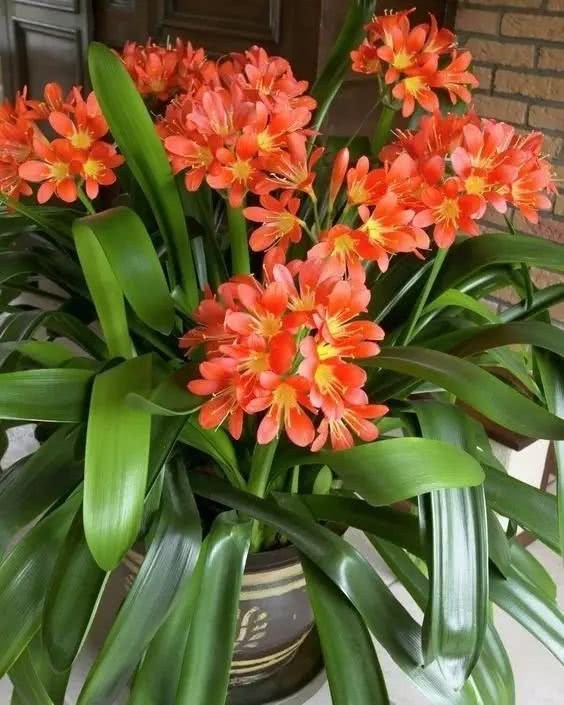
Clivia is not only beautiful in its leaves, but its flowers are even more stunning. However, if the clivia you grow only produces leaves and no flowers, that is still a bit of a pity. Follow these 3 little secrets, and there is no clivia that won't bloom.
Clivia is a plant in the Amaryllidaceae family. It has many flowers and bright colors. Among all flowering plants, clivia has its own unique beauty, and it is also considered relatively easy to care for. But many flower enthusiasts find it hard to get clivia to bloom. First, you need to know its habits.
Clivia likes a semi-shaded, ventilated and cool environment, and does not like exposure to strong sun or high temperatures. Therefore, the environment for caring for clivia should remain cool and warm. It is also not cold-tolerant, so after the temperature turns cold, pay attention to proper cold protection. In places with frost in winter, it should be moved indoors for care.
If it never blooms no matter how you grow it, try these 2 little secrets:
1. Give enough fertilizer for vigorous blooming
Generally, flowering plants like fertilizer, and clivia is no exception. If you do not give it fertilizer, then it will certainly not bloom easily. Generally speaking, before it shoots up its flower stalk, we should apply fertilizer to it. The fertilizer requirement is to have more phosphorus and potassium. For example, we can regularly give an appropriate amount of monopotassium phosphate, or apply decomposed bone meal to it, so as to better promote blooming.
2. Repotting leads to more blooms
Repotting and changing the soil for clivia is one of the important measures to speed up its growth. If your clivia has grown for more than 4 years and still has not bloomed, then you must consider repotting. Generally, clivia needs to be repotted once after only about 2 years of growing, and by the time it reaches 3-4 years, clivia needs to be repotted every year.
When repotting, use a suitable pot. In addition, the potting soil can be made by mixing leaf mold, garden soil and a small amount of river sand evenly, plus a small amount of crushed eggshells as base fertilizer. After planting in the pot, water thoroughly, and place it indoors in a ventilated, semi-shaded spot.