What should you do when your houseplant grows crooked? Learn this one trick and it will be upright again in 10 days
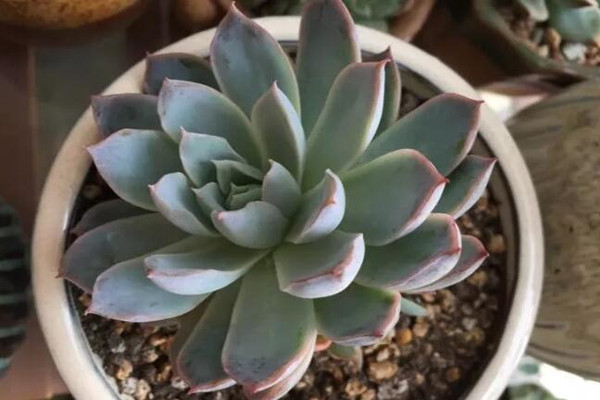
Crooked succulents
Succulents are the plants that most easily grow crooked. Insufficient sunlight, soil that is too loose, and other factors can all cause succulents to grow crooked.
Phototropic tilting
Succulents are phototropic plants, and as they grow they follow the direction of the sun. So succulents will tilt their heads toward the side with plenty of sunlight.
Solution:
Rotate the pot regularly so that every angle of the succulent can receive light, turning it 180 degrees every other day.
Top-heavy tilting
Sometimes a succulent tilts because of its own characteristics. Some succulents tend to grow leggy, and the stems become woody, making the top heavy and the base light, so they easily lean to one side.
Solution:
Depending on the degree of the tilt, place stones on the leaning side for support, or insert a small wooden stick into the soil and tie it to the succulent to help it grow straight.
Tilting caused by soil that is too loose
The soil most gardeners use for succulents is relatively loose, light soil. This kind of soil is fine in the early stage of succulent growth, but as the succulent grows the soil sinks, and the succulent ends up crooked.
Solution:
You can choose a heavier nutrient soil, or use maifan stone and similar materials as a top dressing to add weight.
Beheading
Sometimes, because a succulent has grown too leggy and can no longer be adjusted, you need to perform a "beheading" operation on it.
1. Cut off the entire head of the succulent with a sterilized small knife. Depending on your preference, you can leave the leggy stem at whatever length you like.
2. After about 20 days, new leaves will sprout from the remaining stem.
3. Do not throw away the cut-off head. Put it in a new pot and it can continue to take root and survive.
Crooked leaves on clivia
Clivia leaves mostly grow crooked because of clivia's phototropism as well. More auxin accumulates on the side facing away from the light, so the leaves lean toward the side away from the light.
Adjust the direction
Regularly adjust the direction of the clivia pot. During the vigorous growth period, turn it once every 7 days; during the slow period, once every 10 days, turning 180 degrees each time.
Adjust with tools
If the clivia leaves are crooked too badly, you need to use other tools to help adjust them.
Clip adjustment method:
1. Prepare a few small clothespins (or other clips) and a few thick pieces of paper.
2. Use the clips to clip the crooked leaf together with the straight leaf next to it, and use the paper pieces to separate the clips from the leaves so the leaves do not get pinched and damaged.
Paper piece adjustment method:
1. Prepare a few paper clips and a few pieces of opaque thick paper about the same length as the clivia leaves.
2. Fold them in half from the middle, wrap them around the side facing the light, and secure them with paper clips. After about 10 days, the leaves will straighten out.
Crooked gardenia
Woody plants like gardenia also easily develop branches and leaves growing to one side because of phototropism, which easily makes the plant lose its ornamental value.
Rotate the pot
If the gardenia's tilt angle is not very large and the situation is not serious, you can use the pot-rotating method to adjust it, turning the pot about once every 10 days, at an angle of 180 degrees.
Prune the plant
If the gardenia's leaf crown is leaning severely and it is difficult to adjust it just by rotating the pot, you can prune the plant to adjust it.
1. Use scissors to cut off the excessively long branches growing to the side, and trim the gardenia's leaf crown into a more even shape.
2. Take the cut branches and root them as cuttings. Huahua never wastes anything~
Support with a stake
If the gardenia's main trunk has become crooked because of its own growth, you need to use tools to help adjust it.
For a gardenia with a short trunk and a large leaf crown, you can use the ring-shaped support stake shown in the picture above to adjust it. For a gardenia with a relatively small leaf crown, you can simply insert a straight wooden stake into the pot and tie the gardenia to the stake.
Has your plant ever had a crooked-neck situation?
How did you solve it?
You can leave a comment to share it with other gardeners~