How do you choose orchid potting medium? Master these selection ideas
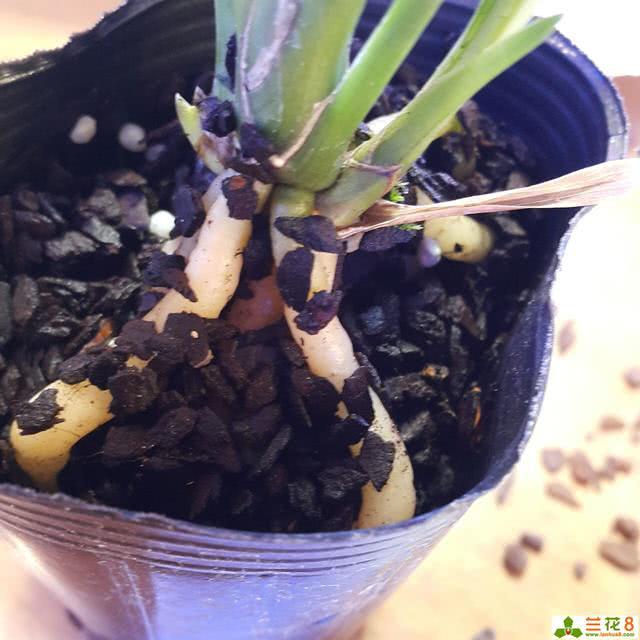
This is a topic I am extremely reluctant to touch, because the complex variety of potting media is, apart from choosing flowers, the thing that best reflects the personality of orchid enthusiasts. From my observation, it almost carries all the expectations orchid enthusiasts have for orchids, and one careless word can touch certain people's sensitive nerves and cause everyone displeasure. But orchid enthusiasts keep bringing it up, and recently quite a few have asked about it in different ways. With the Chongqing personality of not being able to hold back what I want to say, I will here purely from a technical angle set out my personal views on potting medium, with no intention of blaming anyone. Where I am off the mark, I am willing to discuss it with fellow orchid enthusiasts.
I personally believe that orchid potting medium is the soil on which orchids depend for survival. The ancients had a vivid annotation for soil: "Soil is that which gives forth, that which can give forth and give birth to all things." Examined from the viewpoint of modern soil science, this saying still has its scientific rationale. In other words, orchid potting medium is simply the carrier that allows orchids to grow and develop normally, and there is nothing particularly mysterious about it. However, judging from orchid enthusiasts I have come into contact with through various channels, it seems that this extremely simple issue of potting medium has been made extremely complicated, and some people have even deified it. One orchid enthusiast told me that in nearly 20 years of growing orchids, he had switched through no fewer than 40 kinds of potting medium, almost reaching the point of changing twice a year. Sometimes just after planting, he would hear some orchid enthusiast say such-and-such a medium was good, and immediately switch again. This not only proves his obsession with orchids, but also shows a lack of understanding, or not deep enough understanding, of the biological characteristics of plant roots.
Plant roots mainly have the functions of absorbing water and mineral nutrients from the soil, and supporting and fixing the plant. Orchids are no exception, except that their roots are thick, fleshy and tender. Such roots need a potting medium that is loose, breathable and free-draining. If water accumulates, it easily causes the roots to carry out anaerobic respiration, producing ethanol, ammonia, hydrogen sulfide and other harmful substances, leading to root rot.
Since orchid roots have such characteristics, we can determine the principles for choosing potting medium: breathable and permeable, not sticky or compacted, with a certain level of fertility, and also a certain ability to retain water and fertilizer, widely available, cheap and easy to obtain, and when mixing, it is best to combine hard and soft materials. As long as these basic conditions are met, whatever is used as potting medium according to local conditions is fine, and there is no need to follow others blindly or believe hearsay.
According to this principle, in the 5 years from when I started growing orchids until now, I have always used small red brick granules plus Songli Wang orchid potting medium. I have never changed the medium, and I do not distinguish coarse at the bottom and fine at the top, yet the orchids have always been full of vitality. In order to avoid washing the roots out when watering, to keep the pot surface moist for a long time, and also so that the pseudobulbs breathe well and suffer fewer diseases, I use coarse potting medium on the pot surface. That is to say, my practice is the opposite of most orchid enthusiasts, who put coarse material at the bottom.
I have always believed that the potting medium used by most orchid enthusiasts, compared with what farmers use to grow crops, is already very breathable. There is absolutely no need to deliberately put coarse potting medium at the bottom and fine medium at the top. Perhaps because of occupational habit, I think this is too troublesome. I have joked with orchid enthusiasts more than once that farmers loosen the surface soil for aeration when growing crops. If, following the idea of fine on top and coarse at the bottom, they were also required to loosen the subsoil, then they would have no choice but to install pipes for aeration. Or drill a hole from under the roots through to the other side of the earth, but the Americans would certainly not agree. I have another view, which is that finer potting medium is better, because it allows the roots and medium to make better contact, which helps better absorption of water and mineral nutrients. This can also be said to have a fully scientific basis: plant roots can also secrete sticky gum substances, making the roots and soil adhere closely, which helps the absorption of water and nutrients. Using fine potting medium and appropriately lengthening the watering interval can prevent too much water from damaging the roots.
Of course, different regions should make different choices. For example, Yunnan generally uses leaves plus sheep manure, but due to climatic factors, the Chongqing area cannot simply imitate this.
At the same time, I personally have always insisted that potting medium should combine hard and soft materials, that is, hard potting medium mixed with soft potting medium. Hard potting medium mainly plays the role of loosening and aerating, while fully decomposed organic soft potting medium serves as base fertilizer. This can make the nutrient elements as comprehensive as possible, thereby avoiding malnutrition in orchids. I very much oppose soilless cultivation using only hard potting medium, because research on orchid fertilizers can still be said to be at an early stage. For different varieties, different seasons and different growth and development stages, what fertilizer to use and how much to use can be said to have no definitive conclusion. Unlike crops, which have many specialized institutions researching them, such as how much nitrogen, phosphorus, potassium and many other fertilizers are needed in total for a rice field with a yield of 1000 jin per mu, and when to apply them, for which there are quite accurate conclusions. I publish orchid knowledge and pictures every day, taking you to understand orchids in depth and teaching you to grow orchids easily. If there is anything you do not understand about orchids, you can ask me at any time or leave a comment below. If my knowledge has helped you, I hope you can give me a like or repost it to help more people!